TT Epaper LHS
The Telegraph
TT Mobile
 
 
IN TODAY'S PAPER
WEEKLY FEATURES
CITY NEWSLINES
FEEDS
  RSS
  My Yahoo!
SEARCH
 
Archives Web
 
ARCHIVES
Since 1st March, 1999
 
THE TELEGRAPH
 
CIMA Gallary
 
Email This Page
A snack with a dress code
- Marketing a treat

Long before packaged snacks were available, Lakhi Lal Shaw was tickling the city’s taste buds with chana chips and chana garam. The man from Runisaidpur, in Muzaffarpur district of Bihar, came to Calcutta before Independence in search of a job, but fell back on his culinary skills after all avenues seemed closed.

“The only work I was an expert at was preparing chana chips. The grams are boiled and ground into a paste before being fried. A dash of masala and lemon, and a plate of chana chips is ready,” recounts the octogenarian, who also claims to have introduced the dress code for sellers of the snack in Calcutta — kurta, pyjama and topi.

“Though I used to wear a dhoti, most chana chips-sellers today wear pyjamas,” smiles Lakhi Lal, who is fondly called chacha.

The 250-odd chanawallahs, with their jhuri, can be spotted in office areas like Victoria Memorial, BBD Bag, in front of schools in Park Street and near Vardaan market. As the snack has always been popular with non-Bengalis, the chanawallahs are seen more in the areas where they live.

“Our customer base has expanded. Even Bengalis now enjoy chana chips,” says Nandu Gupta, who sells the item in front of Gillander House, in BBD Bag.

The price ranges from Rs 3 to Rs 10. In a market crowded with snacking options, the chanawallahs have always had an advantage because of their affordable ware.

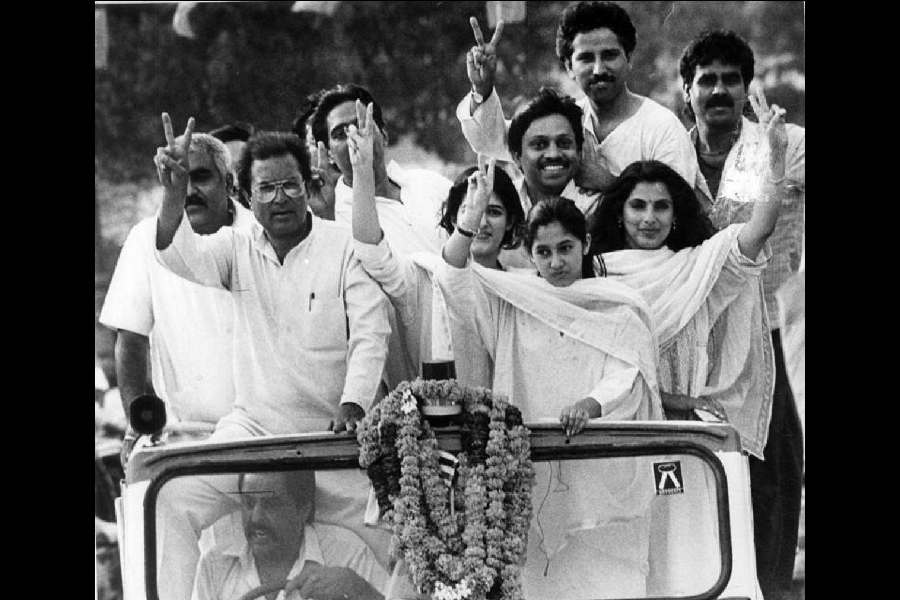
Their dress code has made them easy to spot. “Our dress is our identity. One can recognise us from a distance when we have the topi on,” says Nageshwar Shaw, before adding that Shatrughan Sinha was seen selling chana in the film Kranti, donning the same attire.

The fact that the dress gives the chanawallahs an edge makes Lakhi Lal happy. But he fails to explain why he chose this attire. “There is no particular reason. Dhoti-kurta was the normal attire in those days and I just added a topi, which was also common before Independence.”

Nageshwar lives in a tiny 6ft by 8ft room at Bhukailash, in Kidderpore, with three other men, who too sell chana. “People who sell kulfi on the streets also live here,” says Shaw, while putting on his topi before setting out. The men usually visit their villages twice a year to meet their families.

Lakhi Lal does not sell chana chips any more but his recipe is the source of livelihood for Nageshwar and many like him. “He is our guru. We have learnt preparing chana chips from him,” says Nageshwar.

Though Lakhi Lal has taught the ropes of the trade to two generations of chanawallahs, his son Rohit, who lives with him in a tiny room at 5 Panditiya Road, has not taken up the trade.

“I could marry off my five daughters with my income. But the income has dipped recently and so, he had to choose a different profession,” says Lakhi Lal.

Top
Email This Page

 More stories in Calcutta

  • Act leash on schools
  • Repair road, light up street
  • There's a dare scare in tech town
  • Fly over car chaos
  • Research institute opens doors
  • Mother in murder cry
  • Iconic mall at book hub
  • Rights cry by drug suit accused