TT Epaper LHS
The Telegraph
TT Mobile
 
 
IN TODAY'S PAPER
WEEKLY FEATURES
CITY NEWSLINES
FEEDS
  RSS
  My Yahoo!
SEARCH
 
Archives Web
 
ARCHIVES
Since 1st March, 1999
 
THE TELEGRAPH
 
CIMA Gallary
 
Email This Page
To the Valley & back

It was heaven on earth, I had heard since childhood. But after visiting Kashmir this year, I realised that words cannot do justice to the place.

We took the Rajdhani Express to New Delhi and then Uttar Samjhauta Kranti Express to Jammu, from where we travelled to Katra. We planned to visit Vaishno Devi first. It was a night-long journey. The way to the temple was pretty tough. But we were too excited to think about the adversities.

The next day we reached Srinagar, from where the major part of the journey began. We stayed in a hotel near Dal Lake. The scenic beauty of the lake was visible from my room. The bloodshed that the Valley has been experiencing could not affect the beauty of the valley. The Dal was romantic and serene.

On our first day in Srinagar, we went to Mughal Gardens in Chashmashahi, Pari Mahal, Shalimar and Nishat Bagh. We had a short halt at Nehru Botanical Gardens and the Kashmir Haat.

The destination for the next day was Sonmarg. The Thajewas glacier was the attraction at Sonmarg. The sleighs were fun. We also had a pony ride to the foot of the glacier. I feel Sonmarg is the best avenue of exploring Kashmir.

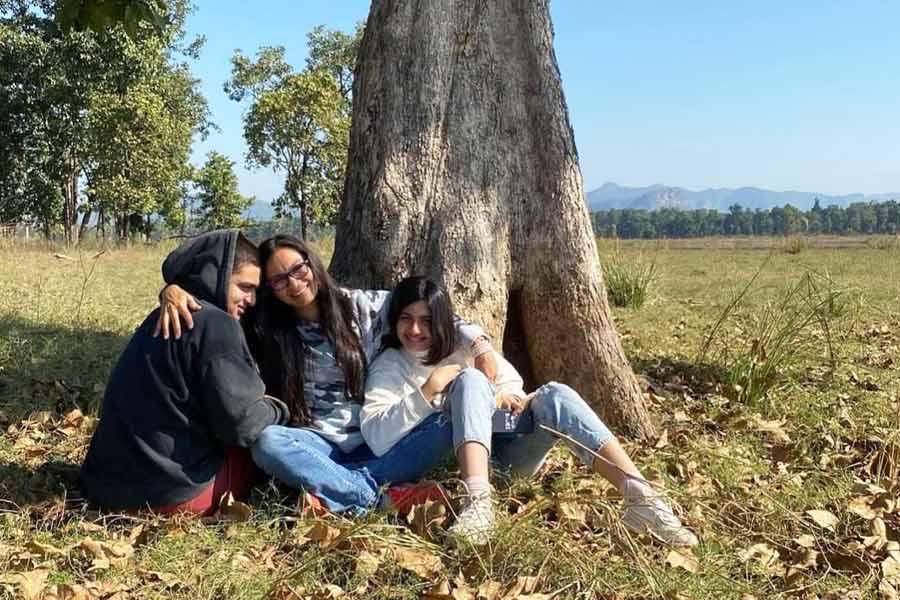
Day Three was reserved for Gul Marg. (picture below) We took a cable car from Gul Marg to Kondoor, 10,500ft high. From Kondoor we went to Aparthwat (3,500ft above). The place was completely covered with snow. The most exhilarating part was the skiing. One can feel the cool mountain breeze on the way down while skiing.

We shifted to a houseboat on the fourth day. We spent the day going for a ride in a shikara and splurging on Kashmiri artwork. We also visited the Shankaracharya temple and Hazratbal mosque. We went to the mosque during the evening namaz. The namaz seemed to echo through the Valley.

Did you know that the largest lake in Asia is in Kashmir? It is Wular lake, the largest in the continent. We found beautiful flora around the lake. One could even see as far as the Pakistan border.

Ninety-five km east of Srinagar, at an altitude of 2,130 m, is Pahalgam, popularly called the valley of shepherds. It is located on the banks of the river Lidder. It is not only one of the best tourist attractions and a health resort, but also a favourite spot for the Bollywood filmmakers to shoot their song and dance routines. We went to Chandanwari (from where the way to Amarnath begins) and Aru.

Kashmir has gone through major political turmoil for the last decade that has left a permanent scar on the Valley. At one time, it had come to stand for fear and death. But the land is slowly returning to the pristine it had always stood for.

Arnesh Ghose

Don Bosco School, Bandel


A fair comparison

The department of information and cultural affairs, government of West Bengal, organised a lecture on the comparative study of the economies of China and India at the Eastern Zonal Cultural Centre on July 20.

The main speaker was Pranab Bardhan from the economics department of the University of California. In his hour-long lecture, he assessed the economic condition of both countries.

“The Chinese are better capitalists today because they were better socialists then,” he pointed out. He also mentioned that China is way ahead of India in sectors like health, education, labour laws and land reforms that strongly affect the economic growth of a country.

Bardhan was accompanied by Bimal Jalan, the ex-governor of RBI, and Asim Dasgupta, the state finance minister. Teachers and students from several colleges participated in the interactive session where Dasgupta stressed on sustainable growth.

Nikhil Agarwal

Shout out loud

What’s on your mind this week

Wonderful India

I never cease to be surprised at the multi-faceted entity that is India — a country of coalition governments, crowded bus stops, multi-party factions, festivities that cut across religions; where female infanticide lives side by side with the Taj Mahal! It is a country of contradictions.

Consider the following instances. Even with Pratibha Patil as our new president, Kalpana Chawla taking India’s pride to space, Kiran Bedi being the undisputed tigress in khaki, we despise the birth of a girl child and do not think twice before ending its life before it sees the world.

It happens not only in rustic villages but in metros as well. The child is often strangulated at birth, buried alive or simply abandoned on the streets by mothers due to family pressure.

As I try to come to terms with such appalling realities, we have billions of Indians worldwide voting through emails and mobile messages to declare the Taj Mahal one of the seven wonders of the world. Taj Mahal is a magnificent monument built to commemorate the love of an emperor for his wife, a woman! Such dichotomies are a part of the wonder that is India.

Shahwar Kibria,
First yr, English, St Xavier’s College


Flooding city

The consequences of global warming are evident through the sudden climatic changes that have overtaken the global arena. It goes without saying that, global warming or not, Calcutta seems to be under water everytime the city is hit by a spell of heavy showers. Open drains and bad sewerage system, ponds suffocated with effluents, other pollutants and ankle-deep water for days make it tough for the citizens.

Some places even experience the use of boats and sailing bags. Many schools have to declare holidays to save students the inconvenience of wading through the slush. Prompt coverage by the media adds to the interest of viewers to make them aware of the problems faced by people in other parts of the city. Floods have also claimed the lives of a number of people, as people are even electrocuted because of open wires.

The question is, why the municipality is unable to do anything about such persisting problems.

The basic problem, I think, is the lack of infrastructure. The drainage system is in dire need of maintenance. Apart from the authorities, it is also the duty of each individual to be aware of the problems and do his bit to avert them.

Flooding is not just a natural calamity but can at times be more of a man-made thing.

Tanmoy Das Lala,
Class XII, St Xavier’s Collegiate School

Top
Email This Page