The Telegraph
 
 
IN TODAY'S PAPER
WEEKLY FEATURES
CITY NEWSLINES
FEEDS
  RSS
  My Yahoo!
SEARCH
 
Archives Web
 
ARCHIVES
Since 1st March, 1999
 
THE TELEGRAPH
 
 
Email This Page
SPONTANEOUS OVERFLOW OF EMOTIONS

A Rasika’s journey through Hindustani Music
By Rajeev Nair,
Indialog, Rs 350

The idea is quite noble really. Rajeev Nair has written his fantasy book, a guideline he sorely missed when he “sallied forth” into “the uncharted waters of North Indian music”. He doesn’t want intelligent but musically uninitiated listeners to feel lost, so he provides them with “a mariner’s logbook”. If this metaphor makes you pause for a moment, then beware! Nair is a more prodigious reaper of metaphors than Navjot Singh Sidhu. And applied to music, most of his effusions become resounding clichés.

“The experience of music,” Nair explains, referring to Schopenhauer and Nietzsche, “is irreducible”. Even veteran commentators end up offering “a string of metaphors, some nebulous platitudes that point, like the free-blowing wind, in the direction of arrows that took flight into infinity”. Doesn’t he hear the absurdity of this statement? Or perhaps he is being deliberately sarcastic, mocking the metaphorical excess of musical criticism by invoking the dizzying abstraction that is typical of many music critics?

One would have liked to believe that the latter was true, but sadly, it is not so. Early on in this voyage, one is drowned in the deluge of clichés. Sample the following: “Once ‘possessed’ by the work of art, s/he dissolves like a crystal of salt into the vast depths of rasanubhuti or aesthetic delight”; or “this book records the search for the numberless shades of aesthetic delight, my quest for the elusive footprints the Muse imprinted on the sands of Eternity”; and finally, “An occasional lull now and then. Like some giant whale, the magus of sound dove into the depths of silence and then with a shuddering heave sprouted a fountain of unheard sounds and tones”. The last is a description of the conclusion of Zia Mohiuddin Dagar’s rendition of Yaman on the rudra-veena. One need not go on.

If the reader manages to swim across this gush of emotions without getting drowned, the rest of the book is not without interest. That is, of course, if he is willing to ignore the rhetorical antics every now and then: the legacy of Swami Haridas, Nair writes, was in giving “the life-giving nectar of spirituality” to North Indian music. However, beyond these verbal gymnastics, Nair provides a more or less comprehensive account of most things that beginners should know about Indian classical music. The opening section focuses on the major forms of vocal music — dhrupad, dhamar, khayal, thumri, tappa, dadra — and other lesser-known generic variations, such as the tarana and the khayalnuma. The technical and historical details are filled out, but, once again, when it comes to evaluation, Nair loves to wallow in diffuse expressions. The moment you seem to think that Nair would come up with a serious, engaging point, a torrent of rhetoric submerges you. He admits that the question of whether contemporary female dhrupad-singers have been able to “equal or surpass” their male counterparts is tricky and perhaps insoluble. He states, and agrees with, the sexist notion of the unsuitability of the female voice to an austere form like dhrupad (surely he hasn’t listened to Asghari Bai), and insists that such a question “deserves an honest answer even in politically correct times such as these”. Then comes the clincher: “Whether enlightened egalitarianism can reverse the exclusivity of nature or the whimsical snobbery of god remains to be seen.”

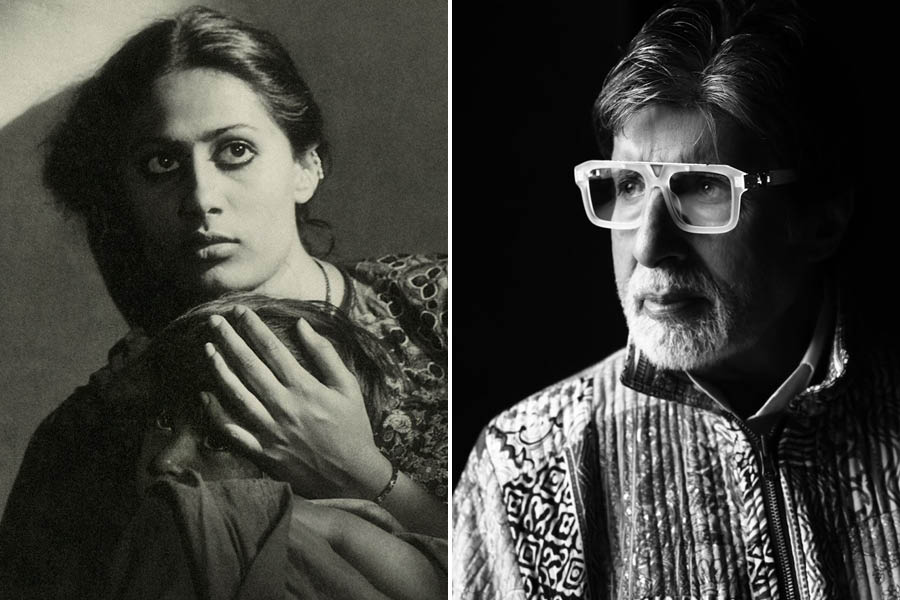
The next set of entries is on the major gharanas. Here, the narrative runs quite smoothly, and so does the section on singers, although the selection of names and the order in which they appear are highly subjective. Perhaps there is a logic in this hierarchy of arrangement, which is meant to be cryptic. Why else is there a section, “Three Konkani Women”, in the middle of this section? The sketch of Gangubai Hangal’s life (picture right), however, is beautifully written. And although all music-listening is bound to be subjective, does Amir Khan’s Abhogi (picture left) give “the sense of an awe-inspiring snow peak drenched in moon-light”? Isn’t there more of a dialogue between intense yearning and subtle playfulness in that recording?

The biographies are anecdotal and eulogistic, with flashes of intelligent criticism, as in the entry on Jasraj: “Those looking for the profound, the contemplative, the monumental, the cerebral, the haunting and the daringly experimental will find nothing to engage their demanding aesthetic or philosophical sensibilities in Jasraj.”

Nair’s approach is novel, in that he moves beyond apocryphal accounts of splendour attributed to musicians, into the recordings that are presently available in the market. It makes good sense to include these for the sake of those freshly setting sail on the supposedly “uncharted waters”. The section on the instruments and their players is generally well-written, and the bibliography and glossary quite useful.

Admittedly, Nair has made a valiant attempt at research, not even neglecting the sleeve-notes to cassettes and CDs! His project of putting together a brief historical introduction to North Indian music does not deserve to be slighted. However, his most significant, and rather costly, omission is the late Kumar Prasad Mukherji’s The Lost World of Hindustani Music. Had Nair read this masterpiece before his work went to press, he would not only have found some arresting information but also picked up a thing or two on how to write about the greatest music in an attractive yet understated way.

Top
Email This Page