|
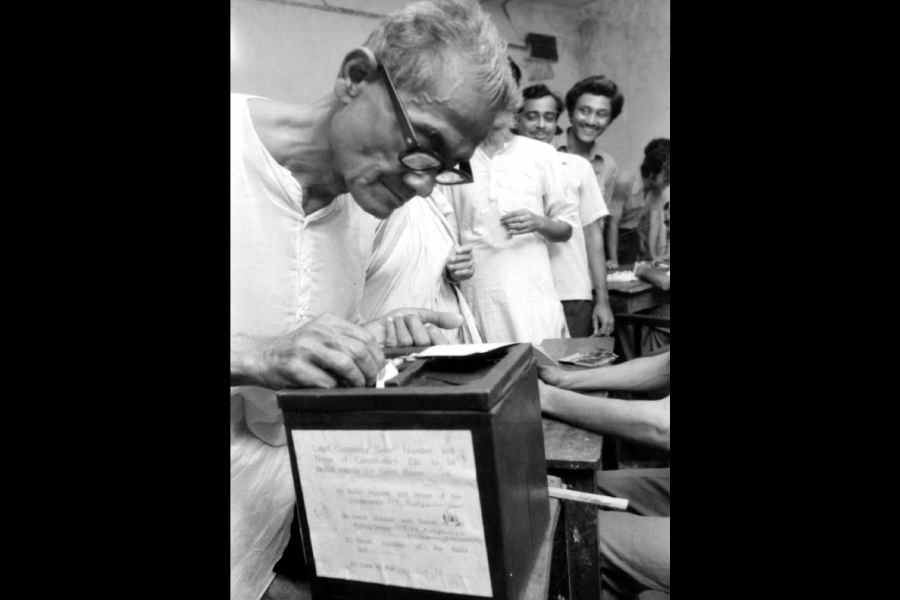
The year 1974 made it difficult for anybody and everybody to become president of India. An act passed by parliament made it mandatory for the nomination papers of a presidential candidate to have at least 10 electors as proposers and 10 as seconders. The number stands today at 50 MPs and MLAs as proposers and seconders respectively. The security deposit has risen much higher than the Rs 2,500 in 1974. All right, that can be blamed on inflation, but together with the other deterrents, it does make the presidential contest full of what today would be called the “fear factor”.
But then, there is no dearth of fearless Indians. Propelled by some of the most admirable ideals, they have, since the first presidential elections in 1952, made a beeline for the bright and beautiful flowers of the Rashtrapati Bhavan garden. Some of them have also become quite famous by virtue of losing the presidential elections. (If only Indian athletes, who keep losing in the Olympics and Asian Games, were as lucky...) Mohan Lal Dhartipakar, who has losses to Neelam Sanjeeva Reddy and Gyani Zail Singh to his credit, would wear a wooden crown and a garland and go around ringing a bell. The bell was for alerting the masses. The masses never got alerted, and the cloth merchant from Bhopal inevitably lost his deposit.
Kaka Joginder Singh, who also earned the title of “dhartipakar” for sheer perseverence — he contested a record 350 elections, including those for president, and to the Lok Sabha, Rajya Sabha, Vidhan Sabha and Vidhan Parishad — did not mind losing his deposit. In fact, he looked upon the amount lost as his “humble contribution” to the national fund. He had an impressive ‘manifesto’ too, and not many also-rans are armed with manifestos. Joginder Singh solemnly promised, if he were elected to the post of president, to repay all foreign loans, inculcate sterling character in children, and bring back the barter system to cure the ills of the Indian economy. But he never got elected, and we still have to deal with soiled currency notes.
One could easily compile a list of impressive names. Rajabhoj Pandurang Nathuji, Furcharan Kaur and Sharma Manovihari Anirudh took on Neelam Sanjeeva Reddy; Bhamburkar Shriniwas Gopal, Seetharamaiah Ramaswamy Sharma Hoysala and Khubi Ram lost to Zakir Hussain.
In 1987, Mithilesh Kumar Sinha, a nominee, created a mild sensation when he requested the Election Commission to put forth his views over All India Radio and Doordarshan. He almost got the information and broadcasting ministry to see his point. If he did, who knows, poor R. Venkataraman may not have had a chance to have tea on the lawns of the Rashtrapati Bhavan.
There is no reason to think, however, that those whose votes did not exceed single digit, were any less serious about democratic values than those who finally made it. The most colourful prospects of 2007 are Anand Khare and his wife, Ranu. Between the two, they are novelist, engineer, experts in socio-political jurisprudence, industrialist and economist. And both want to become president. While this might raise the possibility of an ugly domestic squabble, think of the brighter side too. If one gets past the post, both get to entertain family and friends in the presidential dining room.
|