|
The blast at Guwahati’s Fancy Bazar took place the same day as the one in Hyderabad’s Charminar area. The latter, of course, was far more serious in terms of casualties and the possible consequences. Thankfully, there was no communal violence in Hyderabad, just as the Guwahati explosion did not cause much reaction in Bihar, unlike before, when the victims were all found to be from that state.
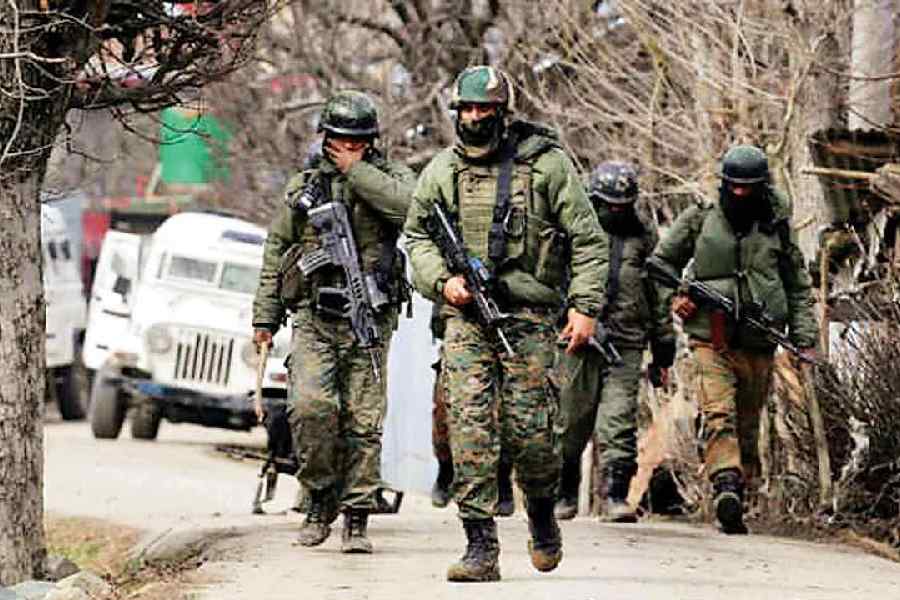
But all this is small satisfaction. The blasts, taking place at the same time, will strengthen the home ministry’s apprehension that various terrorist groups are seeking to coordinate their activities. As yet, there is no definite evidence of that, but it could well be that the common purpose is to destabilize India. There are reports that the Liberation Tigers of Tamil Eelam have reached an agreement with the Inter-Services Intelligence for arms supply in exchange of training. Already there is ample evidence to suggest that these groups, Ulfa included, have spread their tentacles wide. Each action receives support from places far away from the actual site. The Hyderabad blast, for instance, has led to arrests in Asansol.
However, every cloud has a silver lining. The Guwahati explosion does appear to be an act of desperation. The Ulfa seems to be losing its grip on Assam. There are reports from Dhaka that the caretaker government there is bent upon coming down hard on refugee terrorists. The ISI may well force the government to fall in line. But even a temporary hardening of stance may be to India’s benefit. Without a safe haven to fall back upon, the Ulfa will have serious problems. Within Assam it is more feared than respected. The blasts make it clear that it is this fear factor the organization is trying to cash in on.
Come crawling
It is also seeking to play upon a not-so-happy aspect of the Assamese psyche — parochialism. People’s discontent in the state has always been directed at the non-Assamese-speaking population. By aiming its attacks on Biharis, the Ulfa is trying to indicate that it is working in the interests of the Assamese people by trying to stop ‘outsiders’ from stealing their bread. A section of politicians in Assam often speak along the same lines, and so the Ulfa feels that its message will safely reach home.
A descendant of the anti-foreigner agitation of the Eighties, the Ulfa is no stranger to such a line of action. However, unlike the All Assam Students Union then or the Gana Sangram Parishad, the Ulfa had started with a separatist agenda. It had urged the Assamese to break away from the Indian Union. If the Ulfa is now playing up parochial sentiments, it is because it realizes that it is fighting a losing battle. Its populism is unlikely to restore to it any of its former glory.
All organizations like the Ulfa know that the dreams they conjure up are never to be fulfilled. So the movement has to be halted midway and a compromise accepted. This was the case with Laldenga in Mizoram. In Nagaland, the rebel leaders are in the midst of a prolonged ceasefire, interspersed with rounds of talks. In the case of Ulfa , however, there is a problem. It finds itself a pawn in the game of foreign-funded terrorism that had not been there earlier. The decision about when to call it quits does not really lie with the Ulfa, particularly as the leadership is personally beholden to those who are pulling the strings. For its own reasons, Dhaka may refuse to play host for some time but that does not mean that the principal operators will decide to call it a day as their operations are a part of a global scheme.
So the Ulfa must persevere, whichever way it can. And while it does so, it is perhaps the right time to come down heavily on it. Negotiated settlement sounds nice but it is so much nicer if the other side can be brought to the table crawling rather than walking.
|