|
Somnath Ghosh is full of optimism. Therell always be a demand in the field of civil engineering, says the head of the department of civil engineering at Jadavpur University (JU). Any development will automatically ensure an involvement of civil engineering projects, he says, clearly cheerful about the prospects of civil engineering at a time when many feel IT is worming into conventional engineering fields.
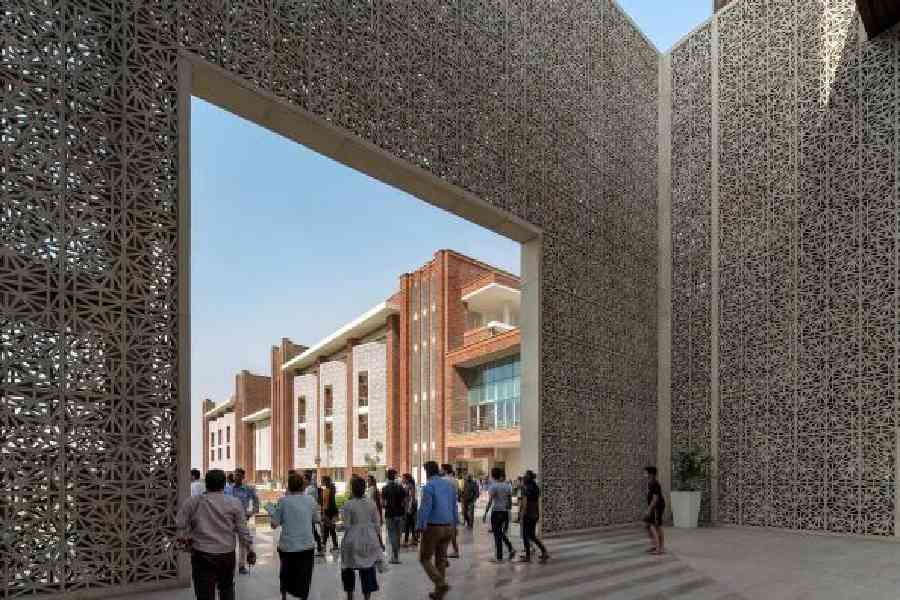
Civil engineering is a broad field of engineering dealing with planning, construction and maintenance of structures, or public works. The rising demand for civil engineers has ensured that universities such as Jadavpur are still receiving good students, says Shibopriyo Mukherjee, professor of civil engineering at JU.
Abhishek Raychaudhury, a second year BE student of JU, is one of them. I realised that the value of core engineering as a subject was something to be cherished, he remarks. JU offers civil engineering at both the bachelors and masters level. One has to study science with physics, chemistry and mathematics, the royal combination as it is popularly known, and appear for the Joint Entrance Exam (JEE) to gain a place in civil engineering.
At JU, the all India JEE has been the entry point for students of civil engineering since 2006. At the Bengal Engineering and Science University in Howrah the qualification required is an appropriate rank at the state level JEE.
There are two courses offered, a four-year bachelors course and a two-year masters course. Generally, a 60 per cent at the higher secondary level is considered to be adequate for a bachelors level entry in addition to the JEE rank. At the masters level there is the GATE (Graduate Aptitude Test in Engineering) exam one has to take to pursue postgraduation.
Civil engineering students have several reasons for choosing the subject. While some have a knack for studying a core engineering subject, others see it as an upcoming field that will compete with other areas once they are saturated. We are witnessing rapid infrastructure development and I am sure civil engineering will enable me to work in areas that will add to the economy of our country, says Agnita Mukherjee, a fourth-year civil engineering student at the Bengal Science and Engineering University in Howrah.
Indeed, civil engineering is providing new roads to tread for those willing to take it. Aparna Dey Ghosh, professor of civil engineering at the Bengal Engineering and Science University, feels civil engineering provides scope for research that encourages students to explore new topics. Research engineers are getting more conversant with computer technology and have also been involved in software development that has improved the techniques of construction in industry, she says.
The emerging areas that require the help of civil engineers include wind engineering, earthquake engineering, wastewater management, soil dynamics and remote sensing.
Today, civil engineers are involved in projects involving computer-assisted design and they are playing an important role in environmental geotechniques, says Sudipto Ghosh, professor of civil engineering at JU.
Universities are also developing research projects to cater to the growing demand. JU has a cell specifically to deal with the industry. We also have a collaboration with the Confederation of Indian Industry, says Ghosh of JU, adding that students get the chance to present papers in conferences and interact with industry members. The university has facilities for a doctoral programme that has 20 seats.
The Meghnad Saha Institute of Technology in Calcutta, started in 2001, is part of the West Bengal University of Technology and has been offering civil engineering courses since 2003. The market for civil engineering is good and we are expecting that the development of new highways will place our students in a favourable position to obtain good jobs, says Jagat Jyoti Mandal, head of the civil engineering department.
A large number of civil engineering students visit foreign shores to enhance their professional credentials. Every year we have almost six students going abroad for higher studies, says Kalyan Bhar, professor of civil engineering at Bengal Engineering and Science University.
Salaries are getting better, too. Civil engineers from JU have got placements in reputed firms such as MN Dastur and Larsen and Toubro. Salaries range from Rs 1.22 lakh to Rs 3.12 lakh, says a Larsen and Toubro official. Our company is expanding and we are looking forward to hiring more civil engineers, says K.N. Pillai, assistant HR officer, Bengal Ambuja Cement.
As long as there is a need for roads, bridges and flyovers to sustain modern civilisation, civil engineers will always be well-placed.
|