TT Epaper LHS
The Telegraph
TT Mobile
 
 
IN TODAY'S PAPER
WEEKLY FEATURES
CITY NEWSLINES
FEEDS
  RSS
  My Yahoo!
SEARCH
 
Archives Web
 
ARCHIVES
Since 1st March, 1999
 
THE TELEGRAPH
 
CIMA Gallary
 
Email This Page
THE INDEX OF TRUST

India’s Political Parties Edited
by Peter Ronald deSouza and E. Sridharan, Sage, Rs 450

After the parliamentary elections of 2004, New Delhi-based Centre for the Study of Developing Societies carried out a survey to find out how much the people “trusted” the major public institutions in India. The ten institutions chosen for the survey included national and state governments, the judiciary, the civil service, the army, the police and the political parties. The result was unsurprising — the political parties were trusted the least; even the police fared better. On a 100-point scale, the parties got 45.8, while the army earned the highest at 85.5 and most other institutions, except the police and the bureaucracy, scored over 70 points.

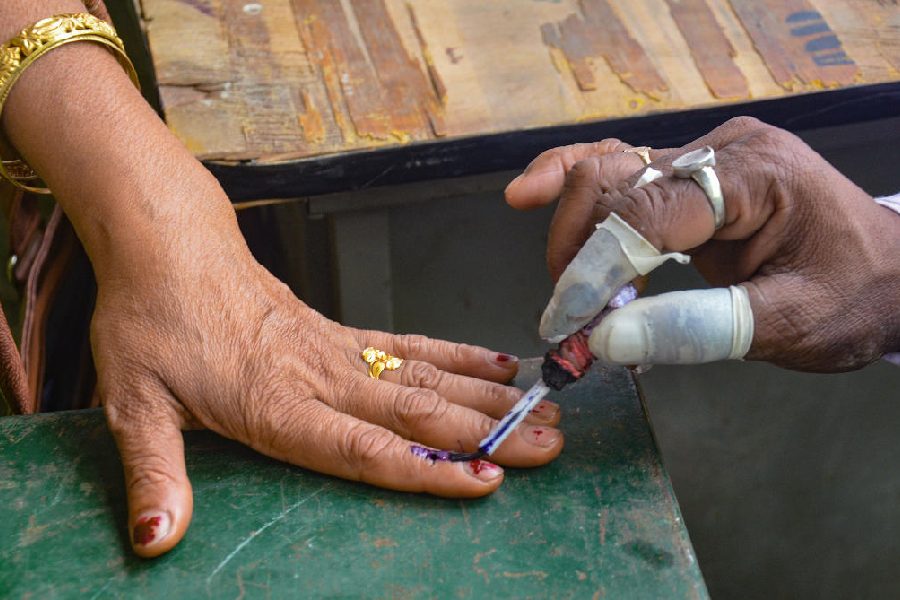
So, who needs the political parties anyway? One hears that loaded question more and more as economics, once a “dismal science”, is increasingly treated as the new theory of everything. But, the CSDS survey hides an irony. If political parties are such an untrustworthy lot, how is it that more and more people are voting in Indian elections? In the parliamentary elections of 1952 and 1957, the turnouts were 46.6 and 47.1 per cent, respectively. In today’s polls, whether to the Lok Sabha or to the state assemblies, the average turnouts are well over 70 per cent. Obviously, many more people are joining the political process than in the past. Why?

Some well-known political commentators try to answer the question in the fifteen essays in this volume. While doing so, they look at the changes that political parties and the party system have undergone over the decades. Although suggested in the Eighties, Myron Weiner’s answer to why the political parties matter so much in Indian lives remains largely valid today. The new economic policies may have just begun to change things for a small section of the people. But the overwhelming majority of the population, as Weiner says, depend on the government for their livelihood. The parties are the intermediaries between the people and the government.

That, according to one school of political thought, creates a major problem for a true democracy. The intermediary role of political parties in a democracy has long been questioned by some analysts. Their argument has been that the parties usurp the people’s own choices and are thereby a hindrance to the growth of direct democracy. The book’s first two essays — old ones by Jayaprakash Narayan and M.N. Roy — argue the case for a party-less democracy.

The essays from another time serve a useful purpose. They not only provide historical backdrops to the growth of political parties in India but also help the reader locate the parties of the day in the changing social and political contexts. Thus, an old essay on the “Congress system” by Rajni Kothari serves as a preamble to the long and detailed exposition of the party system and electoral politics by Yogendra Yadav and Suhas Palshikar. Bruce D. Graham’s 1987 piece on the Jan Sangh days of the Bharatiya Janata Party is updated by Achin Vanaik’s devastating critique of the party’s role in communalizing the Indian polity.

Scholarly as some of the essays are, the volume disappoints in one respect. There is a discourse about politics and political parties that must be disturbing to democratic people everywhere. One wishes the book threw some light on how the parties can fight the anti-politics brigade of our times.

Top
Email This Page