|
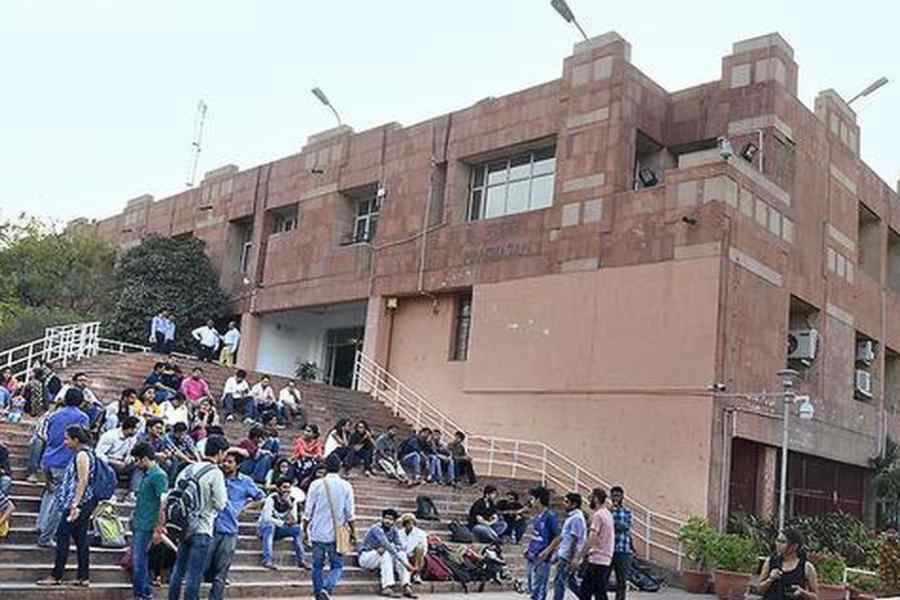
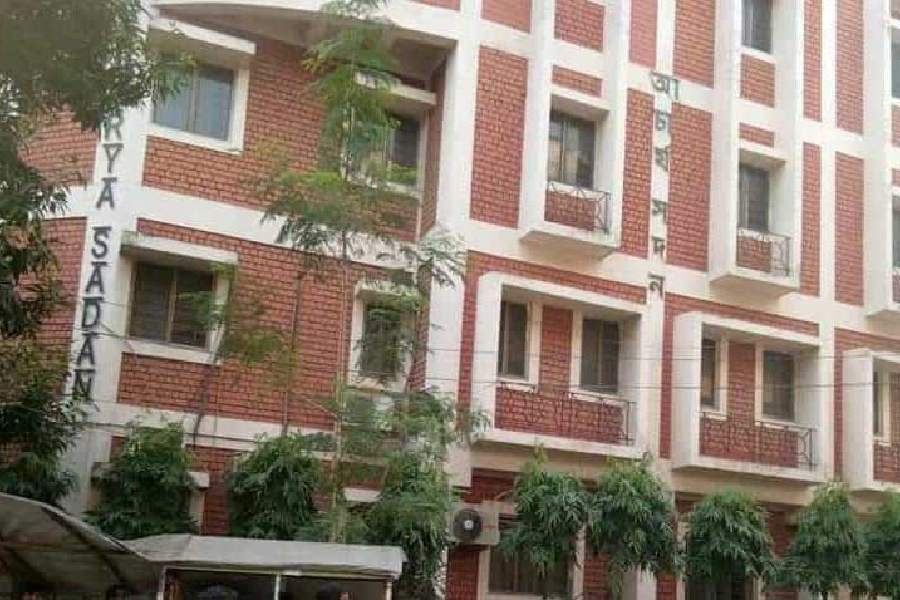
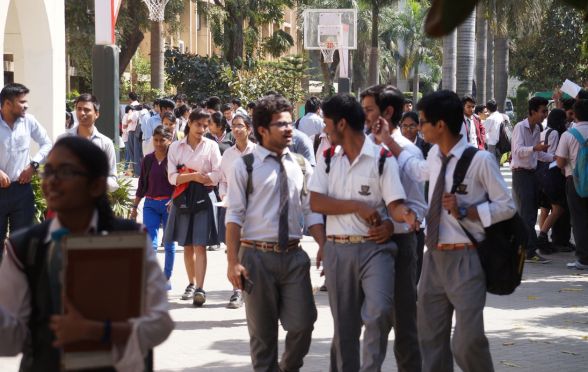
In the garden of the Nirmala Niketan College of Social Work in Mumbai, a class is on. A group of students sitting in the shade is animatedly discussing how best to reach out to a slum community. At a time when marks are paramount and mugging is the order of the day, these students are lucky to be able to do things differently.
In the social work fraternity, Nirmala Niketan, Mumbai’s only social work college under the University of Mumbai, is best distinguished for its emphasis on fieldwork, which is closely interwoven with academics, which again focuses on subjects like individual, group and community work.
Nalini Andrade, a recent graduate of the bachelors in social work degree programme from the college, is on her way to do an MSc in social policy from the London School of Economics. She says, “The foundation laid at the college gives us students an edge when it comes to fieldwork.” At a time when personal attention is a thing of the past, this college stands out again. There’s never a day when the staff room is without students spending long hours in their lecturers’ pretty cubicles, poring over journals, seeking guidance or opening up on the personal front.
Vaijantha Anand, a faculty member since 1992 and an ex-student of the college, explains the rationale: “Students are looked at not merely as students, but as individuals who could make a difference to society. And in offering them personal attention, one is able to shape and encourage them to grow.” Beena Lashkari, director, Doorstep, who graduated in 1988, recalls Nirmala Niketan’s emphasis on personal guidance. “We related to each other in the college as a family. ...We received personal attention from the faculty,” she says.
| Vital Statistics |
|
WHAT IS IT? A social work college
under the University of Mumbai that offers bachelors
and masters degrees.
WHO’S THE BOSS? Mary
Alphonse.
NOTABLE FEATURE: Emphasis on
fieldwork.
SOME PROJECTS IN WHICH THE STUDENTS
ARE INVOLVED : Aid for migrant construction
workers, care for HIV/AIDS patients, and communal
harmony.
WHERE IS IT LOCATED? New Marine
Lines, Churchgate, Mumbai. Phone: 022-22002615/2206734 |
| Growth at the college appears all-pervasive with students working on assignments in the computer lab, reading, and rehearsing street plays and dances. The emphasis on fieldwork has also led students to participate in field action projects under the guidance of faculty. One such project, Nirman, which works with migrant construction workers, has become an independent NGO. Chirag, another project, works on the issue of community care for HIV/AIDS patients. Salokha, yet another project, addresses the issue of communal harmony among youth.
“We would also like to move into areas that deal with the issues of children,” says the college principal, Mary Alphonse. The compact campus is also dotted with students of different hues and nationalities — African, Ethiopian, Nepali and European. “We have a five to six week exchange programme for foreign students, which allows them to understand through theory and hands-on work, the country’s socio-political and economic situation,” she says.
While Mumbai is where the majority of the students come from, the college also comes across as a potpourri, with “one-third of our students coming from out of Mumbai, namely the north-east, the southern states, Gujarat, West Bengal and of late, even the Andaman Islands,” says Alphonse. To help non-Maharashtrian students tide over linguistic issues, the college also offers courses in spoken Hindi and Marathi for bachelor of social work (BSW) students.
The college no longer uses the clinical or welfare-driven approach of the American model used between the 1950s (when the college was established) and the 1980s. The students, too, as Anand observes, are not the same. “While the student of the 1980s was socially conscious, today’s student is more pro-active and willing to take risks,” she says. And though salaries in social work have apparently taken quite a leap (Anand’s first job paid her Rs 1,500 in 1986), they’re still not quite there, when compared with those in other fields. “A BSW student starts with a minimum of Rs 7,000 and a master of social work (MSW) with Rs 8,000 to Rs 10,000.” Placements are assured on campus, she says.
While BSW students find jobs that are related more with “field level intervention”, MSW students find themselves veering towards management and research jobs with NGOs or even corporates. The MSW curriculum dwells on subjects like research, administration, social work in education, statistics and women’s studies.
Reena Martins
|