TT Epaper LHS
The Telegraph
TT Mobile
 
 
IN TODAY'S PAPER
WEEKLY FEATURES
CITY NEWSLINES
FEEDS
  RSS
  My Yahoo!
SEARCH
 
Archives Web
 
ARCHIVES
Since 1st March, 1999
 
THE TELEGRAPH
 
CIMA Gallary
 
Email This Page
Soft-border pill to break China logjam

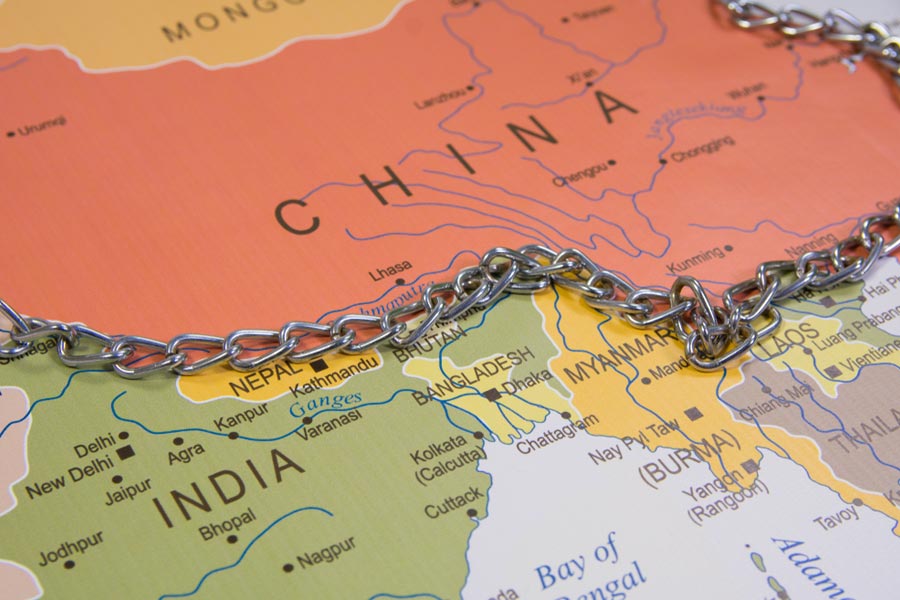
New Delhi, Jan. 18: While Delhi and Beijing agree not to transfer territories with settled populations, as part of their ongoing border negotiations, one way of breaking a potential logjam could be to delineate a “soft border” in areas China continues to claim.

In keeping with the political directives from Prime Minister Manmohan Singh and Chinese President Hu Jintao, special representatives M.K. Narayanan and his Chinese counterpart, Dai Bingguo, ended their ninth round of border talks in the capital today.

Highly-placed sources said the Prime Minister was keen that as with Pakistan, issues are resolved with Beijing as soon as possible.

The sources cited a special confluence of circumstances that could help make this possible sooner rather than later: key Left allies in the UPA government who maintain a special political relationship with the Communist Party of China; economic reforms-minded leaders like Manmohan and Jintao; and, not the least, foreign secretary Shiv Shanker Menon and ambassador to China Nirupama Rao, both of whom understand the nitty-gritty of the border, even in Mandarin.

New Delhi is believed to have proposed a “soft border” in areas such as Tawang in Arunachal Pradesh, which Bejing continues to insist must become part of China at the end of any negotiation.

Narayanan, who is also the national security adviser, had in a recent interview hinted that Tawang continued to be an obstacle. “Arunachal Pradesh has always been seen by Indians as an integral part (of India). That is our position. What we are negotiating is, are there parts of Arunachal Pradesh on which there could be differences and if that needs solutions,” he said.

“It is possible that there may be some amount of changes in territory. But what we have agreed upon is that where there are settled populations, we don’t want to have a Partition-kind of situation.’’

If the proposal of a “soft border” at Tawang is acceptable to Beijing, the arrangement would allow the Chinese, especially Tibetans, to cross over and pray at the Tibetan monastery in Tawang.

Tawang is an especially sensitive issue with China because the sixth Dalai Lama was born there. Beijing is keen to assert public control over all of Tibet, despite the presence of the Dalai Lama in India.

A “soft border” in Tawang, for example, would be very similar to the concept of the Line of Control dividing the two parts of Kashmir.

The “soft border” principle, if agreeable to Beijing, could well become the instrument that cracks the dispute over the 4,000-km border.

It also fits into the Manmohan thesis that India’s boundaries are not cast in stone but must be flexible enough to allow the trade of goods and ideas to flow both ways.

It is not accidental that the Nathu-la pass in Sikkim was opened with some pomp and circumstance last July, even if it was for border trade. Or that the bus between Srinagar and Muzaffarabad as well as the cross-border bus between Poonch and Rawlakot have had their moments under the Congress government.

Top
Email This Page