|
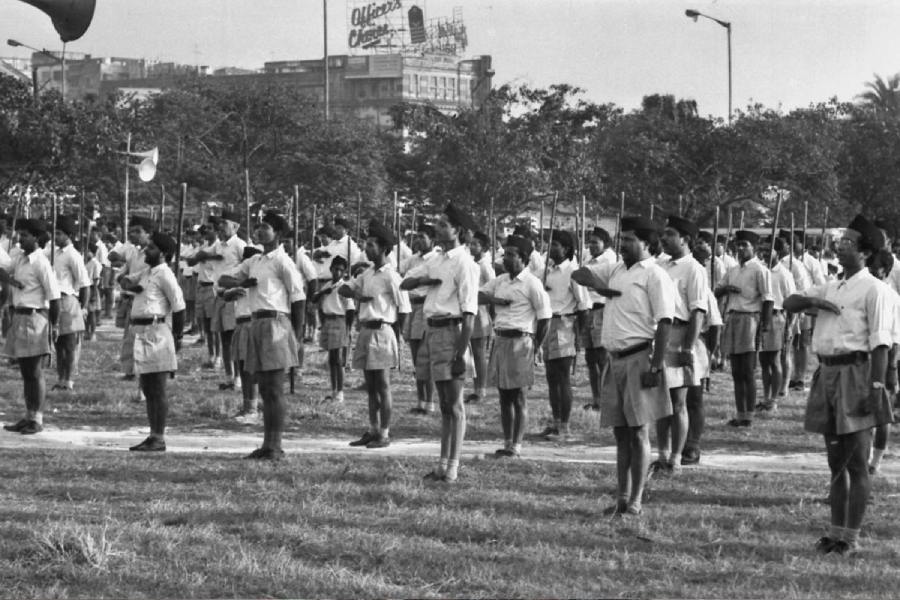
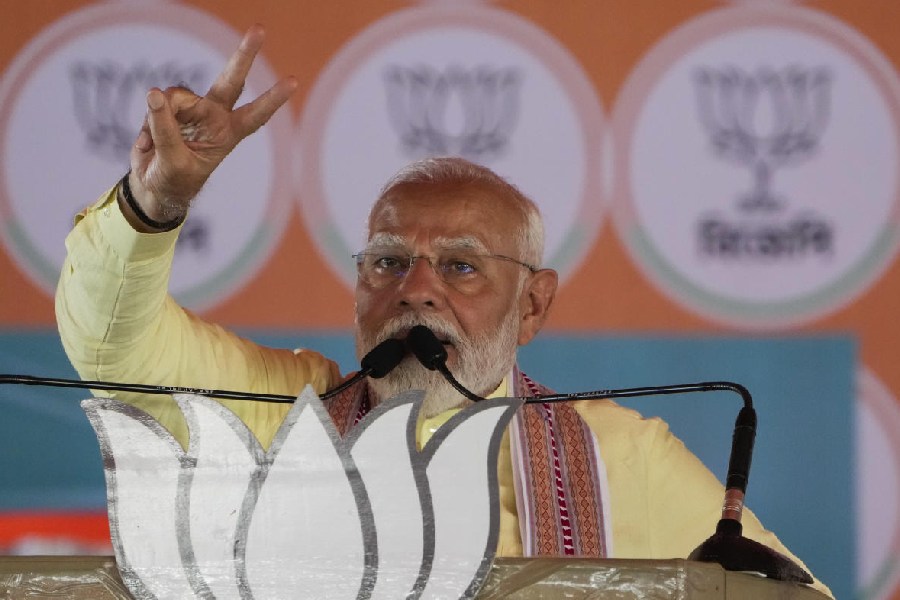
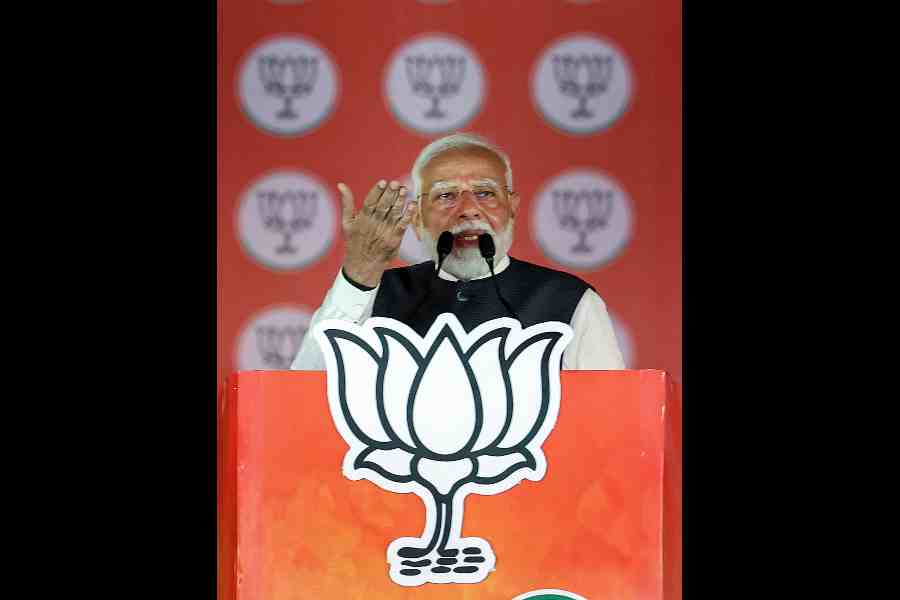
The Bharatiya Janata Party, having decided to go the whole hog on Hindutva, as defined by them, will now have to define and articulate its agenda to this country. It seems that the party has moved away from its NDA avatar of trying to draw the many strands that make up the composite culture of this land into its realm. Maybe the ideological polarization we are witnessing is what will keep the party intact because its leadership, when scratched on the surface, believes in the Hindu raj and not in being an amorphous entity that represents the diverse people of India. During its last innings in power at the Centre, the BJP leadership tried to put forward a modern and inclusive ‘face’, but its actions and silent support of certain events showed the dichotomy in its political stance. The Rashtriya Swayamsevak Sangh was often in public confrontation with its political arm, the BJP, which led to contortions and confusion. This diluted the credibility and professed independence of the BJP as a national party disconnected from the sangh.
Rajnath Singh and others have asked for two terms, a ten-year mandate from the voter, to be able to fulfil their promise of a Ram mandir in Ayodhya, amongst others things. Most Hindus believe in the all-pervasive divine presence and power. Their religion encourages regular prayer and meditation regardless of ‘where’ the offering is made. In many homes, some family members could be devotees of Shiva, while others could worship Krishna, Ram or Durga. Individuals within the fold have the freedom to choose their god or goddess. That is what makes the faith different and special. Therefore, in this new millennium, it is tough to comprehend the BJP’s desperation to reduce a way of life that adjusts itself easily to changing times and impose a set of rigid commandments. By doing so, it would be compelling an open, inclusive, all-embracing faith to become the exclusive domain of closed parochial minds.
Reinvent to restore
Here was an opportunity to build a national party that would make all castes and creeds feel comfortable and secure. Instead, the BJP seems to have alienated itself from all other communities, including some sections of Hindus. This could make it a fairly substantial coalition partner at best and a perpetual opposition party at worst! It has handed the larger, more diverse space, to the Congress, a party that ruled uninterrupted for decades because it represented ‘pluralistic’ India.
It was in 1975, when the Congress government at the Centre declared Emergency, that the rapid exposure of gross failures of governance and a conscious deviation from established democratic processes came to the fore as a stark and frightening truth and forged the beginning of coalition governments. Sharp ideological differences and the constant jockeying for political power, made a mockery of these patchwork groupings. The silent disapproval of the voter resulted in what is called ‘anti-incumbency’, in the lack of honest alternatives in the political space.
Is that pent-up frustration going to explode? Is there going to be a reversal of exclusive mandates by specific communities? Are the people going to vote differently for the Centre and the states? Is India tired of personal aggrandizement and exploitation of office? Does the new generation aspire to have a better environment to live and work? Do they want to leave a legacy for their children which is not adulterated with corruption and unending improprieties? Which party will rise to the national opportunity? If one looks around, all the regional parties are relevant in their states, with the Congress being the only party that represents the diversity, particularly now that the BJP too has abdicated that position. Will it take on the challenge, reinvent and restore itself?
|