|
|
|
On the boil
|
Bangladesh is commonly regarded in India as being nothing but troublesome. Our many grievances include a lack of cooperation to curb terrorism and illegal migration, alleged support to militants in India, ill-treatment of minorities, denial of transit facilities and purchase of natural gas, and failure to finalize the land and maritime boundaries. It is equally commonplace to regard the ‘problem’ of Bangladesh as intractable.
Bangladesh is a quintessential diplomatic challenge for India, though the basic issue also transcends inter-governmental activity. It can be portrayed as nothing less than a post-Partition battle for people’s minds. Events of 1947 or those of 1971 have conclusively resolved this conundrum in East Bengal. The protagonists are either advocates of secularism or votaries of Islamic conformism. Ranged behind them are the liberals — those who believe their birthright as Bengalis is more important than the faith they practise — and the separatists and obscurantists — who are clinging, despite all evidence to the contrary, to the notion of the solidarity of the Islamic ummah. For the last category, the break with the Hindu majority in India in 1947 continues to be much more significant than the liberation from Pakistan in 1971.
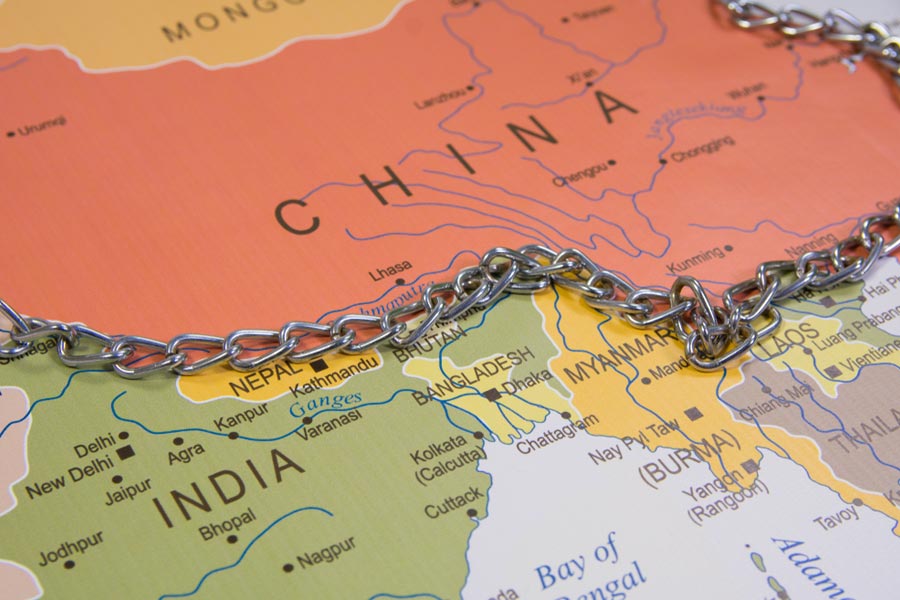
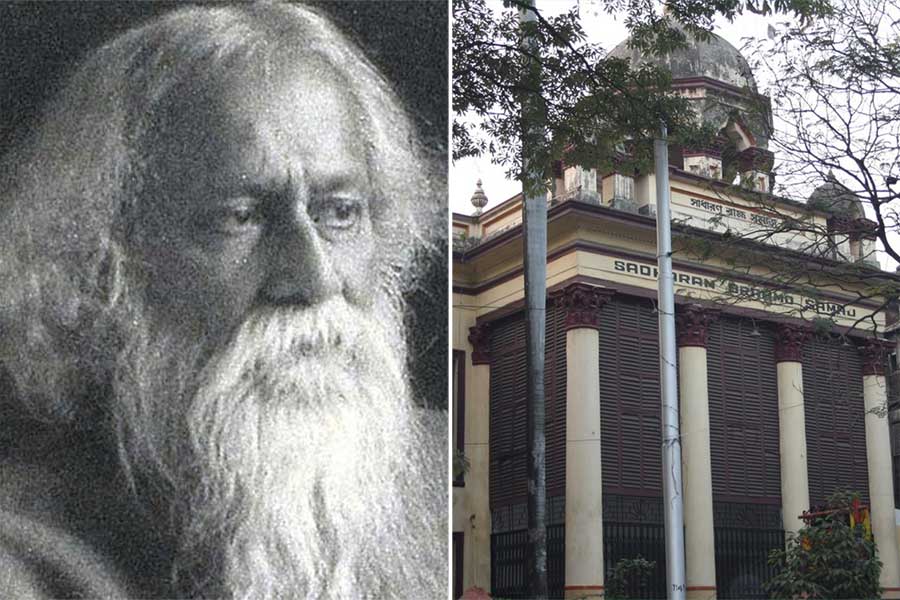
Those who emphasize their destiny as Bengalis will be naturally drawn to the spiritual, cultural and literary pull of Calcutta, and take inspiration from great secularist thinkers like Lalan Fakir, Rabindranath Tagore and Nazrul Islam. They would see the future of Bangladesh as being inextricably linked to beneficent happenings on this side of the border, whether cultural, social or economic; and this would call for the closest of ties with India. Those who draw inspiration from separation and chauvinism, on the other hand, mentally leap-frog India, pretend it does not exist. They try to counterpose relations with America, Pakistan, China, Saudi Arabia, or anyone else at hand, to create the illusion they can do without their powerful neighbour and stand strong despite being almost surrounded by north-east India. This tug of war is by no means over; sometimes one side gains in strength, sometimes the other.
Complicating this tension are various other impulses at work; those of a small country surrounded by a big one, of a comparatively weak one by a comparatively strong one, of a nation that has few heroes in the pages of its history in the political arena, and those few that stand out being widely perceived as falling short of expectations in character or performance. Given Bangladesh’s vulnerability, the presence of several foreign powers which seek to influence or even dominate it, evokes a ready response among the many persons seeking position, status or money.
In these circumstances, whatever India does or does not do regarding the specific bilateral issues would have only an indirect and short-term impact in this polarized society. It will take generations for the scars of Partition and liberation to heal and a true national consciousness and identity to grow, though India can and should exert its influence towards positive outcomes in that purely domestic and internal dialectic. Bangladesh is, with its large and mostly impoverished population, a time bomb in the north-east of India, which is tribal, under-populated and rife with discontent. Stability and economic progress in Bangladesh are essential if millions are to not eventually cross the borders into the sensitive north-east of India as illegal migrants. Thus it behoves India to be supportive of Bangladesh’s economic and political progress. New Delhi has placed much store on sympathy for the secular circles of 1971 vintage and the Hindus. But neither of these subjects is central to India’s long-term interests.
Resolution of Bangladesh’s own and several grievances, which cut across party lines there, would be to India’s advantage since none of the projected issues is by any means a dagger at India’s heart. Trust, mutual understanding and consistent dialogue are needed on the part of both sides to tackle the disagreement between the two countries. Regrettably, there is all too often a confrontational attitude and pure politicization, which stand in the way. What every Bangladeshi leader aspires to is to be seen as parlaying with India as an equal and bringing the negotiation to a successful conclusion. We have too often failed to turn such advantages to good effect by refusing to talk about our common problems.
The political will has notably been lacking in New Delhi, even when the bureaucracy has been willing to give a push in the right direction. Instead of thinking about solutions, the Indian politician and bureaucrat prefer to dwell on Bangladesh’s alleged failings. New Delhi has tended to allow negativism to set the agenda for its policy towards Bangladesh. A more rational approach would be to come to some understanding on Dhaka’s expectations of good-neighbourly relations, to bestow stability on whichever government is in power, and to work for strong cultural, linguistic and economic exchanges with Bangladesh, so that the inalienable historical bonds strengthen the hands of the Bengali nationalists while growing economic linkages that can lead to steady material progress and development.
Can a professedly pro-Indian political party ever win a free election in Bangladesh? Can any government in Dhaka ever show friendship and understanding towards India’s national interests? The answers to both these questions for the foreseeable future are of little real consequence. Politicians in Bangladesh, of whatever orientation, have long thought they had to create the bogey of India even if it did not exist, in order to provide an excuse for their own shortcomings and the absence of any policy that can visibly improve the lot of the masses. The military has had to posit an Indian threat to have a raison d’etre for its own rather privileged existence. But no matter how anti-Indian a government in Dhaka may appear to be, it has nonetheless had to rely on Indian goodwill for a stable existence, because whatever the degree of New Delhi’s reticence and indifference, India has a potential nuisance-value that can be destabilizing.
Assuming that the proxy battle between the contending values symbolized by India and Pakistan for Bangladeshi loyalties is not yet over and a closure on this is yet to come, whether India can take up the challenge for a genuinely friendly and mutually cooperative relationship with Bangladesh will depend on several factors. Many of these have little to do with the current, somewhat fraught, state of bilateral relations between the countries. Relations between India and Pakistan are of great importance because good relations between the two will strike at the root of fundamentalist Islamic ideology in Bangladesh. Stronger linkages between India and influential powers like China and the United States of America will have a sobering effect on Bangladesh since, by inference, this will strengthen India’s position in the subcontinent and serve to weaken Pakistan’s links with Dhaka. Sensitive handling by New Delhi of the bones of contention between the two nations (as seen from Dhaka’s perspective) would blunt the hostility of the genuine ultra-nationalists there and counter the incessant propaganda from certain sections of the Bangladesh media. The military would fall on harder times since the international aid community has little sympathy for bloated budgets and unnecessary arms acquisitions.
There can be no final definition of the internal Bangladeshi dialectic; it will resolve itself slowly as the subcontinent removes itself from the events of Partition and enters a pattern of higher economic growth energized by India’s resurgence. Much will depend on the future of Hindu fundamentalism as also on that of Muslim fundamentalism. Crucial to all this will be New Delhi’s political will to exercise strength and influence in the region with non-sectarian sympathy and humanitarian sensitivity.
|