TT Epaper LHS
The Telegraph
TT Mobile
 
 
IN TODAY'S PAPER
WEEKLY FEATURES
CITY NEWSLINES
FEEDS
  RSS
  My Yahoo!
SEARCH
 
Archives Web
 
ARCHIVES
Since 1st March, 1999
 
THE TELEGRAPH
 
CIMA Gallary
 
Email This Page
Right Degree
PHOTOGRAPHY
freeze frame: Photography is an art that allows us to capture memories and moments forever

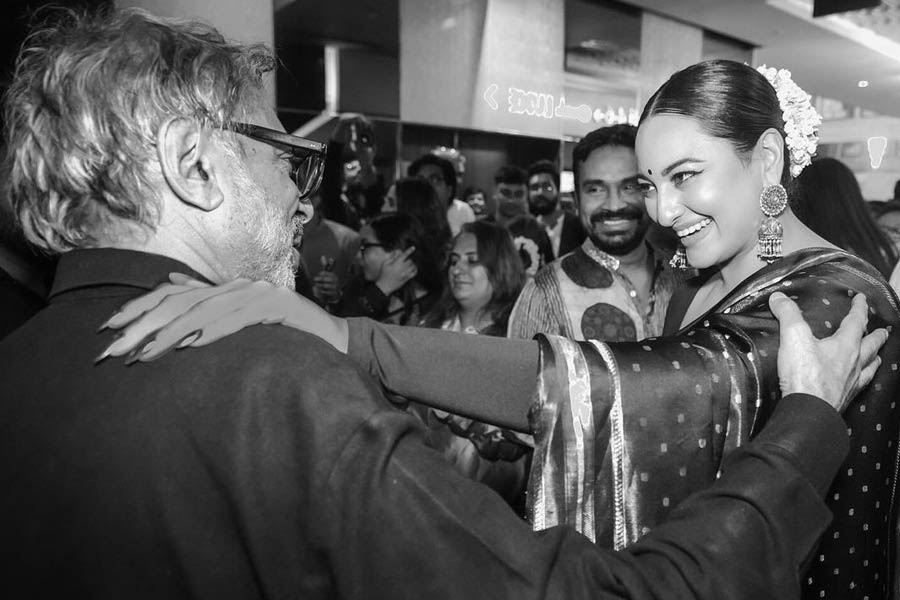
At the heart of all photography is an urge to express our deepest personal feelings — to reveal our inner, hidden selves, to unlock the artist. Since the beginning of time, humans have always wanted to duplicate the physical world, whether it was in the form of drawings, portraits, sculptures or even writing about it so as to bring it to life. But none of these media have been as accurate as photography. The emergence of photography over 150 years back has given rise to a new way of seeing and understanding the world. Photography is an art that allows us to freeze time, capture memories forever, enhance beauty and spread information.

With the enormous expansion of the communication network and media, photography has grown from being just a hobby to a full-fledged profession of great commercial value. Anything from newspapers, educational books and journals, magazines, research and even the Internet would be highly uninteresting without the bright, informative, eye-catching photographs. In fact, it is a unique and fulfilling career option for creative minds.

What do I have to do?

Depending on your interests, you can choose to specialise in any of these following areas:

• Portrait work: Where the photographs of individuals, families, groups, pets, children can be taken. This can be done in a particular studio with different backgrounds so that the lighting can be adjusted or on location such as the home, office, garden, etc. The photographs can range from passport size photographs to enlarged pictures.

• Industrial photography: The work resembles that of commercial photography.

• Commercial purposes: Photos of exteriors or interiors of companies, machinery (in-doors and out-doors), merchandise, etc, are taken for advertising and sale purposes, for company brochures, company newsletters or annual reports and so on.

• Advertising: This is probably the most interesting area where photographers can find assignments; the jobs are well-paid and the photographers need to be efficient and respect deadlines. They are usually given specific instructions about what needs to be focused upon. They can work on creating catalogues for companies or do ‘mail-order’ photography.

• Fashion photography: This sector has developed quite recently in India. With the expansion of the fashion industry, it has become the most competitive area of work today. It is basically the advertising of fashion garments and apparel. The photographers need to know how to work with all aspects —the model, the designer and the fabric — to give the best results. The work also involves making portfolios for models.

• Feature photography: Often, a single photograph can tell us more than a 500-word article. Photos are taken for newspapers, magazines, educational magazines, etc, and could include a variety of assignments like wildlife, sports, environment, cultural events and so on. Feature photographers need to know what is a ‘good story’, work well with the reporters and so on.

• Wildlife photographers: They capture the animal kingdom and plant life in its natural form. If you love nature and have the ability to capture perfect sunsets and waterfalls in your camera then this is ideal for you.

What should i study?

Although formal training is not required, education in certain fields like journalism, machinery, engineering, fashion, etc, helps.

What next?

With the explosion of advertising and media, photography has become a profession of great commercial value.

One of the most exciting aspects of photography is the variety of jobs available in the field, ranging from highly specialised and technical work to jobs that require creativity and visual literacy.

Opportunities abound in studios, advertising agencies, government organisations, research institutes, industries, fashion houses, news agencies, publicity departments, tourism development corporations, etc. Thus, for a talented photographer, the sky is the limit.

The government also employs photographers on a regular basis to do general photography documentation, for covering day-to-day events and functions, and for making photo features. With some experience and time, you can also set up your own studio.

where to study

• National Institute of Design, Paldi, Ahmedabad.
• Academy of Photography, Rabindra Bharti University, Calcutta.
• Jawaharlal Nehru Technological University, Hyderabad.
• Satyajit Ray Film and Television Institute, Calcutta.
• Film and Television Institute, Pune.

Top
Email This Page