|
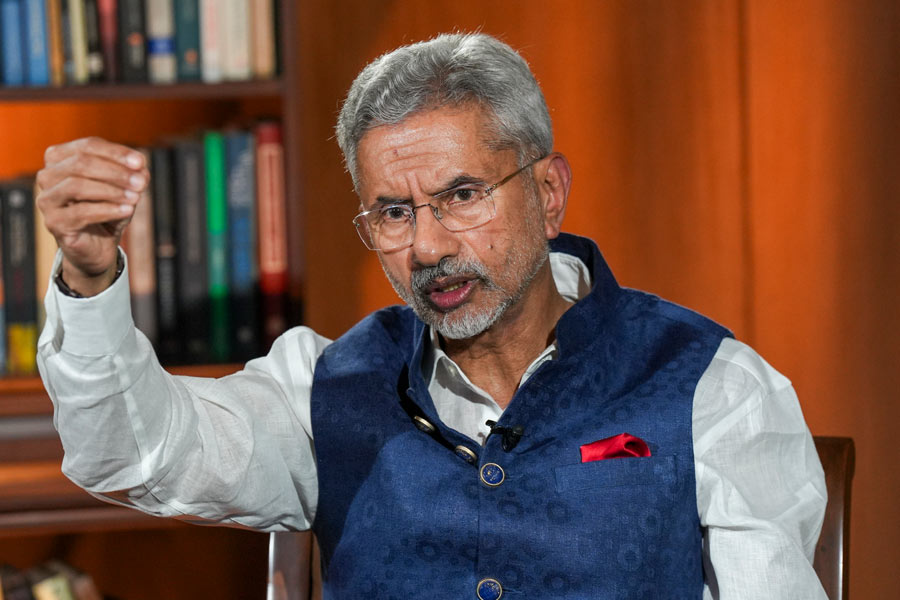
| Talking point: Sanjay Dutt |
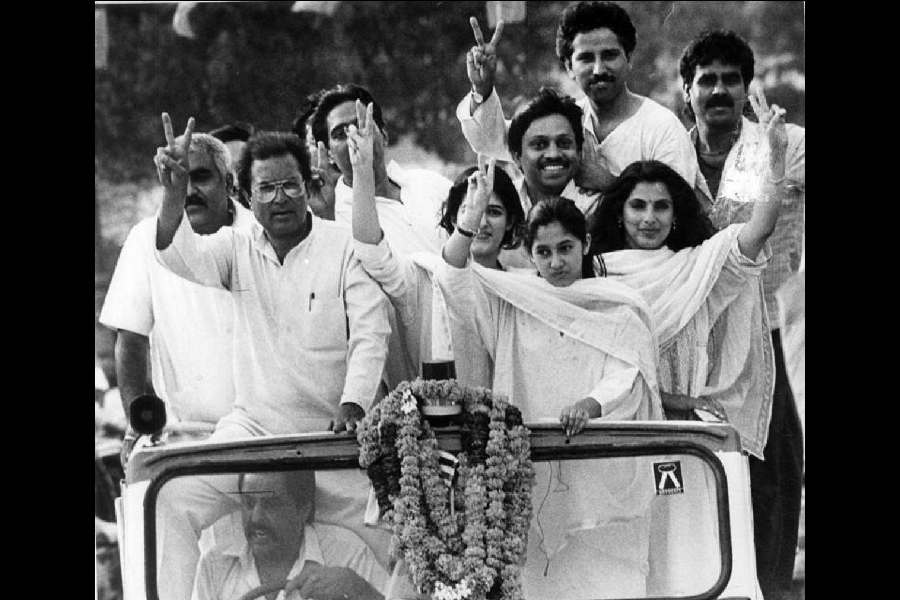
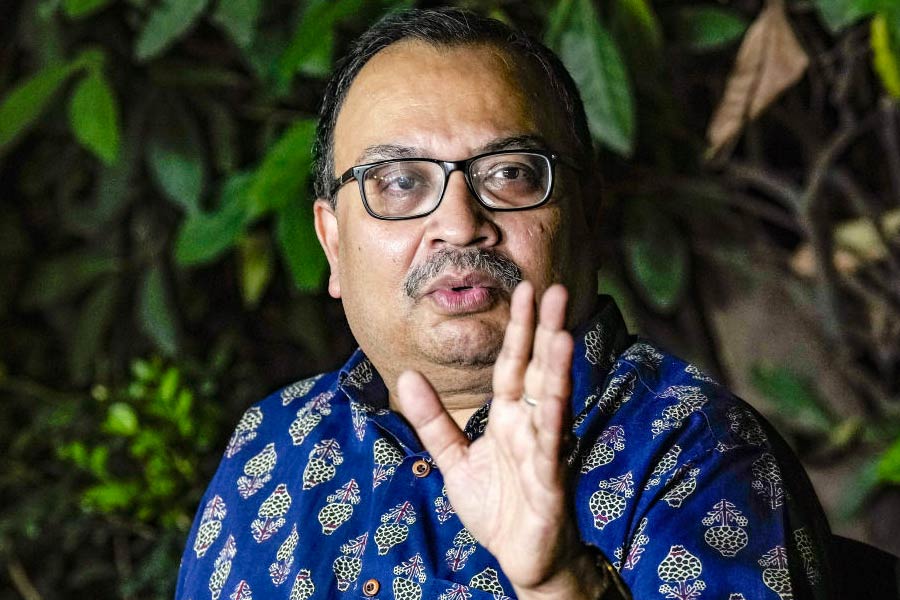
Those that are lost in transition One indication of the “booming Indian economy” is the eight per cent growth in GDP over the last three years, as Manmohan Singh and assorted Indian ministers keep repeating on trips abroad. However, a more reliable indicator of India’s progress is the number of laptops and mobile phones lost in the back of taxis. Bombay comes out pretty high in a global survey of 2000 taxi drivers from 11 major cities, including London, Sydney, Stockholm, San Francisco, Washington, Helsinki, Frankfurt, Berlin, Munich and Oslo. Over the last six months, 349 laptops were left behind in taxis in Bombay, according to a new piece of research. More were lost only in London (3,179) and Munich (355). The research has been done by a company called Pointsec, “experts in mobile security”, who have perhaps missed an important conclusion — it is not so much that an Indian city ranks so high but that people in India have laptops to lose. The loss of mobile phones tells an equally encouraging story. Bombay climbs to second place with 32,970, behind the leader, London, with 54,874, and way ahead of third place Sydney with 6,440. The point of the research — apart from its entertainment value — is to warn business folk that modern equipment can pack a lot of information — “the latest crop of mobile phones are now capable of storing 4Gb of memory”. “That’s equivalent to physically storing data on 400 boxes of paper in nine filing cabinets with the capacity to retain four million emails and 4000 songs.” Pointsec urges business and individual users to “back-up, encrypt and password protect their device in the event of it falling into the wrong hands and the data then being stolen, compromised or abused”. Peter Larsson, Pointsec’s chief executive officer, says: “This survey shows that no one is infallible and you stand a pretty good chance of losing a mobile device in a cab or indeed any public place. If your device falls into the wrong hands, take a moment to think about how it could affect your livelihood. Our advice is that if you have something valuable stored on your mobile device, make use of all the security that comes with it or encrypt it — that way if you do lose it, no one will be able to read your data!” Larsson adds: “In Bombay we took a look at Sanjay Dutt’s mobile and found so many interesting entries under Chota.” Actually, he didn’t say that last bit. I just made that up but you know what I mean.
|
| PROPERTY MATTERS: For a home in India |
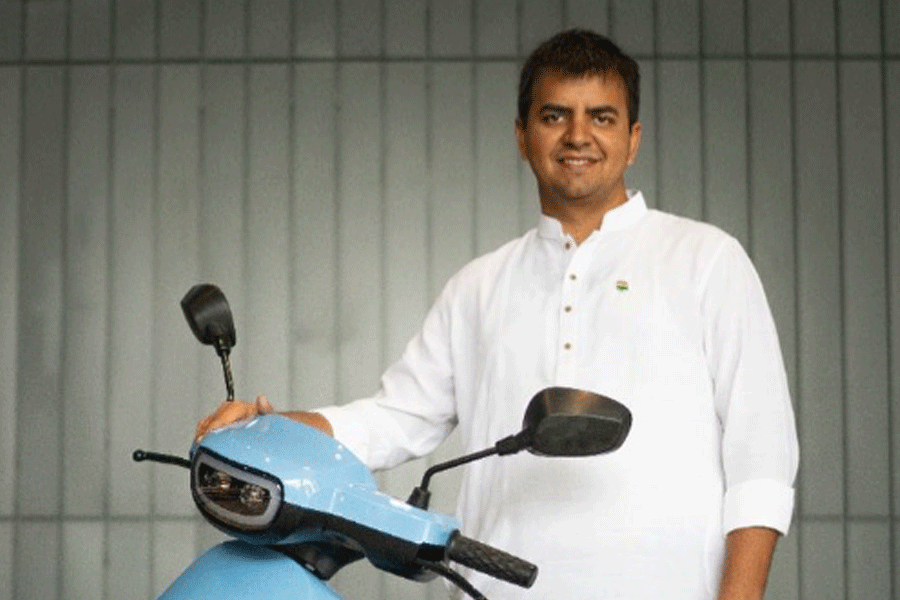
India dreaming An advertisement in the new London giveaway paper, London Lite, “Invest in India'”, provides another example of how things are looking up in India, though there is a hidden downside to it as well. People in the UK — and elsewhere in the diaspora — are being encouraged to buy a home in India. NRI money may force up property prices, not that Bombay properties are affordable for ordinary mortals. But one has to look at the bigger picture and conclude that closer engagement with NRIs is good for both sides. More thought also needs to be given to the construction of new Indian homes from the architectural and aesthetic points of view to bring them in line with world standards. The ad that caught my eye emphasises the attractions of “inspired living” in the Mohali Hills near Chandigarh in Punjab: “With the Indian economy booming, there’s never been a better time to invest in property.” Potential buyers are invited to a property exhibition in west London. What’s noteworthy is that a UK property agency, Hamptons, has got involved in the act, which should provide some reassurance that British buyers won’t get cheated at the Indian end. Over the past year or two, I have seen ads for properties in Bombay, Goa and Calcutta as well. The trend of buying homes in India is already established with many UK Gujaratis investing in the “vibrant” state run by their favourite son, Narendra Modi. Clear the air India can look forward to stormy weather unless the government is seen to do more to tackle climate change — which it should do, if only for the good of Indians who suffer from local pollution. Looking at Calcutta, for example, it’s obvious that the pharmaceutical industry will resist any attempt to cut vehicle emission and pollution for the simple reason that more sick people means more medicines and more profits. The same must be true for most other parts of India. Surely, the time has come to cut pollution not because Tony Blair and his ministers lecture India that it should but because this will be good for the poorest people in India. Anyway, the overseas media will continue to give India a hard time, and perhaps rightly so. In the media awards announced last week by the Foreign Press Association in London — this represents more than 740 members of the foreign media based in London from more than 70 countries — the “Environment Story of the Year” was won by Paul Moss for his two-part report on BBC radio, India & Climate Change. His first piece “covered the Indian economic boom that has led to a huge rise in pollution — a 60 per cent increase in CO2 emissions in just 10 years — and found that those Indians enjoying new found prosperity are not keen to hear proposals to curb any aspect of their lifestyle. His second covered the rise of Indian low-cost airlines and the burgeoning Indian middle-class with both the time and the money to travel.” The judges commended the report as “lively and incisive with a fresh perspective”.
|
| PARTY TIME: Srichand Hinduja |
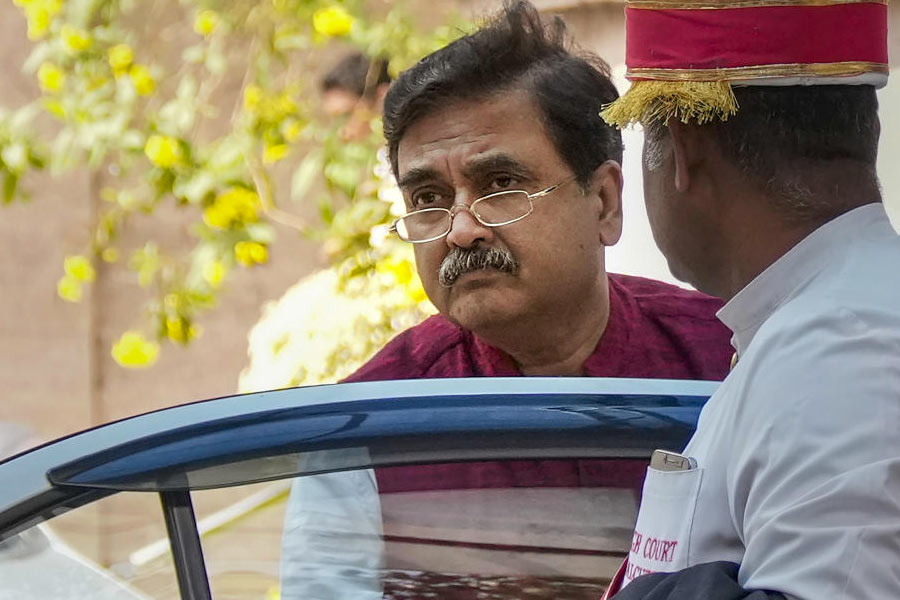
Birthday boy At the Four Season’s Hotel in London’s Park Lane last week, there was a party to mark Srichand Parmanand Hinduja’s 71st birthday given by his family, with music from Jagjit Singh and Anup Jalota. “SP” remains very fond of Shikarpur, Sind, now in Pakistan, where he was born on November 28, 1935. The Indian community in London has also become very fond of SP. Though labelled “controversial” by the British media, most people who know him invariably have kind things to say about SP, the human being. “You won’t win doing business with him but I respect and like him,” was a typical comment from a fellow tycoon (not Lakshmi Mittal who was at the party). Among premier Indian business families — think of the Ambanis or the Birlas — the Hinduja clan is one of the few that remains genuinely united. This is partly because SP has encouraged a culture in which family members are constantly on their mobile phones to each other. SP’s eccentricity is nothing if not engaging. Departing guests received a goody bag which included a copy of Kautilya’s Arthashastra: Its Contemporary Relevance, published with sponsorship from the Hinduja group. It’s billed as a study on how a treatise, “written 2, 400 years ago, can be applied to solving many of India’s current economic and other problems”. Tittle tattle Greg Chappell won’t want to delve too deeply into the case of England rugby coach Andy Robinson. After England had suffered eight defeats in the last nine games, Robinson was unceremoniously kicked into touch last week by his employers. |