|
Last Sunday, college- goers Sohini Sen and Tisha Banerjee decided to meet up at a multiplex in Salt Lake, Calcutta, to watch a film. Tisha had promised to reconfirm but as there were no calls or messages from her, Sohini assumed that the meeting was off. Twenty minutes before the show, an indignant Tisha called her agitatedly: Whats wrong with you? Dont you ever check your scrapbook?
It was only a month back that Sohini got initiated into Orkut. So she couldnt really be blamed for standing up her friend. Orkut, the invention of a Turkish born software engineer Orkut Buyukkokten, however, has been around for nearly three years now. And, today, scrapping is in, messaging out, just as chatting in well-defined virtual territories is in and talking, out.
Orkuts phenomenal popularity, especially in India, neednt be re-emphasised, considering that the mastermind behind it is the omnipresent Google. Invitation only being Orkuts membership criterion, Google had made it covetous to the extent that there was news of invites up for sale at eBay.
But Orkut is just one of the many sites Indias young and the not-so-young as well are furiously logging on to. While there are over 300 social networking sites the world over, Subho Ray, president of the Internet and Mobile Association of India, holds that in the last one year, seven to eight Indian social networking sites have also come up.
|
| Minglebox,
a Bangalore-based social networking site, it was launched
in September this year. |
Thats evident, for Indias most popular social networking site has severe competition. And with online networking gaining traction, Minglebox and Jhoom! are all about Yaari in the Indiagrid. That is not a pointer to a new lingua franca these are social networking sites with a predominantly Indian essence, all set to cash in on virtual friendship and rake in the moolah.
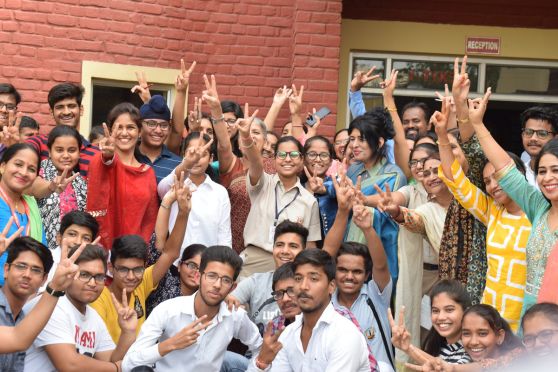
The USP of these so-called virtual social clubs is that they allow users to usually join for free, add and share photos, music, messages, and even create personal profile pages, blogs and web pages which are the online equivalent of someones room. With no geographical boundaries, users build their own network of friends people they already know or may never meet who willingly share their lives on the Internet.
Two kinds of people use these sites those who are looking to get in touch with their old friends and others in search of virtual friends, says entrepreneur Ashish Kumar whose company Tekriti Software focuses on building web-based social software and is presently involved with the implementation of Jhoom!.
|
| Jhoom! has most of the
features that popular websites like MySpace have (minus
the excessive customisations that MySpace offers). It
has blogs, forums, photo albums, blogrolls, polls, avatars,
apart from back-of-the-house administration tools. With
up-to-date information on social and professional events
in your city, college and community, Jhoom! helps to
keep you clued in. |
The good news is, like the dotcom
bubble, this bonding bubble is unlikely to explode with
so many bubble machines working overtime. As Subho Ray points
out, This time round, the Internet business in India
is driven by an increasing number of users. As compared
to 2000 when we had two million users, in 2006, we have
23 million users.
With over 100 million user profiles and dominating over 80 per cent of the social networking market, MySpace is now the most visited website in the US, ahead of Friendster, the hottest online hangout spot in 2003, Google, auction powerhouse eBay, Yahoo and Facebook, a social networking site started by Harvard sophomore Mark Zuckerberg.
The popularity of the networks indicates that for many, the sites are not just a platform for meeting up with old friends, but also for striking new relationships. The concept of virtual friends exists because of the need of a better dating forum in India, stresses Kumar. Most people, while looking for virtual friends, are actually looking for potential dates or coffee-partners and not just friends, though thats also there.
Many love the anonymity too. Says Rashmi Singh, a 23-year-old graphic artist, The advantage online is that you can get more honest opinions because people arent worried about hurting your feelings.
Tirthankar Dutta, a first-year student of economics, has no qualms admitting that the websites allow him to get in touch with perfect strangers. I am basically an introvert and am withdrawn in the real world. But once I go online, I come out of my shell. I am known to be a real Casanova and I enjoy that feeling, he says.
Dutta may not know it, but he and the million other website addicts like him are emerging as an enormous market just waiting to be exploited. India is a young nation with more than half its population below 28 years of age, says Rajnish R., head, digital marketing, revenue and strategic business, at Microsoft Corporation India Pvt Ltd. And today with migration being the order of the day, these sites help you to remain connected. So the more players there are, the better it is, as users will be spoilt for choice.
Venture capital firms such as Matrix Partners and Silicon Valley-based Canaan Partners both of which opened offices in India early this year are keen to tap the Indian virtual networking sector. But it is imperative to pinpoint the localisation component and that can only emerge with a thorough understanding of how Indian consumers want to interact, says Alok Mittal, executive director, Canaan Partners.
|
| Yaari,
an invitation-based social networking site, caters to
Indian youth. The site, launched in September this year,
has introduced some unique applications like Yaari Mobile,
which allows social networking from anywhere using simple
SMS technology. |
Online advertisers in the US have
already taken note of this growing popularity, having spent
about US $280 million on MySpace, Facebook,
and their networking competitors. Some experts predict that
by 2010, that figure could balloon to nearly US $1.9 billion.
And while that may have triggered the interest in Indian e-counterparts, potential investors are still treading with caution. In the social networking sector, the ingredients are known but no one knows the recipe for the perfect site, says Avnish Bajaj, founding managing director of Matrix Partners, India, and former CEO of Baazee.com. If we find the right team focused at addressing this opportunity in the right fashion, we would consider investing in the sector.
Network promoters are looking at what some describe as an Indian mindset before they jump into what can be a booming sector. With Jhoom!, Minglebox and Yaari catering to the Indian mindset, Orkut is most certain to lose out on its market share as the other three will capitalise on their Indian presence and their more Indianised marketing, says Kumar.
The Indianisation has already paid off in some instances. Three-year-old Fropper, short for friend hopper, which claims to be the first Indian social networking site catering to Indians the world over, received US$8 million as funds in March this year from Sequoia Capital India. The site boasts of over a million members and has 25 million page views a month. We always keep in mind the needs of the Indian consumers. Indians often surf from cyber cafes, some dont have a broadband connection and use dial-up, most dont use a digital camera. So we tailor our site so that these technical factors dont cause a hindrance to interaction, says Navin Mittal, who heads Fropper.
So in the near future, will friendships be confined to terminals and keyboards? Kumar of Tekriti Software is not worried. I dont think it will cause a dumbing down of friendship. It will only let people manage their connections better and make the regular-friend list longer.
May be. But who knows, at this e-rate, perhaps in the next two decades, an entire generation could opt out of the real world and just indulge in a virtual existence.
|