TT Epaper LHS
The Telegraph
TT Mobile
 
 
IN TODAY'S PAPER
WEEKLY FEATURES
CITY NEWSLINES
FEEDS
  RSS
  My Yahoo!
SEARCH
 
Archives Web
 
ARCHIVES
Since 1st March, 1999
 
THE TELEGRAPH
 
CIMA Gallary
 
Email This Page
HOW TO CONDUCT A GEO-POLITICAL ORCHESTRA

Shinzo Abe’s accession to premiership in Japan accurately expresses and symbolizes the new Japan that has been in the making over the last few years under the tutelage of his predecessor, Junichiro Koizumi. One is referring here not so much to changes in Japan’s economy or domestic polity and society. Though there has been something of a turn to neo-liberalism since the beginning of the Nineties, this shift should not be exaggerated. Japan’s economy and polity is still very much dominated by the ‘great bureaucracies’ that were firmly established after World War II. It is in its foreign policy that fairly dramatic changes are taking place. There is every likelihood that the internal political process that had already begun will now eventually result in a revision of its constitution in regard to Article 9. This article, though it has not prevented Japan from developing a powerful military under the name of ‘self-defence forces’, is important because it effectively rules out Japan’s involvement in war and therefore expresses its formal commitment against militarism.

For the first time since 1945, Japan provided a military-logistical support structure, albeit of an auxiliary nature, to the United States of America conducting a war far away from it in Afghanistan and Iraq. This is a Japan that is now going to flex its military-political muscles in a way quite different from the post-war past in the name of Japanese “maturity” about accepting its “responsibilities” as a major power. It is also being justified in the name of a Japan becoming more “independent” by shedding the pacifism inherent in the US-imposed constitution. This is ironic because the US very much wants today’s Japan to go in this direction. It wants and needs a more internationally ambitious and somewhat more militaristic Japan that nevertheless remains within its overall control. Interestingly, it is also encouraging India to be more ambitious internationally and regionally for precisely the same reason — to better play the role the US has assigned for it.

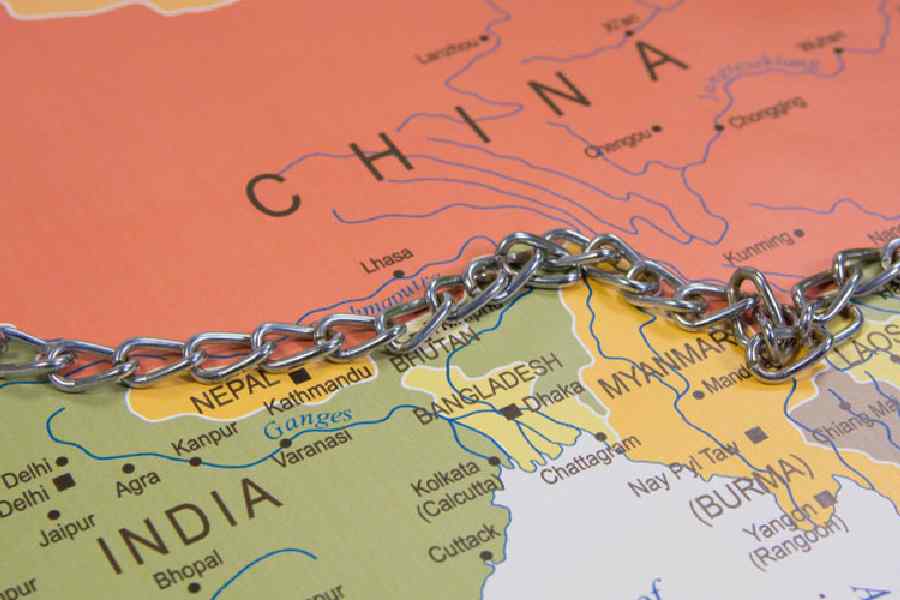
Only a more ambitious India and Japan can better fit into the overall US imperial project of containing China. It is in the logic of this approach that Japan and India must move towards closer political and military cooperation of a kind qualitatively different from their past. Which is exactly what is happening. At the same time, there is no question of the US abandoning its position as the ‘key balancer’ in two strategic triangles related to this overarching imperial project — US-China-Japan and US-China-India.

In east Asia, the last thing the US wants is that Japan and China should forge strategic political ties with each other. The trajectory of the Chinese and Japanese economies becoming ever more intertwined must not be paralleled by a similar trajectory at the geopolitical level. Promoting a more belligerent and nationalistic Japan, given the historically rooted tensions between these two countries, guarantees prevention of such an outcome. And Koizumi’s behaviour, endorsed by his successor Abe, over the Yasukuni shrine issue has played right into US hands. What is more, Washington does not see this greater Japanese aggressiveness as necessarily alienating China from the US. On the contrary, this becomes in its view all the more reason for Beijing to more easily accept the US-Japan Security Pact as a way for the US to control Japan and prevent it from becoming too strategically and militarily aggressive and ambitious. The US then not only retains Japan as a crucial ally in a ‘contain China’ policy but also remains (with partial Chinese acquiescence) the ‘key balancer’ in the region.

The US is also determined not to allow the two Koreas to be united since this would significantly weaken the rationale for the US to maintain as strong a military-political presence as it currently has in the region. It also believes that China does not want a strong, united and more independent Korea to emerge. This means that the US should not press North Korea beyond the point when China gets too worried. But that short of this, there are good reasons why the US should keep the political pot boiling by continuing to make a song-and-dance about North Korea’s nuclear posture when it is obvious that the easiest and best way to eliminate this problem is to do what North Korea proposes — giving up its nuclear arsenal in return for a non-aggression pact between the US and itself, external material help on the nuclear energy front, and diplomatic-political normalization of relations between itself and the US with, of course, Japan following suit. The one time when Japan showed some degree of independence in foreign policy from the US was in the early Nineties when against US wishes it was supporting South Korea’s “Sunshine Policy” of promoting transformed relations between the two Koreas as a prelude to eventual unification. That period is now over, to the relief of the US.

India is to be brought into the ‘contain China’ preparations primarily through encouragement of its naval alignment with the US as a junior partner in controlling the Indian Ocean up to the Malacca Straits and linking with other stalwarts like the Philippines, Indonesia, South Korea and Japan. Again, the idea is to prevent any future strategic collaboration between India and China and at the same time play the role of balancer between the two. The US is partly funding the construction of a Far Eastern Naval Command to be based in the Andaman and Nicobar Islands which, when completed in 2012, will be the most technologically equipped and advanced base of its type anywhere and eminently suited to the US’s longer term geo-strategic objectives.

Not only have joint military operations and exercises between India and the US reached unprecedented levels and depths, the same thing has happened between India and Japan. Both militaries now provide auxiliary support to US operations in Afghanistan and Iraq. But most significantly, in May 2004, Japan publicly offered India a ‘global partnership’ for strategic purposes and, in April 2005, the Indian and Japanese prime ministers reaffirmed their partnership, and announced that they would move towards institutionalizing regular cooperation between their navies and coast guards.

Top
Email This Page