|
Past burdens
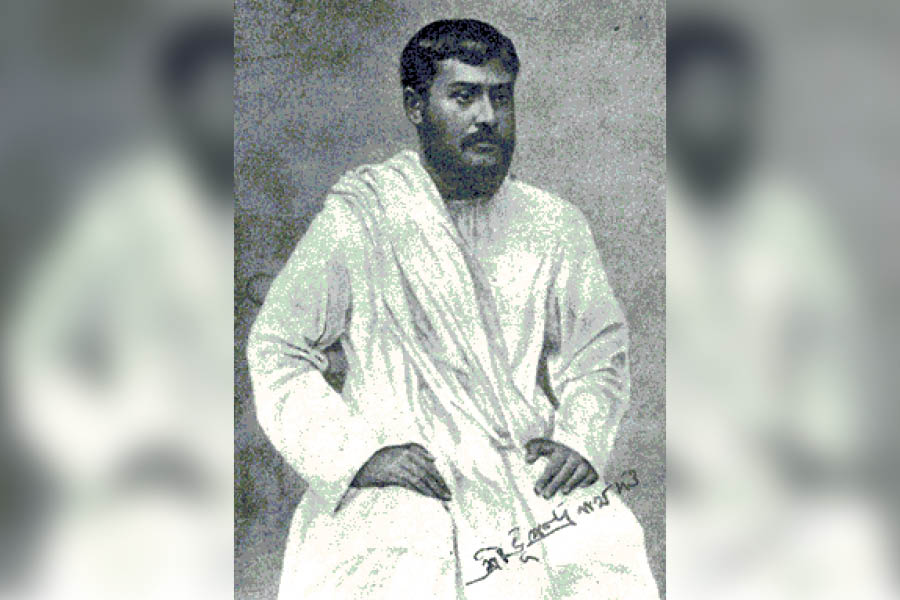
Sir — Ashok Mitra’s poignant piece of writing, “Service before self”(Sept 18), reminds me of an interesting meeting with Subodh Roy in Calcutta in January, 2005. Now that he is no longer alive, I venture to state in public what transpired in this meeting, since it concerns all those who are engaged in research on the history of Indian communism, to which Roy, as Ashok Mitra briefly mentions, made an important contribution. Subodh Roy will be remembered by historians for his excellent documentation of papers from the National Archives of India between 1919 and 1945 in three volumes under the title, “Communism in India”. The private meeting, which was arranged by a friend in the Communist Party of India (Marxist), had a strange background. From May to July 1995, I was in Moscow, working in the Comintern archives, which had been opened to foreign scholars after the fall of the Soviet Union. My area of research was CPI, India and Comintern: 1919-1943. According to the Russian system, each file in the archives carries a top sheet on which the user has to put his signature and date. Throughout my work in these two months, I noticed that hundreds of files relating to India and the CPI, which I was using, already carried the signature of Subodh Roy, the year being 1989. On all the dates, Roy’s signature was followed by the illegible signature of a Russian, giving me the impression that they worked together in 1989, when the Communist Party of the Soviet Union was in power in the Gorbachev period. Following my inquiries, it was revealed that in the late Eighties, the CPSU had sent an offer to all the communist parties of the world, once affiliated to Comintern, to photocopy or microfilm the documents of the respective parties which were stored in the Comintern archives. A number of communist parties had already responded. Subodh Roy, I was told, was sent by the CPI(M) in 1989, in response to this offer and I was further told that as a guest of the CPSU, and because of the language problem, the central committee had deputed a party official to help him in the archives. This explains the presence of the ‘illegible’ signature in Russian on all the dates. I was further told that Roy had collected a huge amount of previously unpublished documents and a trunk load of these had been submitted by him to the CPI(M) leadership on his return from Moscow, following the completion of his assignment. Then, between 1996 and 1998, the CPI(M) brought out a huge multi-volume compilation of party documents under the heading “Documents on the Communist Movement in India”, Volumes 1-4 (published in 1997) covering the Comintern period. I had hoped that the unpublished documents collected by Roy after such hard work and meticulous research would be available in these volumes. But, surprisingly, not a single document in the books originated from the Comintern archives. This was baffling as well as intriguing. I then decided that I must meet Roy in person and try to find out what happened to those papers he had brought to India from Moscow. The chance came in January 2005, and the experience was painful, if not tragic. We spoke for about fifteen minutes. Very specifically, I asked him the following questions. One, whether my information regarding his Moscow visit in 1989 was correct. The answer was yes. Two, whether he had really collected numerous unpublished documents from the Moscow archives and submitted it to the party leadership. He again answered in the affirmative. Then I asked him about the nature of the documents, since I myself was working on a book and I wanted to check what new material he had collected. This time he said that as a disciplined party member, it was not possible for him to part with any information concerning the documents. I then asked him why the documents remained unpublished by the CPI(M) leadership even in 2005 . The answer was that he had submitted the documents in 1989 but he had no knowledge of what became of them. He spoke firmly but very politely. He praised the hospitality accorded to him by the central committee and appreciated the fact that the opening of the Comintern archives was a great opportunity for historians in our country. At the same time, he spoke in a tone that betrayed a feeling of sadness, embarrassment and frustration. Is it not time that the documents see the light of day? This would be the most fitting tribute to Subodh Roy, who, as Ashok Mitra so rightly points out, put service above his own self, a quality that is not easily found these days.
Yours faithfully,
Sobhanlal Datta Gupta, Calcutta
Lift the veil
Sir — In “An enabling garment” (Oct 12), Mukul Kesavan has found Jack Straw’s comments about the burqa untenable. He also equates this piece of clothing with the cassocks worn by Jesuit priests, the ghoongats of Hindu women and the skimpy dresses worn by western women.
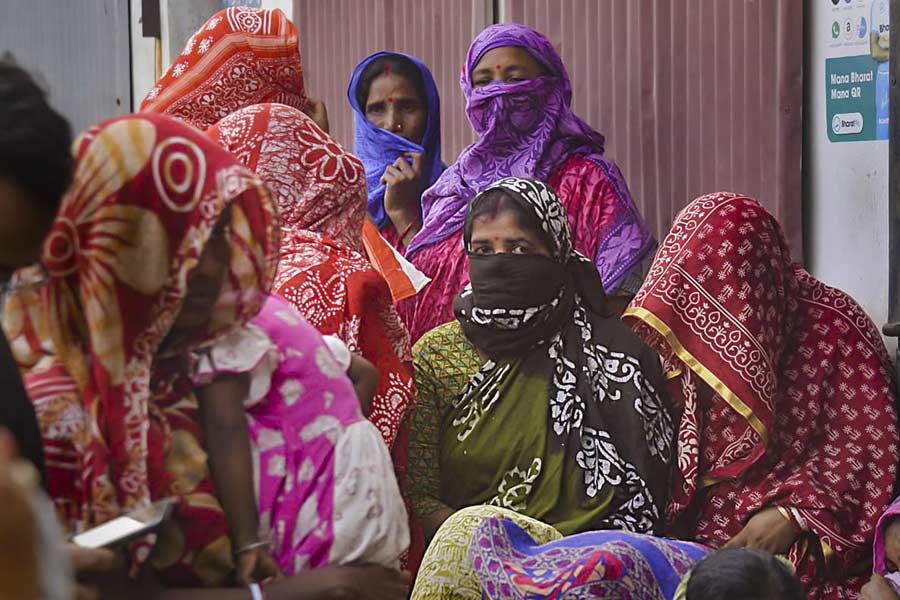
Unfortunately, some of Kesavan’s arguments are a bit far-fetched. Firstly, the burqa, unlike the other garments, is not worn by choice. In most Islamic countries, the burqa is forced on women in the name of religion. Secondly, a large section of the secular democratic world sees the burqa as a symbol of oppression, parochialism and something that impedes national integration. There is nothing wrong if one chooses to dress differently. But if every member of a faith is asked to wear clothes on explicitly religious grounds, it would certainly disturb the secular fabric of a nation. In a world which is striving towards uniformity, Kesavan’s contention only serves to thwart that effort.
Yours faithfully,
S.K. Moitra, Kharagpur
|