TT Epaper
The Telegraph
TT Photogallery
 
 
IN TODAY'S PAPER
WEEKLY FEATURES
CITY NEWSLINES
FEEDS
  RSS
  My Yahoo!
SEARCH
 
Archives Web
 
ARCHIVES
Since 1st March, 1999
 
THE TELEGRAPH
 
CIMA Gallary
 
Email This Page
India Inc’s big appetite for food retailing

New Delhi, Oct. 3: What’s common between Sunil Bharti Mittal and Mukesh Ambani? Both are in talks with farmers to set up their food retail ventures.

With India Inc realising that there is big money to be made in growing and selling fruits and vegetables, agri retail has become the latest mantra among companies.

Reliance, Pantaloon, Godrej, FieldFresh Foods, Ballarpur Industries, DSCL, the Tata group and Mahindra & Mahindra have drawn up big plans to enter the agri foods sector.

Even multinational companies like Wal-Mart, Tesco and PepsiCo want a share of this food retail market, estimated at Rs 9.9 lakh crore. These foreign firms are looking at entering the market through the cash-and-carry or franchisee model as direct entry is barred by foreign direct investment (FDI) laws.

Big money

Analysts say if organised food retailers can grab even 1 per cent of the market, it would represent a Rs 10,000-crore annual market.

According to estimates, the organised format market would grow 10-fold in five years or to Rs 100,000 crore by 2011.

For any company, this represents a huge opportunity to tap what may become the world’s fifth largest consumer market by the end of the decade, say analysts.

They add that for companies planning a foray into food retail, getting directly involved with agri business helps keep costs under check by eliminating the role of intermediaries.

Firm foray

Bharti Enterprises, which is in talks with Tesco, Wal-Mart and Carrefour for its food retailing business, is looking at deriving synergies from its subsidiary FieldFresh Foods Private Ltd, a 50:50 joint venture with the Rothschild Group-controlled ELRo Holdings India Ltd.

FieldFresh, which started with an investment of Rs 250 crore, could become the supply line for Bharti’s proposed retailing business. Currently, FieldFresh leases 4,200 acres on 78 farms in Punjab, producing beans, snow peas, carrots, okra, baby corn and other vegetables for export to Europe and West Asia.

Reliance Industries has even bigger plans. It plans to foray into the agri business with an initial investment of over Rs 4,000 crore, mostly in Punjab and Haryana.

The company is believed to have tied up more than 900 acres of land in Punjab already.

Links are being established with farms on several thousand acres in Bengal, Maharashtra and elsewhere, with rural centres providing goods for farmers and handling their produce.

Even Pantaloon Retail India, which runs the Big Bazaar supermarket chain, and RPG Enterprises’ Spencer are in the process of partnering with farmers to source food grains, fresh vegetables, fruits and processed foods directly for the food section of their retail chains.

Abhiram Seth, executive director, exports and external affairs, PepsiCo India, said: “What started as an obligation to the government became corporate social responsibility and is now big business.” More so in the fruits and vegetables category because of its potential to churn out big bucks.

Growth path

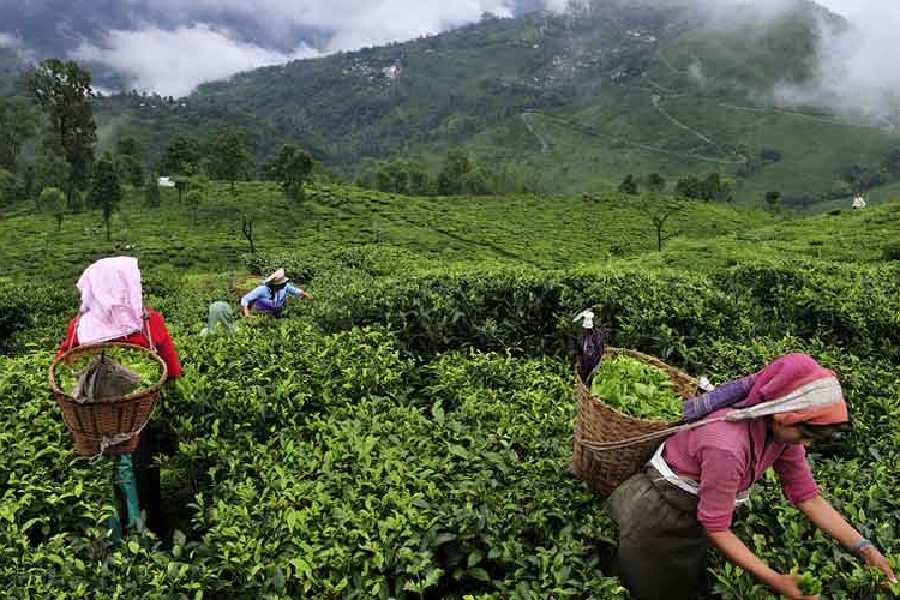
With 77 per cent of India’s population relying on agriculture for a living, better efficiency and new markets have the potential to benefit a large number of people.

Agriculture secretary Radha Singh supports the big companies’ entry in vegetables and fruits “because of the obvious growth potential and the impact they can have on farmers’ performances”.

Seth said while wheat and paddy crops yield Rs 20,000 per acre a year, the comparative yield from vegetables is Rs 40,000 and from fruits Rs 60,000 per acre per annum.

“Oranges comprise 60 per cent of Tropicana juices in India, and in an 18-month cycle, a sapling of good quality citrus fruit can be developed and sold to farmers,” said Seth.

PepsiCo, therefore, is ready with five greenhouses and will invest Rs 5 crore in the venture.

“We will have the capacity to grow 4.3 million plants, the highest in the world,” Seth added. With 22,000 plants in 2005, the company will have 250,000 plants ready by 2006.

For others like the Thapar group’s Global Green Company, helping farmers in Andhra Pradesh and Karnataka grow gherkins has become a big money spinner.

Over 95 per cent of Global Green’s products are exported to 23 countries through 15 leading retail chains. The company produces 30,000 tonnes of gherkins and has a contract farming arrangement with 12,000 farmers.

“These gherkins give farmers the option of getting into short crops with a cycle of 75-90 days with a 100 per cent buyback arrangement,” said Vineet Chhabra, managing director of Global Green.

The Thapar group, which has been in the agri business for 12 years, has total sales of Rs 100 crore primarily from gherkins.

Global Green is now expanding its basket with salsa, relish silver onion, jalapenos and different kinds of pepper. Modern agronomic practices like raised beds, deep root sowing and laser levelling are are being used to improve land productivity.

Wal-Mart, the world’s largest retailer, is also exploring India as a source of “premium exports”, including items like long-grain basmati rice, spices and fresh fruits like mangoes, said a company spokesperson.

Outsourcing hub

“This opportunity in agriculture is an opportunity which is larger than telecom, which is larger than IT,” said Rakesh Mittal, vice-chairman, Bharti Enterprises.

He also said big players now regard the Indian farm sector as the next outsourcing story after information technology. “If IT is serious business today, agri business will be three times as serious five years from today,” he added.

Top
Email This Page