Canalys
The Telegraph
 
 
IN TODAY'S PAPER
WEEKLY FEATURES
CITY NEWSLINES
FEEDS
  RSS
  My Yahoo!
SEARCH
 
Archives Web
 
ARCHIVES
Since 1st March, 1999
 
THE TELEGRAPH
 
 
Email This Page
SING HYMNS TO THE GODDESS OF PROSPERITY

“Theme puja” is currently the ‘in thing’. Organizers of community pujas are no longer satisfied with just innovations in the making of the idols. These, and the decorations of the pandal, must also be according to a chosen theme. Ideas are not hard to come by. Any national or international event will do and even the hanging of a rapist was the theme at a pandal in recent years. Macabre, some people said. But then, many of them were also perhaps among the huge crowds that had turned up to see how the theme had been executed. This year, there is 9/11 or the Mumbai blasts, among other ideas, to choose from.

Purists wonder why a ‘theme’ is needed, particularly when Durga Puja itself is the celebration of the universal theme of good triumphing over evil. But then, purists are often out of touch with ground realities. The community pujas, particularly the larger and more famous ones, need more people at their pandals to satisfy the sponsors, the companies who have provided advertisement support. So, along with idols made of all kinds of things ranging from jute sticks, cowrie shells, fruits and sweets, they feel it necessary to pick on a theme to add a contemporary touch. As electricians do commendable jobs — showing the collapse of a bridge, a train accident or a man with the hangman’s noose round his neck — huge crowds are guaranteed. Whether they also notice the advertisements is another matter. But perhaps they do. Otherwise, why should big amounts be spent on this account?

The issue is essentially one of marketing. No point raising eyebrows at the mention of the term ‘marketing’ in connection with the worship of the goddess. It must be accepted that the four-day festival has become big business. As Christmas is the time for manufacturers — of clothes, toys and sundry other things that can be given as gifts — to make good business, so is Durga Puja in Bengal. Why crib if puja organizers keep looking for ways in which to market their show better than the others? More crowds at the pandals means more business for those who have put up snack stalls and other such small establishments around the pandal. That should also be taken into account. More the people who have a share in the business the festival generates, the better. Even political parties, including the left, who open stalls selling their own literature at the pandals, hope for a big attendance. If a novel theme can ensure that, nothing like it. Perhaps a non-religious theme, as these always are, is also seen as adding a secular touch to the occasion.

What about the religious note? purists may still ask. Well, the day the country pujas came into being, the religious content went out of the window, at least so far as the spirit is concerned. Priests do go through the motions of worship, but the general mood is more of fun than piety. Durga, with her family and asura, is there to provide the essential backdrop as her children on earth live it up. Nothing wrong with that. Even the 19th-century Bengal babus used the Durga worship at their homes to entertain sahibs with claret, champagne and even nautch girls. If some of them did that keeping their temporal interests in mind, then why not the community pujas?

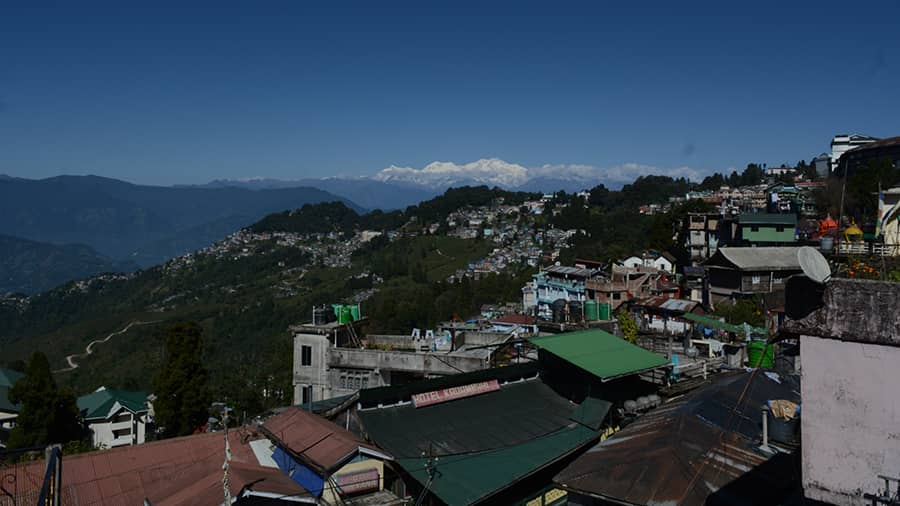
Actually, what this business needs is government support. Not by way of donations, of course, but by helping its marketing both within the country and abroad. Only recently, the chief minister was heard lamenting that the Darjeeling hills have become far too dirty to attract tourists. He was right, there are more people visiting Sikkim these days than before. The historical sites at Murshidabad and Malda also do not match up to those in Rajasthan or Agra. Dakshineswar and Kalighat, by their very nature, can have only a limited number of takers.

Yet a Durga Puja package can be really attractive. Let the department of tourism get together the travel agents and hoteliers and sell the festival really hard the world over. At this moment it should not be a difficult job, given the growing investor interest in the state. And it need not be just a visit to Calcutta. Promise the tourists two days and nights of light and fun in the city, then take them to the seaside at Digha or Shankarpur, or to the forests of the Dooars. The attractions are there. It will just be a matter of selling properly which, of course, cannot be done by the departmental babus but by experts in this particular field. The former would persist with slogans like, “Visit Bengal, the home of Rabindranath”, which will not work. More effective would be slogans highlighting the puja atmosphere together with the serene pleasures that the sea or the forest can offer. If the puja is in October, when the river should be much calmer, a trip to the Sunderbans can also be offered; the Bengal tiger is always a sure draw.

Not that the tourism department does not come alive on the occasion, but things are done in a somewhat halfhearted manner. The department is yet to take the lead in any aggressive marketing. If the industries department or the West Bengal Industrial Development Corporation have been able to wake up from their slumber to sell the state to investors, then why not Manab Mukherjee and his men?

They need not keep their eyes riveted on the glitter of the community pujas alone. There are quite a few domestic pujas in Calcutta and elsewhere which date back to well over a century. Tourists would certainly be interested in seeing these and learning a bit of their history. A few of these pujas are celebrated in palatial mansions and those alone can be of interest, particularly to foreigners. A short trip to any such puja outside the city would also mean a look at the Bengal countryside. The private partners in any such joint marketing exercise should not have any problems in providing the needed creature comforts.

The partners in the exercise could also be the bigger community puja organizers themselves. Today each organizer stands for his own club, and rivalry often leads to clashes with the municipal authorities, the fire services or the police. Yet they can also be drawn in and made to be part of the strategy to make money. For this, however, they would have to abide by certain norms. They would not be making money directly but will certainly be entitled to indirect benefits, given the fact that it will be on their efforts that the marketing will be based. For the same reason, the modellers themselves would also need some attention. How about a “park” for them on lines similar to those in the food, gems or IT industries? Kumartuli has been crying out for help for quite some time now.

Marketing Durga for tourism may meet with resistance, given the Marxist mindset. To what extent would they agree to bringing funds for the state through a festival that has a religious connotation? But then, as Buddhadeb Bhattacharjee is so fond of quoting, who looks at the colour of the cat if it can catch mice? If Darjeeling can no longer bring in the desired funds, why not try Durga?

Top
Email This Page