|
|
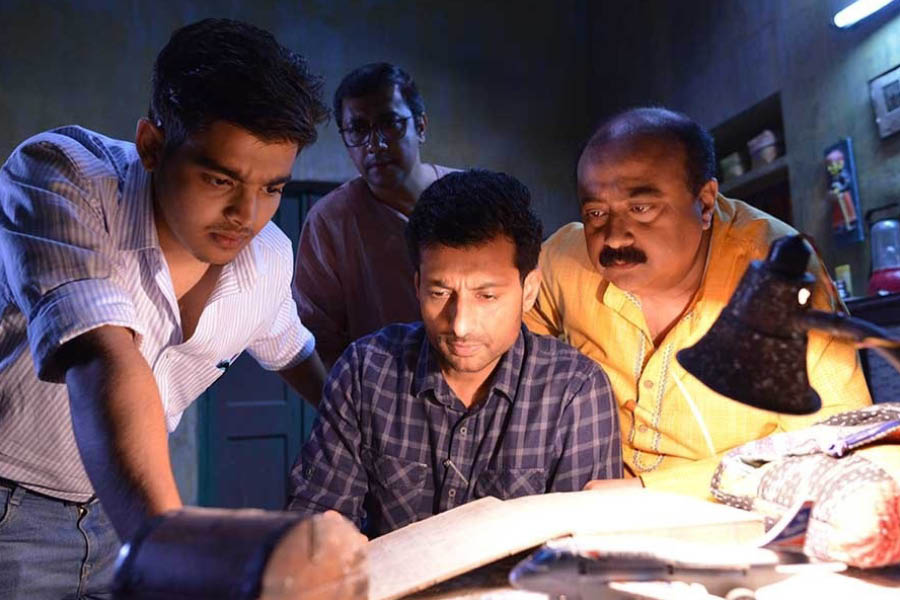
| Scene from Mr and Mrs Iyer |
Konkona Sen Sharma is the best young Indian actress
there is. Or, not to be ageist, the best Indian actress around. And if these categories
weren’t gendered by the Filmfare awards and the Oscars, it would be simpler
and truer to say that Konkona Sen Sharma is the best Indian actor in the business.
She has acted in other movies, but I base this on
the evidence of two films: Mr and Mrs Iyer and Omkara. In the first
film, where the principal actors (Konkona Sen Sharma and Rahul Bose) speak English,
she plays a young Tamil woman. In Omkara, a Hindi movie where the large
cast speaks a western UP dialect with varying degrees of conviction, she plays
a cameo role. She’s Saif Ali Khan’s woman, the mother of his child. Since Saif
is playing Iago in Bharadwaj’s cover version of Othello, she has enough
to do.
Opinions will vary on the quality of the two films.
For what it’s worth, I think Mr and Mrs Iyer is several good films in one:
it’s a great road movie (being a great Indian road movie it uses public transport),
it’s a hill station film with a difference and along the way it manages to be
an affecting drama about the communal traumas that afflict India, without being
hectoring or worthy as parallel cinema in Hindi too often is. Omkara is
an ambitious attempt to set Othello in north India’s badlands, but one
that’s hobbled and then defeated by the fact that its Desdemona (Kareena Kapoor)
and Othello (Ajay Devgan) can’t act at all. I suspect both these films will chiefly
be remembered as vehicles for Konkona’s early work.
Viewed separately, Konkona Sen Sharma’s performances
are remarkable. Taken together they suggest something even more formidable. Consider
this: for the whole of Mr and Mrs Iyer, she speaks English in the way a
middle-class Tamil girl educated in a missionary school would. I have Tamilian
and Kannadiga relatives who have heard south Indian accents lampooned over a lifetime
by comedians in Hindi films. Mehmood, for example, did the definitive Hindi movie
Madrasi in Padosan. These are people who are thin-skinned about the way
in which outsiders play south Indians, and they are agreed, down to the last Amma,
that Konkona Sen Sharma was letter perfect.
In Omkara, she was so convincing as Desdemona’s
rustic, profane north Indian sakhi that I didn’t recognize her at all and
assumed right through the film that she was some new talent recruited from the
Hindi theatre, possibly the National School of Drama’s repertory company. She
spoke the dialect with conviction, dispensed lewd folk wisdom as if she had grown
up in Meerut or Rohilkhand and managed to look plausible through an absurd late
scene where, made up like an avenging Durga, she kills Saif’s Iago.
I can’t think of any other Indian actor past or present,
who has switched manner and accent so persuasively in two films that it’s hard
to accept that it’s the same person and, further, someone who has done it across
languages. It’s instructive to try and think of one. Naseeruddin Shah and Om Puri
are great actors but I can’t see them sounding plausibly Sylheti in some densely
dialectal Bengali film. Shabana Azmi has acted wonderfully in the two languages
of the north Indian middle-classes, Hindustani and English, but when you watch
her play a south Indian singer in Morning Raga, speaking English inflected
with a south Indian accent, you realize at once what a delicate and finely judged
performance Konkona Sen’s is in Mr and Mrs Iyer.
One could argue in a generalizing way that she belongs
to a generation of young metropolitan Indians whose speech isn’t as conspicuously
marked by their mother-tongues as that of an earlier generation of Indians was.
Thus when Suchitra Sen plays a fictionalized Mrs Gandhi in Aandhi, her
Hindi is essentially Bengali by other means. Uttam Kumar in Amanush must
have thought he was speaking Hindi, but no one in the audience did. Similarly,
Hema Malini and a whole generation of south Indian actresses in Hindi cinema let
you know where they were from the moment they opened their mouths.
But even amongst her contemporaries, her virtuosity
is striking. You could make a case for Vidya Balan, ancestrally south Indian,
who played Lolita with great flair and charm in Parineeta while speaking
standard received Hindi unmarked by any trace of an accent. Except that standard
Hindi is the language of Bombay cinema so Vidya Balan’s fluency in it is commendable
but not startling.
The modern, mobile, metropolitan Indian has, if anything,
a linguistic disability. He/she is generally inexpressive in two languages. Within
certain sections of the urban elite, English has so completely colonized the part
of the brain that deals in language that the mother-tongue is only used for rudimentary
transactions like buying cigarettes or thanking plebeians. Konkona Sen’s male
lead in Mr and Mrs Iyer, Rahul Bose, has cornered the market on this sort
of character ever since he played Agastya in English, August. He does what
he does very well but the way in which he speaks English not just in this film,
but every film, pretty much defines the neutral English accent of the great Indian
metropolis. In Mr and Mrs Iyer he is Muslim, but in his manner he is the
upwardly mobile Everyman. His careful impassiveness is the perfect foil for Konkona’s
virtuoso rendering of Tamil-ness.
In fact, Konkona has been well served by her fellow
actors in both films. Kareena Kapoor and Ajay Devgan in Omkara have clearly
been cast for their physical properties rather than their acting abilities. This
being Othello, the hero has to be black or at least dark-skinned and not
pretty. Ajay Devgan fills that bill better than any hero in Hindi cinema today.
Conversely, Desdemona has to be light-skinned and conspicuously of the babalog
and who better than Kareena Kapoor to represent that type? By choosing to cast
his main characters in this way, Dark Machismo and Pale Poshness, Bhardwaj makes
things clear but also so woodenly symbolic that not even Konkona’s masterly cameo
can keep the film from keeling over. Amid the wreckage, her performance and Saif
Ali Khan’s stand out in stark contrast.
Konkona Sen Sharma represents within Indian cinema
the prospect of properly pan-Indian actors, who have the intelligence, the linguistic
ability and the mimetic genius to plausibly inhabit the skins of characters from
parts of India that are not their own. The small body of work she has produced
is a kind of precedent. To have done that in relative youth is a remarkable achievement.
|