|
|
| SENSE AND SENSIBILITY: A still from Jism
|
Have the government and the Bombay High Court violated your freedom of expression? Thats what many senior lawyers argue. Says Harish Salve: It is a blatant violation of freedom of expression.
Indias leading lawyers (see box ) are, of course referring to an information and broadcasting ministry notification in early August banning the telecasting of all films, film songs and music videos that dont have a U certificate and to a Bombay High Court order last week that effectively yanked all adult content off television. The court spared films and music videos and promos certified U/A (earlier it had disallowed all U/A content on TV).
Film certification is categorised as A or U/A. A films are not fit to be viewed by anyone under 18 years of age. U/A films qualify for unrestricted public exhibition.
The courts order of August 23 reinforced a government policy on television content which prohibits TV channels from showing adult films under its Cable Television Networks (Amendment) Rules, 2003. The Bombay court, however, also barred direct-to-home (DTH) broadcasting of non-U programmes.
The net result is that youll never be able to watch adult movies on television.
The court order had an immediate impact in Mumbai — for days movie channels were off the air. The government rule will eventually affect other cities, including Calcutta.
The impact was evident in other ways too. Indias Rs 5,412 crore television broadcasting industry plunged into chaos. Executives at Hindi cinema channels scrambled to pick films certified U or U\A. Music channels took to filling their screens with repeats of what they called vegetarian music. And general entertainment channels declined to air film trailers that had not been certified U/A.
Some satellite film channels, especially those that telecast English films, may have to can a large part of their film stocks. Expect a major confusion over that, because what is U or U/A in the West may be A in India. It is going to affect a large part of the inventory of most film channels, says Sunil Khanna, media industry veteran and Dish TVs former CEO.
But most television broadcasting companies insist that they have few adult films in stock. Says Kunal Dasgupta, CEO of Sony Entertainment Television, We never ran A films. Thats what we told the courts and they agreed that we were not showing A films but U/A films which are basically A films that the censors have passed and are shown with appropriate cuts. So if you ask me whether I am going to lose any stock of A films, I would say I would lose a zero number of A films because 90 per cent of our stock consists of U/A films. A Star India executive too backs the point.
The chaos will get compounded by long queues of broadcasters and film and music video producers outside Central Board of Film Certification (CBFC) offices around the country seeking U/A certification, after deleting any adult content in films and programmes.
Getting the censors certificate could be a nightmare. All English film channels are uplinked from outside India. So the master tapes of each film will have to be brought here first to be certified, explains Khanna. Nor is the certification process easy. For instance, if a U/A film needs to be converted into a U film, an application in duplicate has to be accompanied by a floppy with details of the application, the film script with voluntary deletions marked, as well as a tape of the film with voluntary cuts, copies of the original censor certificate and the telecast rights.
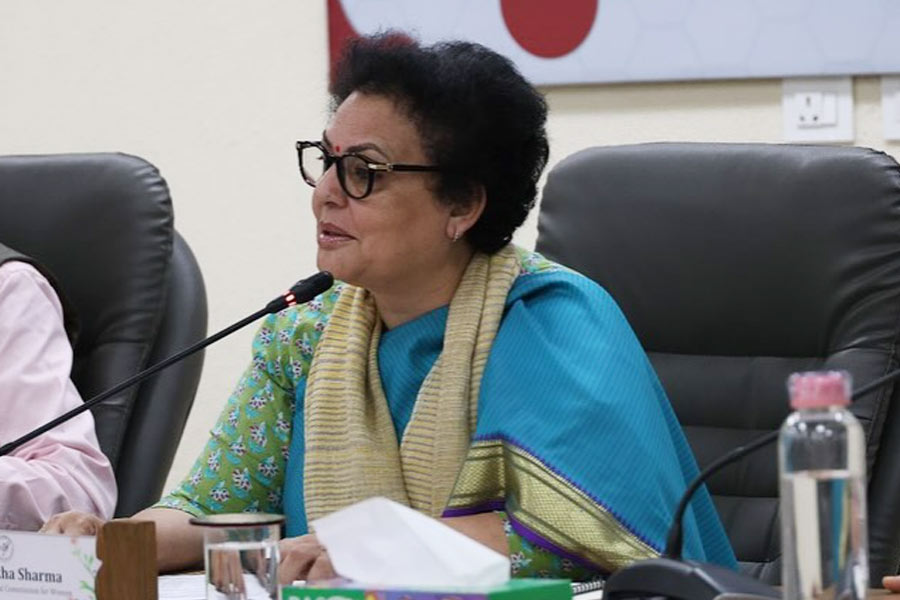
It takes the CBFC 25 to 30 days to clear one film. What will happen if we dump 400 films on it, asks the Star executive. Indeed, thousands of tapes of films, music videos and promos will be deposited at CBFC offices. CBFC chairperson Sharmila Tagore, however, is unfazed. We certify content. It is our job and we have people to do it. If we need people, the ministry will help us, she says.
In the long run, the revenues of TV channel may be hit too if they continue to remain unsure of the programmes they can air. Most channels sign long-term deals with advertisers. If they yank off some films for which they have already signed up sponsors, their income will be affected. The stakes are high.
According to TAM Media Research, the agency that tracks television channel viewership, the Hindi film channels raked in Rs 303 crore in advertising revenue in 2005; the English entertainment channels, including film channels, bagged Rs 206 crore and the music channels made about Rs 108.24 crore.
Confronted with the mess, television broadcasters are planning to ask the government for more time to implement its rule.
Nor is the problem confined to the television industry. Filmmakers will be hit too. They hawk their film rights for telecast on TV channels — this is an important source of revenue for them. Bijoy Khemka, the Calcutta-based film producer whos vice-president of the Film Federation of India, confirms this when he says that by denying permission to broadcast adult films the government is cutting off a vital revenue stream for filmmakers. TV channels are said to have acquired some Hindi blockbusters for between Rs 2 crore and Rs 5 crore a film.
Their plight is illustrated by the case of Varsha Bansal, director at RDB Entertainment, which recently made Bibor, a film set in the Calcutta of the 1980s that explores the relationship between a middle-class Bengali boy and a high-class call girl. If the government has its way, it is going to be difficult to sell this film, she frets. Tollywood, which has produced films like Dosor, Tapasya and Antarmahal that deal with adult themes, could be affected too.
The governments move has sparked off other issues too. First, most members of the TV viewing public clearly want adult fare. A Telegraph-Mode survey of 104 television viewers (52 men and 52 women) in Mumbai (age group: 25 to 50 years) suggests precisely this. Nearly 65 per cent of those polled said that adult films should be shown on TV, though 75 per cent of those who said yes to adult films said that these should be shown after 11 pm. Most (77 per cent) also felt, however, that the government should police television channels for adult content.
Satish Gurnani, 25, a production executive at a portal in Mumbai, perhaps speaks for the majority when he says, Adult films should be shown on television channels in India, though after 11 pm. Anindyo Sengupta, 25, a call centre employee in Mumbai, adds that he doesnt mind if movie channels air adult films as long as they make it clear whether a film is A or U.
Secondly, several observers agree that A-certified films in India are not really adult films. And Sengupta makes a further point, I think the soaps need more moral policing as children willy nilly end up watching them. Children pick up all kinds of negative stuff from Ektaa Kapoors serials.
He has a point. To cite but two examples, in Kahiin To Hoga on Star Plus, Rishi, one of the characters, sleeps with most women in the serial. In Virasat on Star Plus, actress Sangeeta Ghosh promises passionate scenes. A questionnaire on all this sent to Balaji Telefilms elicited no response.
Says Channel V head Amar Deb, If we think people turn to TV for adult content, we are behaving like ostriches. What about the print media? Pictures of Paris Hilton wrapped up in wires were all over the national newspapers.
Sharmila Tagore, however, says that India needs to be more careful about showing adult content on TV. She feels that unlike in the West, children in India go to bed pretty late. Secondly, more often than not, parents behave irresponsibly and take little children to films that arent suitable for their age. Adds Zee Networks vice-chairman Jawahar Goel, The ban was inevitable. All kinds of stuff was being shown on TV.
Pratibha Nathani, who went to court and triggered the ban (see box), presses the case for banning adult content when she says, Even in the land of the Statue of Liberty, where pornography is legal, president George Bush has approved of a law where channels cannot use the F word or any other objectionable word unless they are willing to pay a fat fine of $3,25,000.
The answer may be a detailed programming code. Zees Goel believes that the government will be introducing a code on the lines of British regulator Ofcom. In the UK, the Ofcom guidelines have a section on protecting the under-18s. Adult content can be shown between 9 pm and 5.30 am provided a mandatory PIN protected encryption system that restricts television access to only those authorised to view it is in place.
The authority also makes it mandatory for television programme distributors to check that the subscriber is an adult. In the US, too, the watershed hour for adult content is 10 pm, though the Federal Communications Commission bans some things (explicit human sexual intercourse and frontal nudity, for example).
Amidst the rumpus, a media expert declares, The
entertainment industry, including television and films, will be a Rs 837 billion
business in India by 2010. Unfortunately, the government is creating so much din
about an industry it has made no contribution to at all.
The Telegraph-Mode survey
Should adult films be shown
on television channels in India?
Yes: 65% No: 35%
If yes, should they be shown
only after 11 pm?
Yes: 75% No: 25%
Film channels usually screen
a warning note if the content is not suitable for children. Should our general
entertainment and news channels do this too?
Yes: 53% No: 47%
Should the government police
television channels for adult content?
Yes: 77% No: 23%
Does the decision violate Indians freedom
of expression?
Anirban Das Mahapatra seeks the opinion of leading
lawyers on whether anyone can take the government to court.
K.K. Venugopal: Yes, it does, if it is imposed as a blanket ban. Had a
cut-off time such as 10 pm been set, it might have been all right.
But a total restriction on airing adult content does violate ones freedom
of
expression.
Harish Salve: It is a blatant violation of ones freedom of expression.
The Bombay court has no business passing such an order.
Shanti Bhushan: The order of the court or the central government can
be challenged as a violation of ones freedom of expression which is guaranteed
by Article 19A of the Indian Constitution only if it can be argued in court that
the blanket banning of adult content on TV is unreasonable and not in the
public interest. Whether or not the ban is unreasonable and against public
interest is subject to deliberation in court.
The woman who started it all
|
| Pratibha Nathani |
Pratibha Nathani is not quite a crusty dowager
she is quite the opposite. In her mid thirties, Nathani is attractive, estranged
from her husband and teaches political science at Mumbais St Xaviers
College. And shes the woman who started it all in Mumbai. Nathani one day
felt that she had to do something about all the sex and violence that got beamed
into her house. So she approached Mumbai lawyer M.M. Vashi to file a case. More
recently, she went back to court after wondering why the police were not acting
on the courts directive. The Mumbai police promptly seized the decoders
of cable television operators last week. Nathani figured in television talk shows
last week and film producer and journalist Pritish Nandy accused her in
a newspaper column of being a headline hunter. Nathani says she has no problems
watching adult films and that she is not protesting solely about sex on the small
screen violence is an issue too. She says she knows of at least 1,000 cases
of children affected by television programmes. The nine-year-old daughter
of a maid servant was raped by 12 and 13-year-olds who said they wanted to emulate
their small screen heroes. In Lucknow, a 16-year-old boy raped his seven-year-old
cousin and said that he watched a lot of soft porn on south Indian channels late
at night. So what about all the extra-marital sagas and rape scenes in Ekta
Kapoor soaps? She says that she holds no brief for them and wants a television
regulatory authority to police channels. We like to believe our children
are angels. They might not watch something in your presence. But given an opportunity
they will do it behind your back, Nathani adds before hurrying off for another
TV talk show. Velly Thevar.
|