|
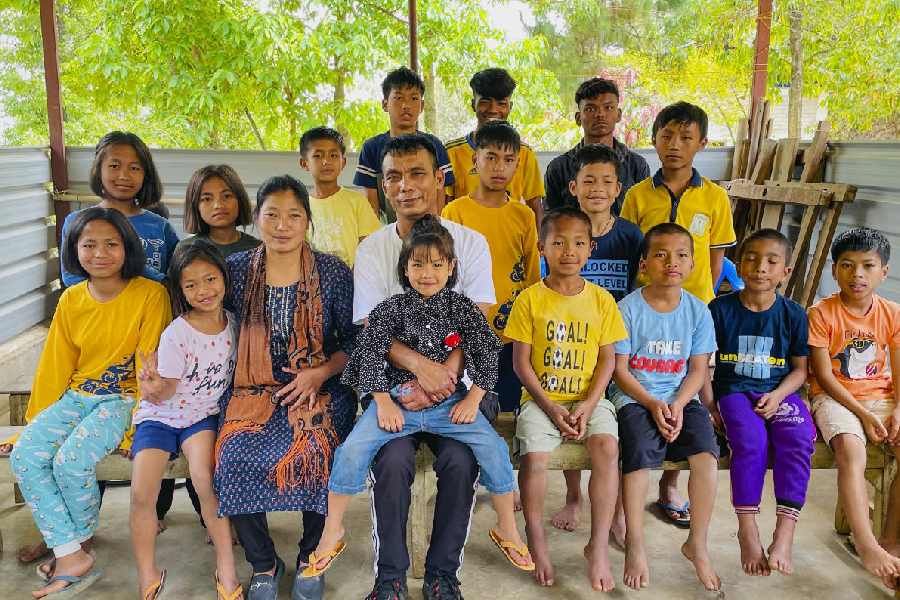
| A family infected with HIV at a village in West Bengal
|
Twenty-year-old Nilanjana (not her real name), a resident of Sonarpur in West Bengal, had been diagnosed with HIV/AIDS during a routine antenatal check up in 2004. She agreed to undergo treatment to prevent mother-to-child HIV infection at Nilratan Sircar Hospital, Calcutta, where she gave birth to a girl.
Nilanjana along with 100 pregnant women were the first in West Bengal to undergo treatment to prevent HIV transmission to their unborn child. They were treated with the drug Nevirapine to prevent transmission of the disease to their children and doctors advised them to come for regular check ups. But then Nilanjana simply disappeared along with her child. The doctors were worried because the treatment with Nevirapine yields results only after 18 months of childbirth, when the baby takes the final HIV tests. During the period, both the mother and the baby need to report to the hospital at regular intervals for monitoring their conditions.
Recently, Nilanjana reappeared at the hospital with her baby after almost 18 months. There were hoops of joy in the hospital when HIV rapid tests showed that the baby was HIV negative. The baby is West Bengals first success story. The drugs effectively prevented the transmission of HIV infection from the mother to the child, says Dr A. Talukdar of the West Bengal State HIV/AIDS Prevention and Control Society (SACS).
But many children in our country are not as fortunate as Nilanjanas daughter. According to estimates by the National AIDS Control Organisation (NACO), which is in charge of formulating and implementing a national policy to combat HIV/AIDS, 60,000 children are born infected with the HIV virus every year. These newborns join the unknown number of HIV positive children in the country. Activists, however, say that the number of such children is around 250,000.
And the number of such children is growing. The increasing number of HIV infections among children is one of the major challenges in the country says Dr S. Bhattacharya, who is in charge of the paediatric HIV clinic at the Calcutta Medical College and Hospital. He also complains that poor diagnosis is adding to the problem. Recurrent diarrhoea and respiratory infections, which are symptomatic of HIV infection, are very common even in the case of normal children. Therefore, doctors do not suspect HIV when a child suffering from diarrhoea and respiratory infection is brought to them for treatment. An HIV orientation among medical practitioners is still lacking, adds Dr Bhattacharya.
Even the government seems to be apathetic in trying to address the plight of HIV infected children. According to Indias Progress Report (IPR) submitted at a UN meeting in June 2006, there is no nationally co-ordinated data on children infected with HIV virus. The data on children is absent because HIV/AIDS programmes continue to target only the high risk groups like sex workers and drug addicts, says Dr S. Panda of Society for Positive Atmosphere and Related Support to HIV/AIDS (SPARSH). We seldom accept that the entire population, including children, are at risk of contracting the disease, he adds.
Since children are almost invisible in the governments response to HIV/AIDS, its left to the parents to care for these HIV positive children and provide them with the best possible treatment. The irony is that many of these parents are themselves HIV positive, are poor and cannot afford to buy medicines or go for treatment.
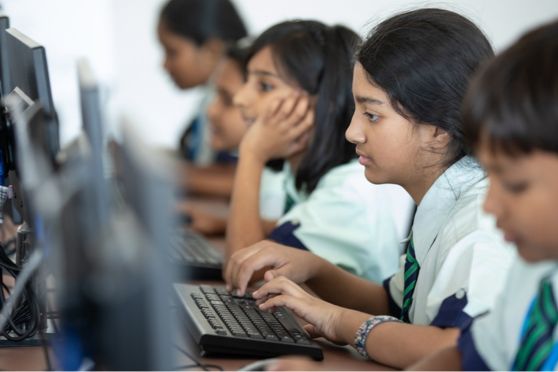
In many instances, HIV positive children or those orphaned by the disease are forced to withdraw from school and face discrimination in the society. Many also opt out of school to take care of HIV infected parents.
The plight of these children has enraged activists, who call for comprehensive programmes to tackle the problem. There is a gross neglect on the part of the Government of India in formulating paediatric guidelines, providing paediatric medication and training health care providers in child care. Its time that the government puts its full attention to address these issues, says the US-based Dr Vineeta Gupta of Stop HIV/AIDS in India Initiative.
At present, most HIV centres in the country provide paediatric dosage by dividing adult formulations, resulting sometimes in violent side effects in children. The most humane and cost-effective way of containing HIV in children is the prevention of mother-to-child transmission. But fewer than 4 per cent of the 189,000 infected women are receiving testing and counselling and fewer than 3 per cent are receiving the anti-retroviral prophylaxis.
In order to develop a comprehensive and sustainable response to children, the central government had initiated a task force in March 2005 and endorsed protection, care and support of children living in a world of HIV/AIDS. In June, Union health minister Anbumani Ramadoss had promised that anti-retroviral (ARV) combinations would be distributed from HIV clinics with the goal of reaching 10,000 children this year and 1,00,000 by 2007.
But promises apart, there remains the need for community-based programmes to enable HIV infected children and orphans to live in an environment free of stigma and fear. And with the increasing incidences of HIV infection in our country, such children cannot remain invisible any longer.
|