TT Epaper LHS
The Telegraph
TT Mobile
 
 
IN TODAY'S PAPER
WEEKLY FEATURES
CITY NEWSLINES
FEEDS
  RSS
  My Yahoo!
SEARCH
 
Archives Web
 
ARCHIVES
Since 1st March, 1999
 
THE TELEGRAPH
 
CIMA Gallary
 
Email This Page
AWARENESS IS NOT JUST A WORD

Why Buladi, and not Bulada? Why a muppet and not someone corporeal? And, more ridiculously, why buxom and not shapely?

Have we ever heard of an ?agony uncle?? If someone is privileged with access to such a phenomenon, there will be a few things to consider. He will be a person ? warts and all ? and a product of his conditioning. He could react in a manner that suits his sense of right and wrong: if he is warm to the colour blue, blue it will be. If he sports a disagreeable goatee, and you try and suggest that his visage is tailor-made for a van Dyke, you have to wait for an opportune moment that unites a good mood, contentment and a sense of humour in overdrive. Else you?ll be approaching an ?uncle in agony?, whereby you?ll need to reverse roles.

Enter Buladi, and not Bulada. Warm, smiling, impossibly cuddly. All likeable traits, and undoubtedly useful ones given her agenda: to sensitize, not terrorize, to befriend, not befuddle, to be the one who visits, rather than the one who is visited. And all in an attempt to spread awareness, and not alarm, about a phenomenon that spawns fright and baseless demonization. Her voice charms, her deportment beckons and her soft, yet firm, approach endears. She can berate, it is just that the berated will not be aware of that. Imagine being asked a question soaked in inanity such as ?Doesn?t using a condom mean suspecting your partner?? and resisting the temptation of burying the questioner in a slew of expletives and saying, instead, something disarmingly positive like, ?Rather, it is a sign of healthy relationship.? A corporeal Buladi would have had to muster godlike composure when faced with such ignorance and spend lavishly on a shrink in order to develop the habit of being non-judgmental.

It is easier for a doll?

Buladi, inspired by the nyakrar putul of Bengal, is apt for two reasons. One, it requires immense cerebral vacuity to react adversely to a doll. Two, given her unenviable task ? to present a less grim picture of a menace that might kill ? her unfaltering pleasantness becomes a huge plus. That is why it is easier for her to tell a small-town woman that having a ?gentleman? for a husband does not ensure immunity from HIV, rubbishing an erroneous belief harboured for long. Soon, Buladi is not just a myth-buster, but a welcome teatime companion whose reassuring personality makes a Bengali mother do the almost unthinkable: talk about her son?s drug problems, an admission attended by a misconception spurred by falsehoods ? and a bit of hope: ?He used to inject drugs, surely he can?t be susceptible to HIV now.? Regardless of what Buladi says to debunk this woman?s theory, what is gratifying is that the latter remains just as proud and forgiving of her errant offspring. Buladi manages to pacify when panic could have taken over.

When a superannuated father talks about his son?s callousness towards his own health, another aspect of Buladi?s personality comes into focus. Nobody calls her Bula, like this flustered gentleman could jolly well have. The honorific is constant, fit for a 20-something to someone on the threshold of 70 ? a pointer to her indeterminate age. The same ambiguity surrounds her use of the bindi, which almost parades as vermilion, yet doesn?t really indicate her marital status. Of course, the honorific is also an appreciation of her poise, credibility and unimposing superiority, a respect that rubs off even on her ubiquitous jhola.

The jhola, though thought of as a mere accessory, emblematic of wisdom and simplicity, has elicited unexpected reactions, and that too from a group among which the incidence of HIV is high. Since they habitually dismiss counsel, this group ? of truckers ? ought, perhaps, to have viewed Buladi as another gadfly, showing up disruptively every now and then. Hardly secretive about their carnal indiscretions, ?justified? by their lifestyle and feeding their machismo, their reaction was a revelation: ?Unkee jhola ek upaye ka khazana hai (her bag represents a treasure trove of solutions).?

Of reliable solutions, they added. Perhaps this perception has enabled Buladi to comfortably don the twin-hat of counsellor-friend, close enough, discreet enough and, crucially, dependable enough to be approached with one?s vaginal blights ? ?smelly white discharge? ? which could be followed by that long-pending visit to a voluntary counselling and testing centre. Or for a local know-it-all hoodlum to gracefully shed his obstinacy regarding mistaken notions about sexually transmitted diseases.

As an amiable myth-buster, Buladi educated lives; as an ambassador for STD prevention, she entered people?s lives; today, as a tireless advocate of condom-use, she has become a part of their lives. She is no longer reactive, but proactive.

Today, she speaks not when asked, but even before issues become questions. So she has easy and equal access to a red-light area, a middle-class bedroom or a love nest of amorous youngsters.

She has no body odour. She doesn?t sport a perfume that offends your olfactory senses. She doesn?t intrude on you during Sunday lunch. She is hardly the sort to suggest that a crew cut makes you look like an out-of-work boxer ? even if it does. Yet you don?t have to hunt her down when needed. And, to top it all, she is not judgmental. She eschews the halo of a moralist. She suggests a safer way of life and not, mind you, a more virtuous way of life.

Not bad for a doll. Not bad at all.

• 38% of adult HIV/AIDS cases in India are women

• Less than 3% of HIV/AIDS-affected pregnant women in India receive treatment to reduce chances of passing the virus on to the baby

There is an invisible dimension to Buladi, a messenger of HIV awareness. In 2005, over 19 lakh women were living with HIV/AIDS and of them, more than 90 per cent were married and monogamous.

India?s size and diversity make figures just pointers to facts. But numbers expose the dangers of cultural smugness. A sex worker was found to be HIV+ in 1986. So India first confronted HIV with a mixture of virtue and nationalism: the illness came from the ?alien? West, and ?traditional values? would protect the country. That is, ?risk groups? ? sex workers, migrant labourers, truck drivers ? could be isolated, morally as well as medically, while the heterosexual family would remain untouched. But HIV exposed, without scope of denial, unacknowledged routes of sexual exchange that endanger women and children innocent of ?risky behaviours?.

The India section in 2006 Report on the Global AIDS Epidemic released by UNAIDS in May shows that in 2005, 5.7 million people have been found to be HIV+. There is a 32 per cent increase in AIDS cases since 2001 and 1.3 million more people are now HIV+.

The report notes the diversity of India?s epidemic. Diversity dogs the very meaning of ?awareness? in a field of meanings in any case conflicted, dependent on differing cultural expectations and behaviours. How do people of varied literacy, livelihood, religion and condition ?know AIDS? for ?no AIDS?, as a NACO motto urged? Or understand ?risky behaviour??

To ?know? is to speak, as Buladi is trying to do. To break down the resistance to talk about sex seems as difficult as getting Indian men to use condoms. Moralistic pretence and wilful blindness then distort the message. To speak is to evolve not just a new discourse and vocabulary but also a pragmatic acceptance of a fact of life: sex and associated behaviours.

This is tough where the plea to use a condom is interpreted as a spur to promiscuity. Buladi?s language, it seems, has to be moderated: the implication of sex as fun might seduce schoolchildren. Just as sex education in schools is unwelcome.

But now, silence is death. And pretty lies about sexual behaviour the recipe for destruction.

VISIBLE AND INVISIBLE

Buladi almost spills out of the frame, her large eyes demanding attention. She is a comforting didi, drawing on a cluster of associations that combine homeliness with a social worker?s zeal. Perhaps it is a recognition of woman-power that the state, in the form of the West Bengal State AIDS Prevention and Control Society, should choose this figure to speak of the hitherto unspeakable to men and women. The state?s voice in HIV awareness is a woman?s.

But the state?s institutions remain stubbornly silent when asked general questions about the levels of awareness in different segments. How much and how well do people know about HIV is not the same as asking who has AIDS. If Buladi is to be even partially effective, the state needs to back her up. When the 1097 line remains engaged for a whole week, it might say something about the success of the campaign, but very little about the state?s ability to help the distressed.

How real is Buladi? The Kolkata Municipal Corporation recently found that workers baulk at door-to-door trips to talk about HIV/AIDS. From a different part of the state comes the account of someone associated with HIV awareness: although panchayat members have been sensitized to spread information in villages, the virus is spreading faster, especially because of migrant labour. Buladi remains mainly an urban phenomenon, for hoardings are rare and require literacy, and not every villager has access to a TV. On the radio, Buladi?s voice does not attract the same curious attention as her ample, blue-sari-clad figure does on the billboard.

The WBSAPCS campaign addresses heterosexuals, not the invisible population of men who have sex with men and of bisexuals. It is never easy to warn people publicly about their hidden lives. So no campaign can be without its critics. Can adults alone be addressed? Can children be insulated? How should they be warned? Can it be hoped that policy-makers will break through their own cultural assumptions and conceive of concrete situations, of stealth and haste, of the scale of anal sex, of the need for sex turning respectability and class upside down? Scenarios are more diverse than Buladi can be made to enter. The state cannot afford to leave the invisible out of account.

positive schooling

What was Buladi doing on a slushy field where 22 young boys were playing for the love of their para? She was doing what she does best ? spreading awareness about HIV/AIDS. According to the Indian Football Association secretary, Subrata Dutta, the IFA had approached WBSAPCS when the former decided to organize a para football tournament in Calcutta last year. WBSAPCS was more than willing to fund the tournament if it meant that Buladi would be able to reach more people ? particularly younger ones ? in the city.

Calcutta was divided, for the purposes of the tournament, into 48 paras, each fielding 12 to 16 teams. WBSAPCS put up stalls, with counsellors, at each venue. Half-time was put to optimum use, with messages and jingles being aired through loudspeakers. Short situation-plays were enacted before or after the match. And if you still managed not to notice, there were larger-than-life dummies (real people in muppet-wear) roaming about the football field.

The response was more than WBSAPCS or IFA could ever have expected. So much so that WBSAPCS has come forward this year to sponsor the inter-districts state league that would cost about Rs 16 lakh. ?Last year?s effort was confined to Calcutta,? says Datta, ?so we are going all-out this year to take the message to the districts, and even to backward communities.? Hence, there will be a full-fledged tournament for tribals, another first for the IFA.

Buladi has several other happy hunting grounds. When at the races, she tries to impress upon people that condoms are the ?safest bet? in the ?race of life?. She is also ?in tune with life? when she makes her presence felt at soir?es. And now, she has spawned an entire range of merchandise, including key-chains and refrigerator magnets. Last heard, children at village carnivals were happily trying to ?stick the teep on Buladi?s forehead?, a brilliant innovation to the game of sticking the tail on the donkey.

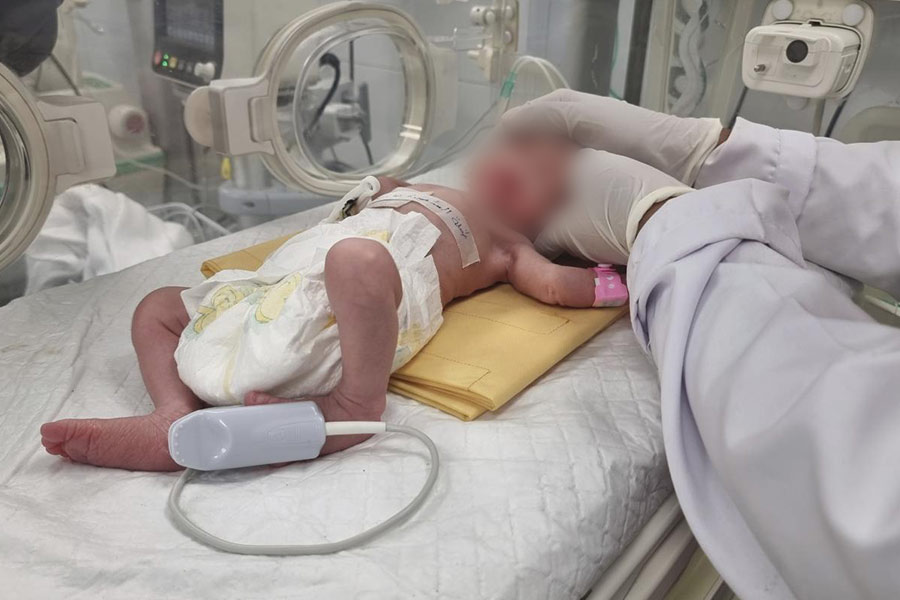
Analysis of the latest UNAIDS report shows that at least 250,000 children in India are HIV+. In 2005, there were about 70,000 new paediatric infections and 60,000 have died, but no accurate estimates are available. AIDS orphans are barely accounted for. A little over a thousand children are getting the necessary treatment while 70,000 need it urgently. NACO does not appear to be adequately prepared yet for the systematic treatment of children. The report says that the needs of children ?have largely been left out of the research agenda?. India has failed to meet the 2005 target for treatment of pregnant women to reduce chances of vertical mother-to-child transmission. Specially trained doctors are needed for the proper administering of appropriate doses. Few patients get this treatment, and doctors trained for children?s treatment are as rare as the paediatric drugs. Sporadic or irregular doses may lead to resistance.

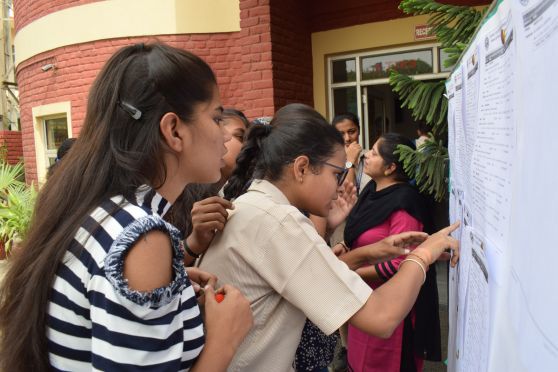
Going to school helps. Educated children know more about HIV/AIDS, of ways to avoid infection, and can change risky habits. A girl going to school tends to marry later, can aspire to choices, and care for her children with better understanding of the dangers. Worldwide, schools are using sex education to propagate safe sex. But over 42 per cent of boys and 69 per cent of girls of 15 years and older do not go to school in India.

The lack of awareness is lethal, driving children out of school, women out of homes, and patients out of hospitals. In India, HIV/AIDS attacks not just the body but also the identity, which disintegrates in the face of an attitude that regards the affected as simultaneously sick and deviant. Out of this world of negation, there has been a resurgence of positiveness among sex workers in Calcutta, where the success of peer group educators began a new chapter in the fight against AIDS. And it is a 14-year-old living in a red-light area who says, like many of his friends, ?We must not hate a victim of AIDS...We are human beings. So we must all help each other...If someone has AIDS, make arrangements for that person?s treatment.?

Everyone can help Buladi in her mission. Attitudes are as important as deeds. Awareness is not just a word.


Top
Email This Page