The Telegraph
 
 
ARCHIVES
Since 1st March, 1999
 
THE TELEGRAPH
 
 
Email This Page
Testability
A healing touch

The Central Board of Secondary Education (CBSE), New Delhi, conducts the All India Entrance Examination for admission to 15 per cent seats in medical or dental colleges in India run by the government or municipal or local authorities except in the states of Andhra Pradesh and Jammu & Kashmir. The CBSE conducts the exam, evaluates the answer-scripts, prepares the merit or waiting list and notifies the result in leading newspapers. A copy of the merit or waiting list of candidates is forwarded to the director general of health services who allocates the seats at medical or dental colleges. In case of a tie, merit is determined on the basis of marks in zoology, botany, chemistry and physics.

The exam is conducted for admissions to the MBBS and BDS courses.

The application form and information bulletin can be obtained on a cash payment of Rs 200, including the exam fee (Rs 100 for SC/ST) from the notified branches of Canara Bank or CBSE regional offices at Ajmer, Allahabad, Chandigarh, Guwahati, and Chennai. The form can also be obtained by post from the All India Pre-Medical/Pre Dental Entrance Examination Unit, CBSE, by remitting a bank draft for Rs 200 (Rs 100 for SC/ST) along with a self-addressed envelope of 12'X10'. Completed application forms should reach the CBSE by registered post by the end of November. For more details, please contact the Central Board of Secondary Education (CBSE), 17-B Indraprastha Estate, New Delhi-110002, directly. You can also log on to www.cbse.nic.in.

Eligibility

You should be 17 years old as on December 31 of the year of admission and have passed the Senior Secondary Examination with physics, chemistry, biology and English securing 50 per cent (40 per cent for SC/ST) aggregate marks in these subjects. Candidates who have appeared in the qualifying exam are also eligible. You should also be medically fit.

Entrance Exam

The preliminary exam is held in April and the final exam is in May. Centres are located at Agartala, Ahmedabad, Bangalore, Bhopal, Bhubaneswar, Calcutta, Chandigarh, Chennai, Delhi, Guwahati, Imphal, Itanagar, Jaipur Lucknow, Mumbai, Nagpur, Port Blair, Patna, Panaji, Pondicherry, Shimla, Shillong and Thiruvanthapuram.

Pattern of Exam

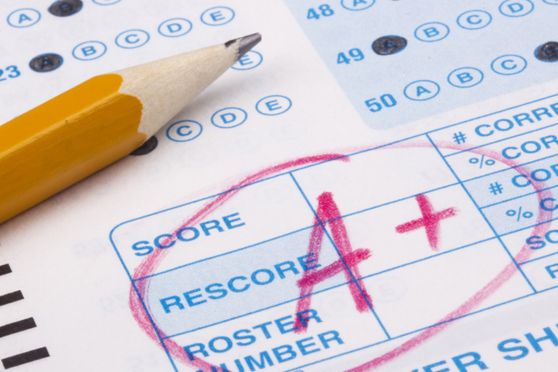
The entrance exam consists of one paper in physics, chemistry and biology (botany and zoology) combined, of two-and-a-half hours' duration and carries 800 marks. The questions are objective-type with negative marks for incorrect answers.

The syllabus is given in the information bulletin. The medium of examination is Hindi or English. The general standard of the exam is that of Class XII under the 10+2 scheme or pre-medical or intermediate science or an equivalent exam of an Indian university.

How to prepare

You can practice biology from MP Kaushik and Ramesh Gupta. Various guides for the entrance exam such as Parihar, Bhatia, Shivam and Vishal are found at major bookshops. Tutorials like Brilliants also help students to prepare for this exam.

Some of the other books you can refer to are Physics 10 + 2 by H.C. Verma and Chemistry by O.P. Agarwal and Tata McGraw Hill publishers. Practise solving as many questions possible within a short span of time.

sample test paper

Biology

• Which one of the following antibodies is present in mammalian milk'
a) lgG
b) lgM
c) lgD
d) lgA

• The location of colour processing centres in the human visual cortex is obtained by using:
a) NMR imaging technique
b) PET imaging technique
c) EEG
d) CT Scan

• Which proteolytic enzyme inducts lysis of fibrin during fibrinolosis'
a) Plasmin
b) Fibrin
c) Thrombin
d) Platelet factor VIII

Physics

• Planck’s constant (h) have the dimension of –
(a) Energy
b) Frequency
c) Angular momentum
d) Momentum

• Newton per metre square is the unit of:
a) Energy
b) Momentum
c)Force
d)Pressure

Chemistry

• The osmotic pressure of equimolar solution of BaCl 2 , NaCl and glucose will be in the order:

a) BaCl 2 > NaCl > glucose
b) NaCl > BaCl 2 > glucose
c) Glucose > BaCl 2 > NaCl
d) Glucose > NaCl > BaCl 2

Top
Email This Page