|
|
|
Held in check
|
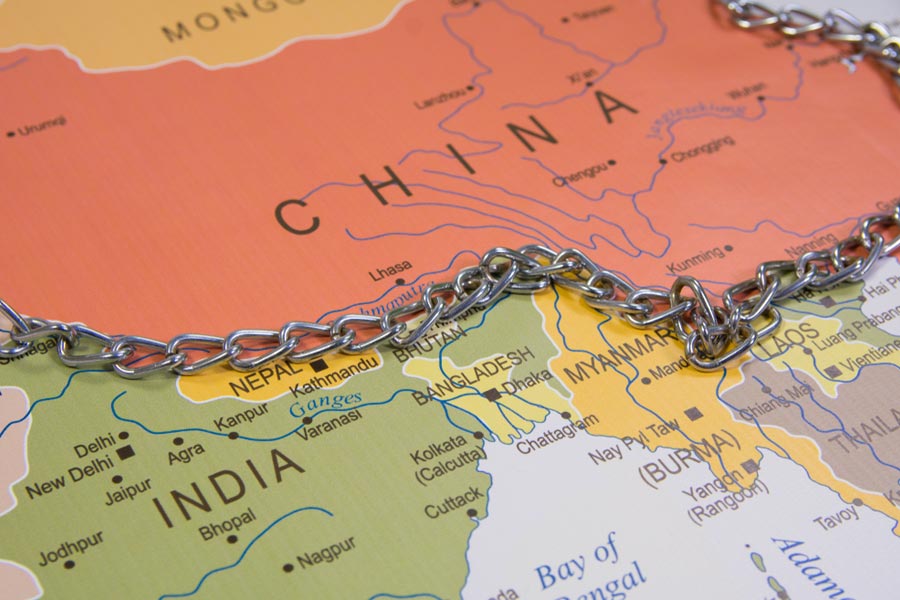
China?s mighty Yangtze river has been tamed. The wall that now spans the river marks the beginning of the end of the Three Gorges project. It is the largest construction mankind has undertaken since the Great Wall of China. Like its Indian counterpart, the Sardar Sarovar dam on the Narmada, this fantastic achievement has been dogged by controversy and criticism at home and abroad. Such criticisms derive from a narrow understanding of Asian society and culture. A deeper understanding of history can correct these misperceptions.
Allegations by the transnational elite ? non-governmental organizations, film stars, academicians and do-gooders ? gravitate around the notion that these projects are examples of national ostentation and will cause untold damage to man and nature. Such criticisms flow from the elite notion that poor Asians are incapable of managing modern technology and the cultural changes it engenders. However, the historical record belies this view. As demonstrated by professor Frank Dikotter of the School of Oriental and African Studies, China?s history is dotted with endless local acts of creative appropriation that melded the new with more established ways. If anything, India?s poor have an even longer history of appropriating not just modern technology but concepts ? such as democracy ? to suit local interests.
Criticism of the Sardar Sarovar dam has been more vocal ? if only because the Indian masses have embraced democracy and permitted foreigners to access parts of the country that authoritarian China would never allow. Yet, the Chinese project is far larger and the consequences far greater. In both cases, criticism centres on the lake that will form the dam?s basin. The Yangtze basin at 632 sq km. will displace nearly two million people, and submerge 19 counties, 153 towns and 4,500 villages. The Western imagination boggles at these vast numbers. Human misery is compounded by anticipated environmental damage. Some critics fear that located downstream from the industrial megapolis of Chongquing, the artificial lake might trap waste and be converted into a giant cesspool threatening endangered species like the Yangtze dolphin, the Chinese sturgeon and the Giant Panda.
Ultimately will all this work? This is the question some foreigners ask of the dam on the Narmada, but not Indian critics who are only concerned with the fate of the displaced people. Designed to generate as much electricity as a dozen nuclear reactors, the Three Gorges dam will power Shanghai and China?s entire south-eastern seaboard in the future. That is if silting does not clog its giant turbines.
Undoubtedly, physical and cultural changes will be massive. That is only to be expected from such a gigantic project. But it is fallacious to assume that the poor are unused to and incapable of managing modern technology. Or that China?s poor are trapped by a tradition that thwarts adaptation.
India and China both demonstrate that poverty does not mean backwardness. History shows that China?s poor were the first to pragmatically harness modern technology to everyday life. While the rich sipped tea from porcelain, the poor enthusiastically adopted much more durable enamelware.
The poor have demonstrated remarkable innovativeness in appropriating foreign goods to local tastes in a myriad ways. They bought the new and chucked out the old. Since the last decades of the 18th century, China?s material landscape has been inextricably linked with global trends. The latest imports were eagerly consumed as they became symbols of prestige ? if only because they were produced by the distant West and therefore cost more.
To buy foreign was not just exotic, it was also done to be modern. Staple foods like rice, wheat and sugar ? long regarded as the least permeable to outside influence ? changed in taste and aspect as they were increasingly produced industrially, with white being the preferred colour. Culinary possibilities expanded on a massive scale in the 20th century with the introduction of tinned food, which allowed the transportation at reduced costs of products that were not traditionally available to the poor.
A sense of enchantment characterized the combination of tradition with modernity as ordinary people adapted new inventions to old practices. What appeared incongruous to outsiders was perfectly in tune to the locals. Thus, mass-produced mirrors were hung outside homes to ward off evil spirits. Western corsets, tights and skirts were combined in strikingly original ways with local items of attire. The one-piece gown with scarf and coat is just one example of this.
Both projects are just the latest in the selective appropriation and innovative application of modern technology by Asians. They are, of course, on a completely new scale but the historical record shows that China?s material landscape is marked by 150 years of successfully combining tradition with modernity. Ordinary Chinese have demonstrated the ability to absorb the modern to change their lives for the better. They have done this so successfully that there can be no doubt that China will be able to manage and adapt to the changes engendered by the Three Gorges project.
The real question is: What does it mean to be modern? If to be modern is to be able to change, adapt and innovate, then are the Chinese more modern than those in the West? The question is even more apt for poor Indians who have not just appropriated modern technology but also concepts like democracy, the rule of law and freedom of thought and expression to suit their local interests.
|