|
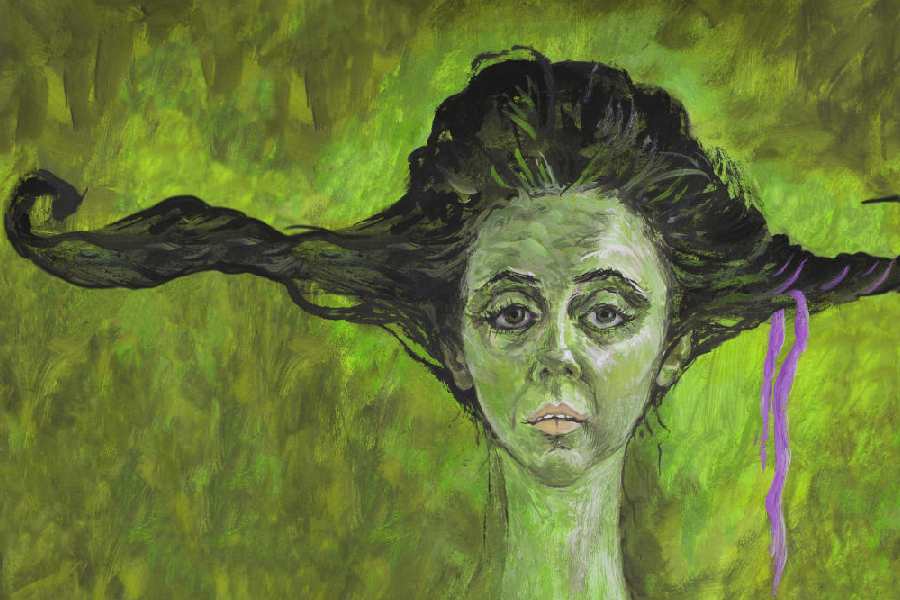
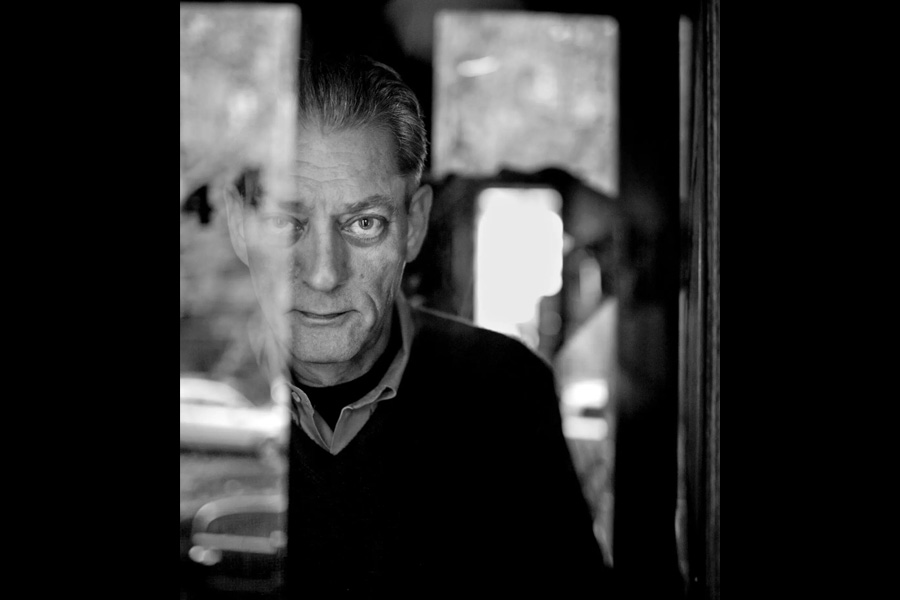
| BLACK AND WHITE: Dharker’s new book |
The many colours of spring Although I have mostly missed the daffodils in Britain ' the riot of yellow along the Backs in Cambridge is as close to English paradise as you can get ' spring is here (with commentary from Lord’s). If I were an escapist poet I would write about the fresh green of the leaves, the blossoms that cover parked cars and the evocative smell of cut grass which takes me back to the cricket of a misspent youth. I mark passing time by the flowering crab apple in the back garden under which two of our cats are buried. Belgachia Villa and Bandra, two of my favourite places in India, seem so near and yet so far. This year the blossoms on the crab apple, pink and white, seem more beautiful than ever before. Within a week, they will all be blown away by the wind and rain. Fortunately, the task of writing poetry can be left to the likes of Imtiaz Dharker, whose just published new collection, with, as usual, her own wonderful sketches, is called The Terrorist at My Table (Bloodaxe Books). It’s not a surprising title, given last summer’s London bombs. Here’s her poem, Black and White: All the people are wearing black./ Coming out of stations, scrambling/ on buses, crossing the street, stacked/ on escalators/ they look like letters running away/ from words I am struggling to understand./ There is no way to fix them/ blurred as they are by movement,/ mirrors and cracked glass./ I am trying to write you down/ on this white space/ in longhand, calm/ you, still you,/ put my arms around you,/ touch your face, trace/ the cheekbone,/ hold you long enough/ for you to read/ the words we have been assembling. Imtiaz feels her poems “ask crucial questions about how we live now ' working, travelling, eating, listening to the news, preparing for attack”. She attempts to see life through distorting screens ' “a windscreen, a television screen, newsprint, mirror, water, breath, heat haze, smokescreen”.
|
| Art of the matter: Amrita Zhaveri at Husain’s exhibition |
Lost and found M.F. Husain failed to turn up last Wednesday at an exhibition held at Asia House in London where the 90-year-old artist was to be the star turn. One reason suggested was that perhaps he felt a little vulnerable, given that the Indian government, in its first really reprehensible move, is reported to have asked police to take “appropriate action” against him for his nude paintings. On Husain, the government certainly seems to be speaking with different voices, for the exhibition was opened by the Indian High Commissioner in London, Kamalesh Sharma, who spoke warmly about India’s greatest living artist, before adding: “India is rising everywhere but who would have thought Indian art would also rise.” The exhibition, M.F. Husain: Early Masterpieces 1950s-70s, includes 16 of his works. “We wanted to show his early works, which are his most significant,” commented Amrita Jhaveri, formerly of Christie’s and now a collector and consultant. Present was businessman-cum-art dealer, Anwar Siddiqui, who opened the Arks art gallery in Mayfair in 1995 but closed it after three years. “I was 10 years ahead of my time,” he says. A Husain he sold for '4,000 in 1995 was recently valued at '95,000. Anwar adds: “London certainly helped to raise awareness of contemporary Indian art.” Should India prove unbearably hot for Husain, he will always find refuge in London, for this is a country which values its artists, especially when they are controversial. Postscript: a day late, Husain sauntered into Asia House but offered no explanation for why he had missed his own party. The normally barefoot painter shocked people by wearing shoes.
|
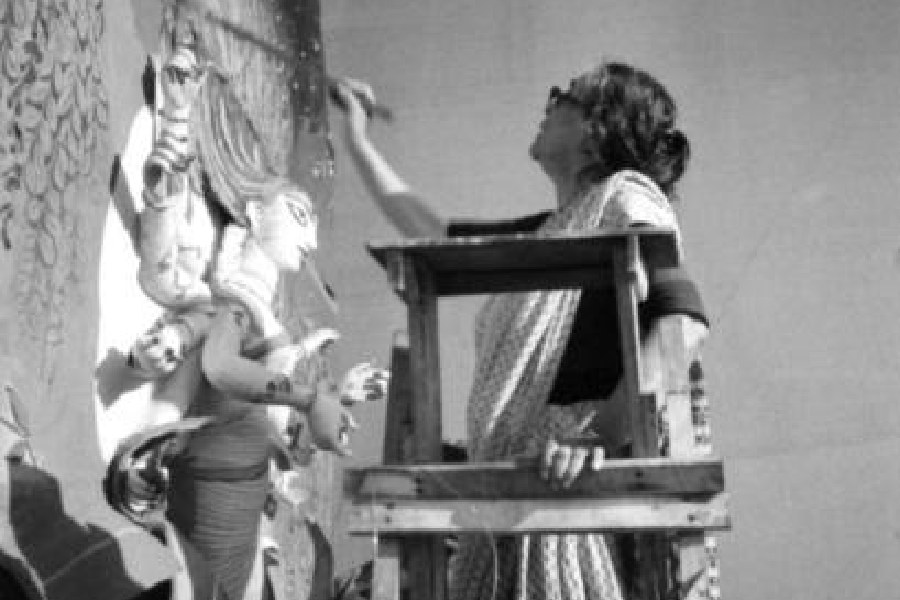
| New horizons: Gargi Roy Chowdhury |
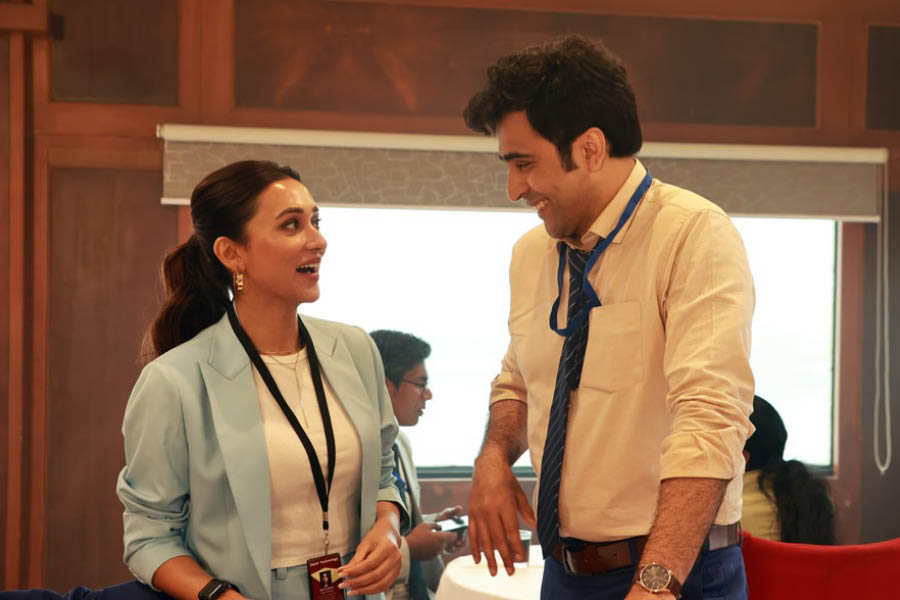
Play acting Who said, “When a man is tired of London, he is tired of life”' Those who said, Samuel Johnson, will, I am afraid, have to resit their Higher Secondary. The answer is Gargi Roy Chowdhury, star of Bengali stage and screen, who brought a touch of glamour to the Nehru Centre last week. To the accompaniment of songs by Sangeeta Datta, she presented a “theatre collage”, Je Andhar Alor Adhik (Darkness greater than Light), with the script based on Tagore’s plays, Raja, Arupratan, Sapmochon and Raktakarabi. Having started with Bahurupee in Calcutta in 1993 ' “theatre is my first love” ' Gargi is preparing to launch her own company, Purab Paschim, in August. “I have been exploring London, making contacts,” I am told by Gargi, who would like to bring her own plays to London. Traditionally, the noisy arts scene in London is dominated by Punjabis, with Gujaratis in second place. Bengali theatre exists but it’s a niche market. Gargi would get a bigger audience, doing Bengali theatre in English. “If we buy tickets to see their plays, why won’t they buy tickets to see ours'” she asks. She has been to the National Theatre, which hugely impressed her, and has seen a play, Blackbird, at the Albery. The play, reminiscent of Nabokov’s Lolita, is about the experiences of Una, a woman in her late twenties, who catches up with a man, Ray, with whom she had an apparently consensual sexual relationship when he was 40 and she was 12. She did not consider Blackbird quite right to be transposed to Bengali theatre in Calcutta, even though she accepts that Indian society is changing. “Who would have thought we would be willing to pay for bottled water'” she points out, stressing, however, her own traditional roots, “I am daughter of Tagore’s literary Bengal.” His story It was a friend who pointed out that I had a book I didn’t know I had ' Ambassador’s Journal by John Kenneth Galbraith, president Kennedy’s envoy to India (1961-63), who was best known for calling India a functioning anarchy and who has just died, aged 97. The late Harvard economist noted after a visit to Calcutta, where he delivered a lecture: “The University of Calcutta has 125,000 students and most of them were evidently there.” I am glad I have the book but disappointed by how unbelievably tedious it is, comprising an endless list of lunches, dinners and official appointments. There are no great insights into anything, apart from American concern for the well being of Pakistan. However, I enjoyed Galbraith’s observation on the physical size of the Saudi ambassador in Delhi ' “a vast man'.he was not built for the desert, and all camels should be grateful that he took up diplomacy”.
|
| Silence zone: V.S. Naipaul |
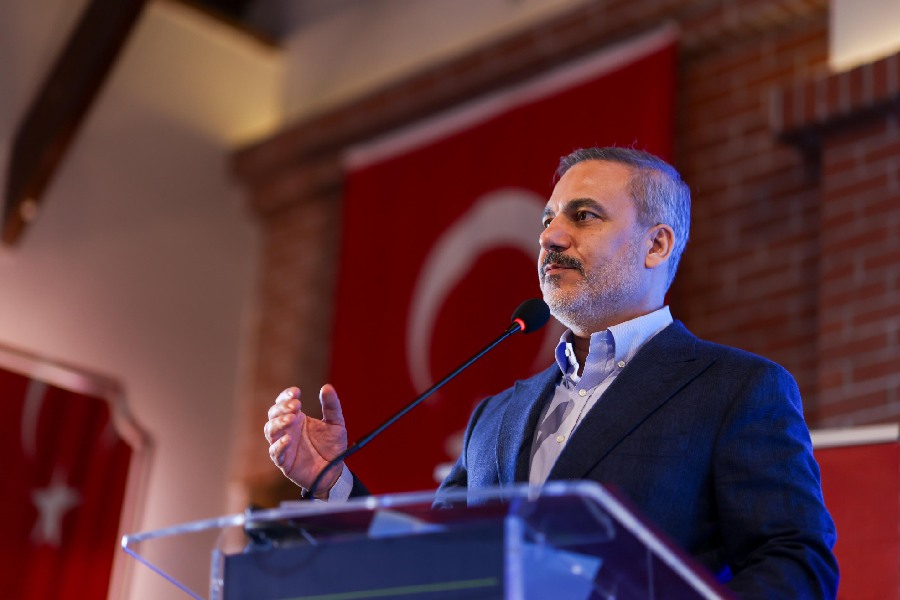
Lock ’n’ key “It’s under lock and key,” is all the normally loquacious Patrick French will say of his much anticipated biography of V.S. Naipaul. He sounds like a man hoping to make a lot of money from serialisation. Tittle tattle The English are pretty excited about Sven-Goran Eriksson’s inclusion of Arsenal’s 17-year-old “wonderkid” Theo Walcott in the 23-man England football squad for next month’s World Cup. This has invited comparisons with other 17-year-old prodigies, including Sachin Tendulkar. This is somewhat flattering to Walcott who has yet to play for Arsenal’s first team. At 17, Sachin had scored his first century ' against England, it so happens. |