|
|
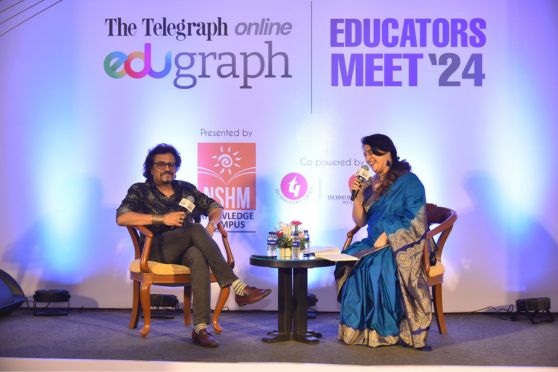
MODERN TIMES: Bhoomi regales the audience at the Bangla Sangeet Mela
|
Bangla Sangeet Mela (April 15-22) seems to have zeroed down its focus on the music produced in and around Calcutta at the expense of a broader ambit. In spite of showing a scant regard for the indigenous musical traditions facing extinction, this annual event remains the only platform for a ringside view of Bengali music.
There was no dearth of sterling performance at the Rabindra Sadan stage this year. Among the elder generation, Ramkumar Chattopadhyay, Amar Pal, Dwijen Mukhopadhyay, Mrinal Chakraborty, Nirmala Mishra, Madhuri Chattopadhyay and Dhiren Basu gave soulful recitals. In the highly rewarding folk evening, Sukhbilas Barma paid a centenary tribute to the long lost songs of Suren Basunia, the first man to record Bhawaiya songs. A rare Kanai Shil folk derivative was presented with panache by Uttam Saha. Tapan Roy shifted the focus to Siraj Sain, a lesser-known contemporary of Lalan Fakir. Adding a surprise element, Gopal Adhikari justified his inclusion with an enlightening performance of self-composed Jatiner chayer dokan, an easy-paced conversation-song championing functional literacy among the agricultural labourers. Complemented by compelling physical movements, the singer was successful in touching the nerve of Sarva Siksha Abhijan (Universal literacy project), now facing rough weather in the state.
Rhythmscape, led from the front by Bikram Ghosh, continued to regale. Innovative use of supportive vocals was the key to Shilajit Majumdars takes on urban ethos. An enthralling Sriradha Bandyopadhyay rode on beat variations in her latest release Shyane swapane gopane, a Sanjoy Chakraborty composition. Susmita Goswami and Shampa Kundu made promising forays into lighter numbers and Rabindrasangeet respectively. Sumana Chakraborty showed considerable poise in articulating a throbbing adolescent love in Babla-da. Raghab Chattopadhyay made optimum use of pre-recorded tracks during his trailblazing recital. Rupankar displayed his talent in spinning urban ballads. The new generation of song-makers found a well-deserved representation in his recital, as well as with Manomay Bhattacharya and Lopamudra Mitra. A magnificent vocal display notwithstanding, Bhattacharyas numbers charted the beaten track. But Mitra, now in command over her formidable repertoire, maintained a high quality, balancing Tagores sobriety with a condescending peek into Bengali middle class dilemmas. There was not a single reference to the polls in the six sessions that this reviewer attended. But Chandrabindoo, sporting to the core, adjusted a few words in their chartbusting Khelchhe Sachin to give fillip to the iconic appeal of Sourav Ganguly.
Barring a few exceptions, Bengalis outside the state were not represented. Beside one thoroughly enjoyable recital by Bhoomi that continued for more than an hour, the children had very little to cheer about. Classical musicians were relegated to the sidelines except for two recitals in the inaugural session. A seemingly clueless audience started thinning out as Rashid Khan began his meticulous delineation of raga Kedar, missing out on the electrifying tintal bandish Kanha re nanda nandan and the magnetic tarana that followed.
|