TT Epaper LHS
The Telegraph
TT Mobile
 
 
IN TODAY'S PAPER
WEEKLY FEATURES
CITY NEWSLINES
FEEDS
  RSS
  My Yahoo!
SEARCH
 
Archives Web
 
ARCHIVES
Since 1st March, 1999
 
THE TELEGRAPH
 
CIMA Gallary
 
Email This Page
Can you trust voting machines?

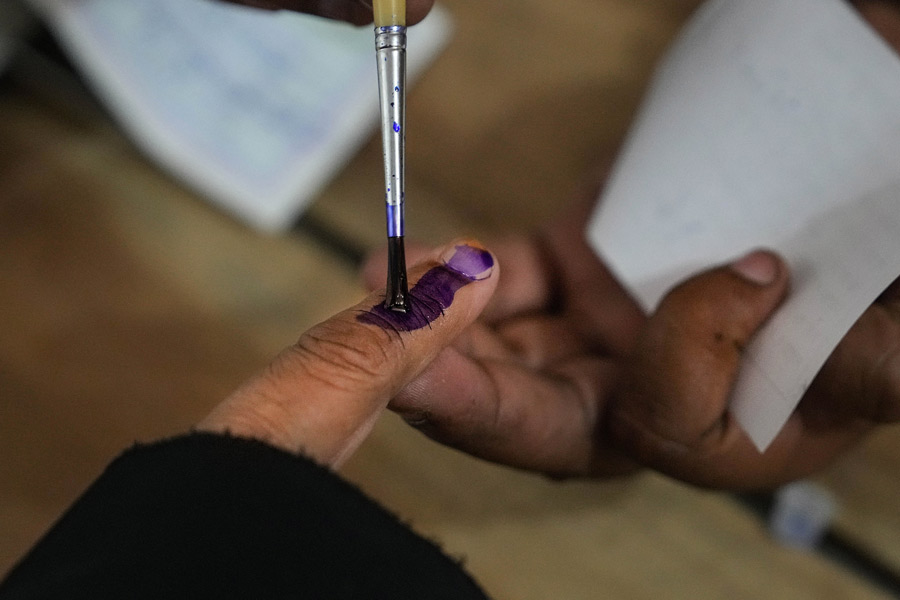
Ever since the Election Commission (EC) of India introduced electronic voting machines (EVMs) in 2001, the last few elections have witnessed greater transparency and less manipulation. Gone are the days of the ballot paper and the traditional rigging by stamping false votes. The EVMs have also done away with the logistical nightmare of safely transporting ballot boxes from the booths to counting stations and the long periods of counting thereafter.

But before smiling smugly, the electorate should understand that humans have made voting machines and that these, therefore, have many glitches. And it just needs a corrupt and tech-savvy person to fudge poll results.

The EVMs used in India were devised and designed by the EC and manufactured by two public sector undertakings -- Bharat Electronics Limited, Bangalore, and Electronic Corporation of India Ltd, Hyderabad.

Each machine has a secret source code. These codes, however, can be misused because quite a handful of officials are privy to how they work. To avoid this nuisance, the presiding officer demonstrates to the polling agents that there are no pre-recorded votes by pressing the result button. He or she then conducts a mock poll by asking the agents to record their votes. The officer then again presses the result button to satisfy them that the outcome is correct. Thereafter, the machine is cleared of the mock votes and is ready for the actual polling. This may all sound above board, but what happens if someone at the factory replaces the chip in the EVM with a fake one? This fake chip may be programmed to flip every 10th vote after the 1,000th vote in favour of a particular party.

Sceptics may argue that this isn’t possible, as a candidate’s serial number is not known in advance. So even if the EVM has been tampered with, the program will tilt in favour of the first vote cast on that particular balloting unit. But what happens if an unscrupulous candidate asks his supporters to jam the booth to ensure that they cast the first vote?

A voter is assured that the vote has been recorded as a red lamp glows beside his or her preferred symbol followed by a long beep. Let’s assume that a candidate doctors the microprocessor in the EVM to record 10 votes in as many seconds. The EVMs, however, will only light up and beep after 10 seconds. The ordinary voter wouldn’t notice the difference. And an election observer wouldn’t suspect anything as it takes at least 10-15 seconds for a voter to cast a vote.

At present, EVMs in India are not networked. But some geek can easily bypass the microprocessor in the EVM by controlling the machine by a WAP application on a cellular device or by a laptop computer. A five-metre-long cable connects the two polling units ? control and balloting. Someone can also tamper with the cable to feed in false votes.

Today’s social and economical systems have given rise to a breed of young people who are both tech-savvy and politically committed. It would be easy for a few unscrupulous people to tamper with the EVMs. Computer scientists describe this tampering with machines as “retail fraud”.

On the other hand, “wholesale fraud” entails rigging of the software from the outset. The Indian machines are more vulnerable to retail fraud because of the basic design. A wholesale fraud would require the entire system to be corrupt.

So you may seek solace in layers of safeguards in the EVMs. But the problem is that each layer creates several unintended loopholes, which may be difficult to plug. In other words, a well-designed machine can only minimise the chances of cheating, not eliminate them entirely.

Top
Email This Page