|
Preserve the past
Sir ? In ?History?s city? (March 26), Rudrangshu Mukherjee talks about museums, their role in ?freezing aspects of culture? in order to display them for posterity. The concept of museum, however, has undergone a dramatic change over the last couple of decades. Museologists have been experimenting with the idea of ?eco-museums?, a concept very close to that described by Mukherjee. Developed in France and experimented in Italy and Canada, this theory involves preserving the living heritage of a place through community participation. The traditional ?static?
museums with their elitist approach, are gradually giving way to eco-museums across the globe. Ha Long Bay Ecomuseum in Vietnam is a highly successful example in Asia.
Unfortunately, though India has a number of prospective eco-museum sites, the country is yet to develop one. In West Bengal too, places like Santiniketan, Bishnupur and the Sunderbans can develop into eco-museums. The fact that the entire city of Venice is a declared Unesco world heritage site helps in its scientific and systematic preservation. Applying the vision of eco-museums to such areas with rich heritage resources promotes the local economy, protects culture and fosters a local identity, thus ensuring sustainable development of the region.
Yours faithfully,
Baisakhi Mitra, Calcutta
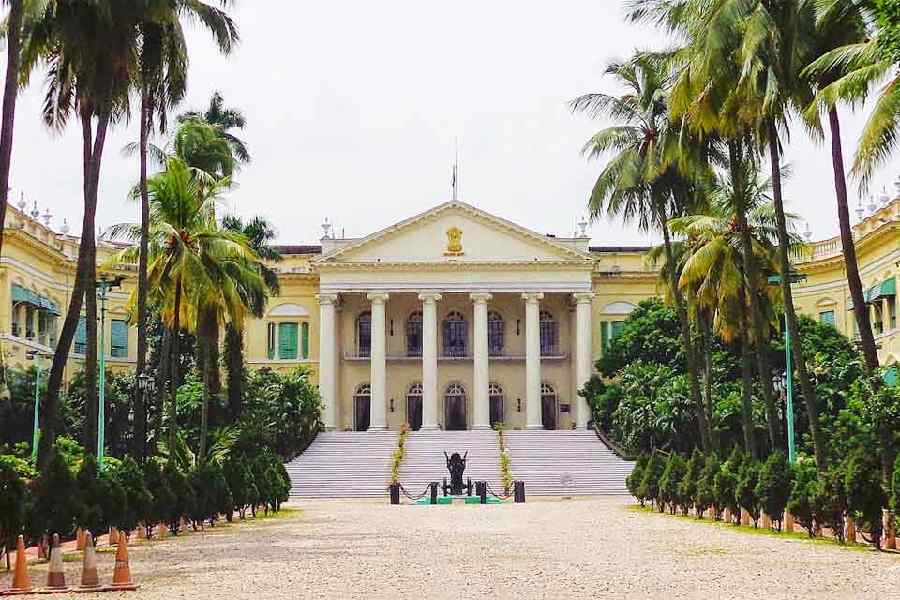
Sir ? India?s way of cherishing its own past is by not talking about it. The hypocritical gestures of the left have made it difficult for us to honour our heritage buildings in a deserving way. These symbols of our past are the most effective medium to trace our roots for they help us reconnect with the ideals and values of our ancestors. No one can doubt the need for protecting these structures from the onslaught of time and from the evil eyes of real estate developers. Today?s architects, in fact, should learn from these enduring legacies of the past.
Yours faithfully,
Arvind K. Pandey, Allahabad
Sir ? If Venice is a living museum today, it is because the aristocracy there retains some power and say in the city administration. This is not the case with India, where the former aristocracy has almost vanished, together with its heritage. There are exceptions, though, as in Rajasthan and Madhya Pradesh, where former landlords and princes have taken it upon themselves to preserve old constructions and palaces by giving them up for commercial use. As for a city like Calcutta, ruled by a government for the poor and by the poor, it is a wonder that some such structures still exist.
Yours faithfully,
J. Acharya, Calcutta
Where beauty lies
Sir ? Beauty and brains seldom go together. The way Shahnaz Husain applied make-up at the Rashtrapati Bhavan before a distinguished gathering at a solemn function lent more credence to the dictum (?Make up: anytime, anywhere?, March 30). It was strange to see her so self-absorbed, completely unmindful of the television cameras or the assembled dignitaries. Shahnaz Husain still looks beautiful at this age, albeit with considerable cosmetic help. But a function like the Padma Shri awards ceremony certainly did not require her to put finishing touches to her make-up. The president would not have denied her the award had her kajal and lipstick faded. The least that she could have done is go to a nearby washroom to freshen up. She does not have to appear to be beauty-conscious all the time just because she is in the beauty business.
Yours faithfully,
Govind Das Dujari, Calcutta
Sir ? Shahnaz Husain?s behaviour at the Rashtrapati Bhavan happened to be out-of-place. The front-page photograph of this celebrity certainly shows that this famous beautician can create her own make-up corner in Rashtrapati Bhavan too. Has the Padma Shri lost its value to such an extent that it evokes no emotion in its recipient than image-consciousness?
Yours faithfully,
Moumita Nandi, Calcutta
A generous helping
Sir ? For the Dravida Munnetra Kazhagam, it is a do-or-die situation in Tamil Nadu (?Politics of rice returns in south?, March 30). The party manifesto released on March 29 promises rice at Rs 2 per kilogram, free colour television for those who do not have one, gas stoves for all those below the poverty line and other unrealistic offers. This shows the desperation of the DMK to recapture power in Tamil Nadu at all costs, even if it drains the state?s finances. Hopefully, the electorate of the state will not be fooled by the DMK and be able to vote wisely.
Yours faithfully,
P.S. Ponnuswami, Calcutta
Sir ? Elections mean big business for Tamil Nadu, that is if the DMK has its way. For people who do not have a roof over their heads, K. Karunanidhi has offered colour TVs and gas stoves (who will pay for the gas cylinder?). It would have been far more beneficial to the political fortunes of the party had it promised safe drinking water, free education and free homes for the poor instead. The Election Commission should formulate some guidelines on election manifestos. It should differentiate between promises which are policy-oriented and those which are reward-oriented. And most important, there should be some way to hold political parties responsible for their non-fulfilment.
Yours faithfully,
Bidyut Kumar Chatterjee, Faridabad
Sir ? There must be a method in the DMK?s madness. It goes without saying that a majority of the pre-electoral promises being made will never be fulfilled. There are far too many economic compulsions. And if voted to power, the previous government can always be blamed for emptying the exchequer. Why should people?s intelligence continue to be insulted?
Yours faithfully,
Ramani P. Easwaran, Bangalore
|