|
| At home: Lord Swraj Paul with his grand daughter Amelia |
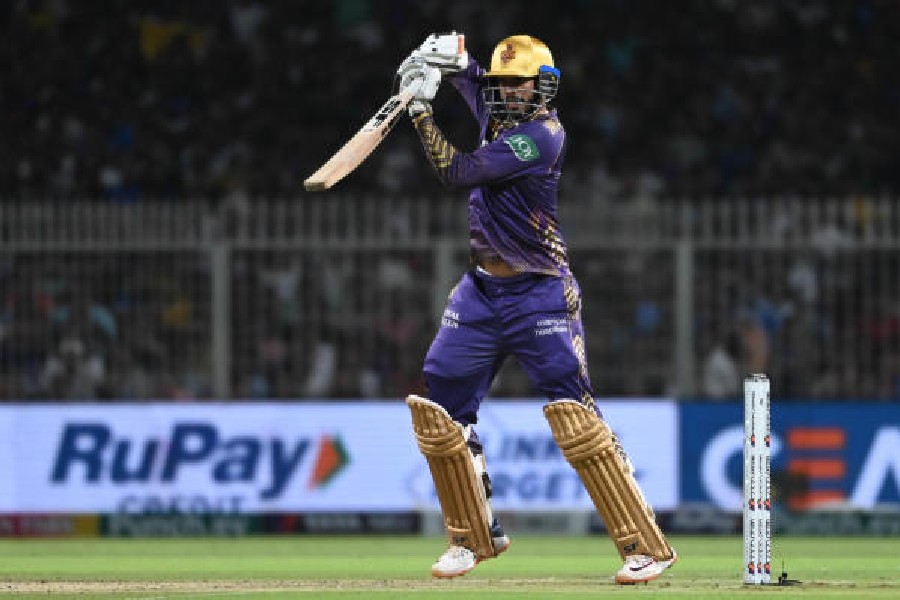
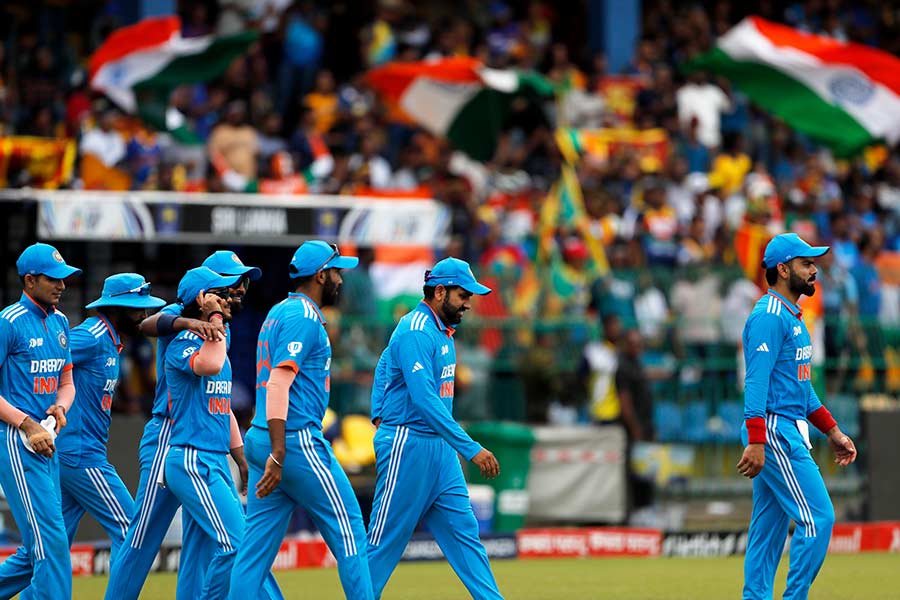
Lording it over Lord’s Lord Swraj Paul has had a very nice present to mark the 40th anniversary of his arrival in Britain in 1966. He was guest of honour at a dinner given at Lord’s by the Marylebone Cricket Club (MCC), where he described how easy it had become for British Asians to identify with the England cricket team. “I am 100 per cent British and 100 per cent Indian,” he declared. The Jalhander-born Swraj, who is 75, has, after all, spent more than half his life in Britain. What I did not know was that he has been a member of the MCC for the past 30 years, as well as a life member of the Cricket Club of India since 1952. Though Swraj’s MCC address was full of characteristic bonhomie, he did make an important point about Indian loyalties. Speaking of the “S. Tendulkar lbw Monty Panesar 16” wicket in the Mohali Test, Swraj said: “It was a special moment and cause for great celebration amongst the British Indian community. The Luton-born Panesar, whose parents arrived from the Punjab some 30 years ago and whose grandparents remain there, had arrived on cricket’s stage. He will surely inspire many other British Asians to make their mark.” He went on: “Looking at the England one day team, with four Asian players, I am reminded of an incident in New York. I was standing at a crosswalk, when a van pulled up. On the side, it said, ‘Singh & Singh ' Plumbers.’ And underneath, the slogan was, ‘You have tried the cowboys, now try the Indians.” Swraj is also chairman of the Olympic Interim Delivery Committee whose job is to complete preparations for the games in London in 2012. He has also taken on the vice presidency of the Cricket Foundation’s Chance to Shine campaign. “It has a clear aim to revitalise cricket in state schools, where its place has disappeared almost to the point of extinction. We are also working on a student exchange scheme between Britain and India. Through cricket at school, young people can access the game’s traditional values which remain more relevant than ever.” The inclusion of Asians in the England side will have a big impact, predicts Swraj. I think he is absolutely right when he says: “They will play for Britain with great pride.”
|
| Indian delight: Andy (left) and Arjun Varma inside Selfridges |
Phuket parties After the Chatwal wedding, the next noteworthy “celebrity” marriage is that between Divia Lalvani and the “quintessentially English, very private” Joel Cadbury, for which guests have been flocking to the Indonesian paradise of Phuket. Divia, 29, daughter of Gulu Lalvani, founder of the Binatone electronics group and briefly an escort for Princess Diana, and Joel, 34, a member of the British chocolate dynasty, have had their marriage solemnised in England. Phuket is for non-stop partying. One of the parties has a “Raj” theme, which should please Joel’s friends from England. Currying favour Selfridges, the Oxford Street department store which was given a makeover a few years ago by the interior designer Rashied Din (brother of the playwright Ayub Khan-Din), is to have another British Asian touch. The news was broken to me by the Varma brothers, Andy and Arjun, who looked very pleased with themselves when I found them wandering round the cosmetics counters at Selfridges. “We are going to do the Indian food at Selfridges,” said Andy, who runs Vama in the King’s Road, Chelsea, with Arjun. “We are going to do food in the top floor restaurant and throughout the store.” The last time shopping was an especially desi experience was in 2002 at Selfridges, when it adopted a Bollywood theme for three months. Loose ties Over the last two or three years, a fundamental social change has been taking place in England. Even in conservative circles, the wearing of ties is no longer compulsory. One of the few who still insists on a tie, even in the heat of the Rajasthan desert, is Prince Charles (his hosts all tended to wear loose fitting Indian clothes). The change is most apparent on the BBC where we see presenters or reporters speaking to camera without ties. Not so long ago, this would have been unthinkable. One reason for the change is the arrival from the United States of the informal “dress down Friday” code, which in many offices now effectively extends to all days of the week. In Sir Richard Branson’s Virgin Atlantic, the boss made a point of honour not to wear a tie to work, with the result his staff found it prudent to follow his example. When Tony Blair went to see George W. Bush, the British prime minister looked ill at ease in informal clothes but he had to follow the American president’s dress rules. Most gentlemen’s clubs in London will insist on a tie, as will such meeting places as the American Bar of the Savoy Hotel. Ironically, some of the most conservatively dressed businessmen in London are middle management fresh from India who affect pin stripe suits and dark ties when they come to the UK for meetings. Perhaps the most smartly dressed visitor from India is Amitabh Bachchan.
|
| OLD TIES: Prince Charles with his wife, Camilla |
Royal touch The National Theatre in London is on track to dramatise William Dalrymple’s White Mughals, in association with the Tamasha Theatre Company. “The play is being written by Christopher Hampton,” confirms Dalrymple, whose new book, The Last Mughal, will be out later this year. Hampton won an Oscar for Dangerous Liaisons, which probably means the National is having to pay him a generous fee for adapting White Mughals. I hope there will be money left for hiring actors. These are happy days for Dalrymple. When the erstwhile Maharajah of Jodhpur, Gaj Singh II, had a dinner at Umaid Bhavan for Charles and Camilla last week, Dalrymple managed to wangle his way on to the guest list. “I am a distant cousin of Camilla,” he tells me. “On Camilla, my lips are sealed. She is a warm, lovely person.” Returning from Jodhpur to Delhi, he had more reason to be pleased. “Two of my books are on display at the airport bookshop,” he points out.
|
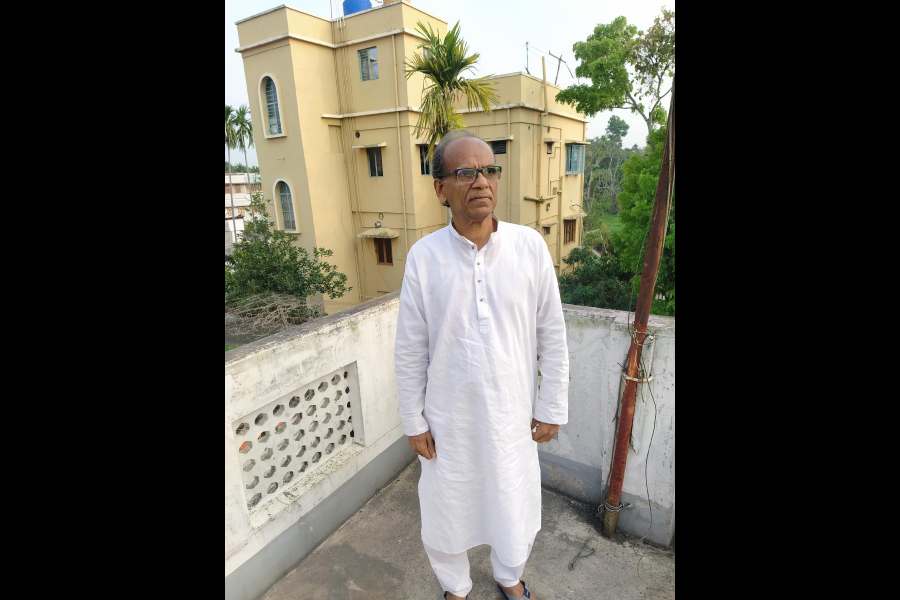
| Floored: Roopraj Prajapati and his wife |
Tittle tattle When they got married a year ago, Camilla, Duchess of Cornwall, received a green sari from the dabbawallahs of Mumbai (which she has not yet worn). Perhaps she will get a bit more use from the durries she has brought back from Rajasthan. In fact, she appears to have done quite a bit of shopping in India. During a tour of local handicrafts in Rajasthan, Camilla and Charles were given a small durrie by Roopraj Prajapati, who runs a durrie cottage industry from the small village of Salawas, near Jodhpur. “But when she saw the other durries I had brought to show as examples of our work, she bought two more ' large ones,” confided Prajapati, who offered them small discounts in return for a photograph of himself with the royal couple (for possible use later to publicise himself and his products). He told Camilla and Charles of traditional village customs: “We take credit cards and use Fedex to deliver durries within 10 days.” |