|
What does the office of profit law say?
Article 102 (1) says a person shall be disqualified for being chosen as, and for being, a member of either House of Parliament:
(a) if he holds any office of profit under the Government of India or the government of any state, other than an office declared by Parliament by law not to disqualify its holder.
Article 191(1)(a) lays down a similar provision for members of state legislatures.
What is the objective behind the law?
To ensure independence of MPs and MLAs and prevent them from receiving benefits from the executive.
How do we decide whether a person is holding an office of profit?
The phrase office of profit has not been clearly defined in the Constitution. According to Article 102, a member stands disqualified if it is proved that
a) he holds an office
b) that it was an office of profit and
c) it was an office under the Government of India or a state government.
Article 103 leaves the question to be decided by the Election Commission whose recommendation is binding on the President.
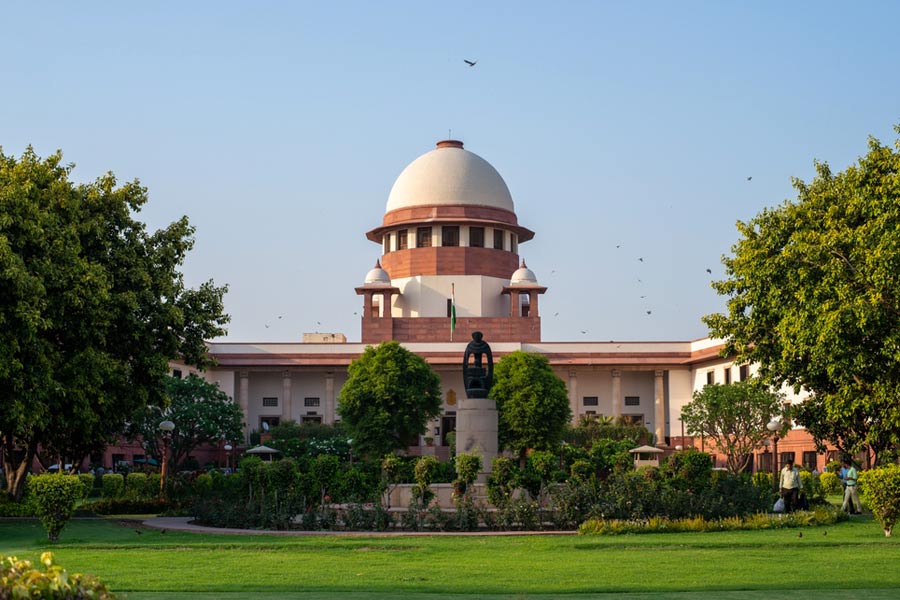
What about the Supreme Court?
It laid down broad guidelines. In 1971, the court said an office capable of yielding pecuniary gain or material benefit would attract disqualification. Actual making of profit was not necessary. The amount of such profit was also immaterial.
The court clarified that compensatory allowance would not be considered profit. But it would be otherwise if it was proved that the money received was in excess of the expenditure.
In 1975, the court said where the appointment itself was in an honorary capacity, it could not be said to be an office of profit. Thereafter, in 2001, the court said the issue of gain was important and not labels like honorarium, remuneration or salary.
But an inquiry should be carried out only if the office was under the government. For this, it has to be seen whether the government had the power to appoint and remove the holder and whether he was paid out of government revenues.
What are the posts that are exempt?
Article 102(1)(a) empowers Parliament to exempt certain offices from attracting disqualification. Some of the offices exempt:
Any office held by a minister, minister of state or deputy minister for the Union or for any state, whether ex-officio or by name
The office of leader of the Opposition in Parliament
The office of chief whip, deputy chief whip or whip in Parliament or of a parliamentary secretary
The office of a member of any force raised or maintained under the National Cadet Corps Act, 1948, the Territorial Army Act, 1948, or the Reserve and Auxiliary Air Forces Act, 1952
The office of a member of a home guard
The office of sheriff in Mumbai, Calcutta or Chennai
The office of chairman or member of the syndicate, senate, executive committee, council or court or a university or any other body connected with a university
The office of a member of any delegation or mission sent outside India by the government
The office of chairman or member of a committee (whether consisting of one or more members) set up temporarily for the purpose of advising the government or any other authority in respect of any matter of public importance or for the purpose of making an inquiry into, or collecting statistics in respect of, any such matter, if the holder of such office is not entitled to any remuneration other than compensatory allowance
The office of village revenue officer, whether called a lambardar, malguzar, patel, deshmukh or by any other name, whose duty is to collect land revenue and who is remunerated by a share of or commission on the amount of land revenue collected by him, but who does not discharge any police functions.
What are the grey areas?
There is no authoritative definition of office of profit. The matter comes to courts only after the President acts on the recommendation of the poll panel.
Parliament, too, has not defined the expression, though there is scope to do so under para 2 of the relevant act which defines only compensatory allowance, statutory body and non-statutory body. The Supreme Court has suggested that the matter needs to be decided case by case.
Compiled by Singh Gyanant Kumar
|