TT Epaper LHS
The Telegraph
TT Mobile
 
 
IN TODAY'S PAPER
WEEKLY FEATURES
CITY NEWSLINES
FEEDS
  RSS
  My Yahoo!
SEARCH
 
Archives Web
 
ARCHIVES
Since 1st March, 1999
 
THE TELEGRAPH
 
CIMA Gallary
 
Email This Page
ROAD TO MANDALAY

Just as Prime Minister Manmohan Singh was pulling off India?s arguably biggest foreign policy coup in recent history ? persuading President George Bush to agree that India?s military programme would not be subject to international inspections as part of the nuclear energy deal ? he was, at the same time, also unfortunately turning New Delhi?s carefully crafted policy on Myanmar on its head.

At the joint press conference at Hyderabad House that followed their one-on-one conversation on March 2, few noticed ? or if they did, they deliberately underreported the policy shift ? Bush?s enthusiastic reference to ?Burma?. And how he and Manmohan Singh had jointly agreed that democracy should return to that country. Perhaps the magnitude of the event unfolding before their eyes ? the implicit acceptance of India as a nuclear weapons power by none other than America ? was so impressive that these analysts thought it better to push the Burma-Myanmar reference under the carpet.

For a start, India agrees with Myanmar?s military regime that its country should be called Myanmar and not Burma. What?s in a name, you may well argue, except that Myanmar?s State Peace and Development Council, which has pretty tight control over its country, might not feel the same way about Shakespeare as the rest of the Western world.

Now New Delhi had begun to feel quite grateful to the SPDC, despite its strong-arm tactics since the 1989 elections (when the electoral verdict, in favour of the pro-democracy leader, Aung San Suu Kyi, had been summarily rejected by the State Law and Order Restoration Council, the previous incarnation of the SPDC). Especially since the military men in Yangon were simply not ready to allow any anti-Indian insurgents to take refuge in Myanmar, across the border from India?s north-eastern frontiers.

In fact, in the late Nineties, Yangon actually allowed the Indian army to chase these insurgents into Myanmarese territory and destroy them on foreign soil. It was a top-secret operation. But it also denoted a measure of respect, cooperation and understanding between the world?s largest democracy and a military junta, which had slowly come to realize that it could not solely depend upon China for all its external needs.

Here, then, was the essential difference between the military dictatorship on India?s western border, Pakistan, and on its eastern border. While Musharraf?s Pakistan encouraged cross-border infiltration into Kashmir, Myanmar?s generals were actively helping the Indian army in cleaning up its east. And so New Delhi laid out the red carpet in November 2000 to welcome General Maung Aye, chairman of the SPDC and the second most powerful man in Myanmar, repeating it in 2004 when the top general, Than Shwe, visited India.

This, then, is the delicate and extremely vital relationship Manmohan Singh has put into jeopardy when he allowed Bush to make that remark at Hyderabad House. Nor was it a case of the Indian prime minister not knowing what the US president was going to do. In fact, in parliament about ten days ago, when Manmohan Singh stood up to defend the Indo-US nuclear deal, he also announced that India would do everything it could to help the return of Aung San Suu Kyi back into power. India?s flip-flop on Myanmar was complete.

But there was more: Ironically, just as the prime minister was making his statement in parliament, Myanmar?s top military general, Than Shwe, had, only some hours before, received President A.P.J. Abdul Kalam on an official visit. Kalam was accompanied by the foreign secretary, Shyam Saran, a previous ambassador to Yangon. The two countries talked about everything, from helping Myanmar with remote sensing to gas exploration and industrial development.

So when reporters aboard the president?s plane later quizzed the foreign secretary about the seeming double standards, Saran clarified that a reference to Aung San Suu Kyi and democracy had been made to the Myanmarese generals only ?at the airport?? when they had come to bid Kalam goodbye and not during official talks during the visit.

Clearly, Shyam Saran too was walking a diplomatic tight-rope between the need to keep the Americans happy (after all, hadn?t they just given India the best present in the world ?) and the Myanmarese satisfied. After the recent mess over the trilateral gas pipeline from Myanmar to India via Bangladesh (a result of the squabbling between the ministries of external affairs and petroleum) ? which resulted in Yangon awarding key gas blocks to the Chinese ? Saran didn?t want yet another mishap on his hands. Clearly, General Than Shwe and Co could not be given the impression that India, under American pressure, was going to get all preachy with Myanmar.

The fact is, the Chinese are all over the place in Myanmar, a country with which India shares a 1,670 kilometre-long border. From constructing a naval base in Sittwe, a strategically important seaport quite close to Calcutta, to setting up four listening posts in the Bay of Bengal and the Andaman sea to funding the construction of roads, to pouring in money for industrial development, the overweening influence of the Chinese is evident.

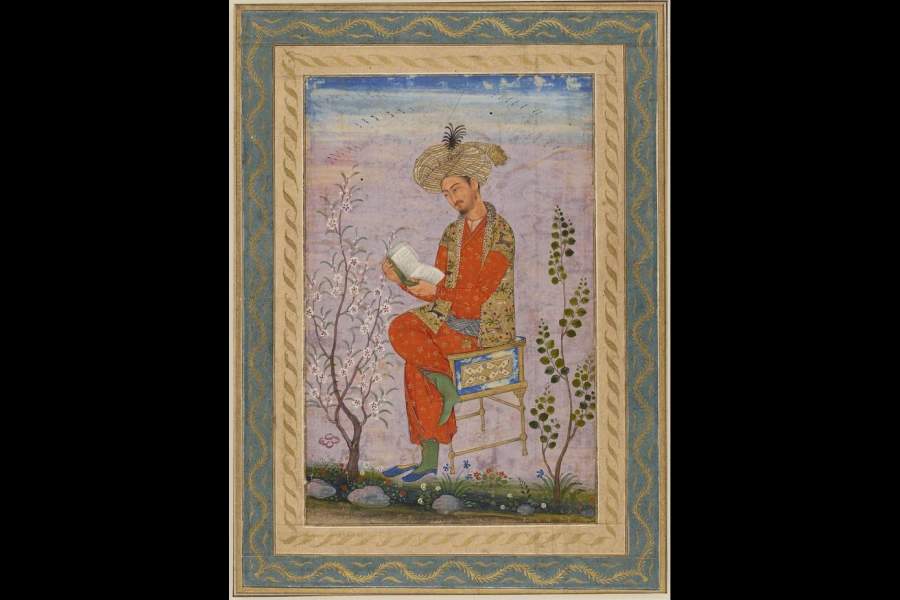
And yet, Than Shwe and his generals have in recent years realized that India, the other big Asian giant, can also be leveraged in a delicate balance of power with its close friends in Beijing. They are well aware of the nostalgia generated by old historical linkages ? Bahadur Shah Zafar, the last Mughal emperor, was exiled in Yangon by the British after the 1857 mutiny, and the British sent old Thebaw packing from the Glass Palace in Mandalay to Ratnagiri some years later. And then, of course, there is the blood that Indian soldiers spilt in Burma and other parts of Indochina when they fought under the British flag during World War II.

Perhaps India would have by now reassured Yangon that the Bush bonhomie over Myanmar was merely meant for the cameras and the newspaper-reading public. Here?s hoping that the generals take New Delhi at its word. Otherwise, with the infiltration in the west across the line of control hardly under control, if the east also begins to rise up in defiance, India is sure to have a lot of trouble on its hands. Some would say it is a small price to pay for true friendship with the US. But the fact remains that New Delhi has a major foreign policy test to clear.

Top
Email This Page