|
The budget nowadays is slated as a big-time media event. Industry chambers and mainstream media channels plan the event much ahead of D-day. So the element of seriousness, which was associated with Parliaments exclusive prerogative as espoused by our republican Constitution, has become a thing of the past.
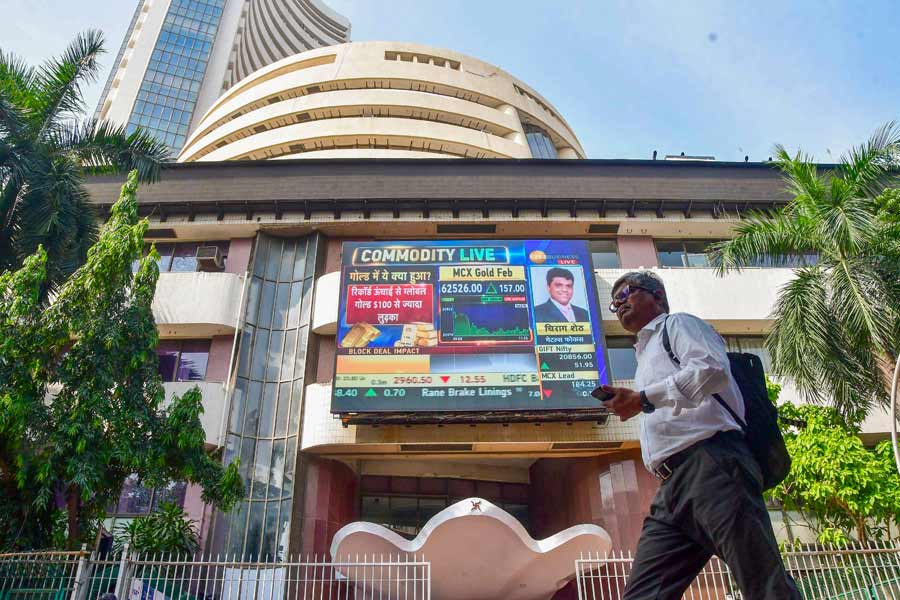
Since the success or failure of a budget is an instant affair with corporate approval ratings and sentiments expressed by the movement of the sensex, the framework of the budget becomes a foregone conclusion. Gone are the days of serious study to determine what the proposals would hold out in the medium or long term for the well-being of our people. This budget is also a confirmation of this overall trend and setting.
The yardstick for evaluating the budget for us is totally different. We are old-fashioned ? looking to judge the performance of the finance minister in terms of his accountability to the people. And the way to go about this is by judging the budget in the light of the common minimum programme and the realisation of the goals enunciated therein.
If one goes through the CMP, one will understand that the rejection of the notion of India Shining was on account of two major factors ? the crisis overtaking the agriculture sector and the grim employment situation.
This has assumed enhanced significance in the light of the Economic Surveys observation that almost 75 per cent of our people reside in the countryside. The survey further highlighted the grim scenario in the rural setting with a marginal increase in food production and the paltry rate of growth in agriculture.
The CMP led to the formation of the national commission for farmers under the aegis of its chairman, Prof. M.S. Swaminathan. Therefore, the hope was that if the finance minister doesnt pay heed to the Left, at least the recommendations of the commission would be manifest in the budget. That has not happened.
The increment in the allocation for agriculture and rural development has not been commensurate with the extent of the crisis that grips rural areas. Though the short-term interest rates for farmers has been reduced to 7 per cent, which is a step in the right direction, major recommendations like creating a price stabilisation fund for agricultural commodities and extension of crop insurance to farmers and crops are conspicuous by their absence.
The morning newspapers reported that Nagpur cotton farmers were committing suicide. But the budget has not provided for any additional protection from imports for these hapless farmers.
The stagnant rate of food production of a meagre 206.6 million tonnes reported in the Economic Survey renders per capita foodgrain availability at a rate far lower than that during the Bengal famine. Whats worse, the finance minister has managed to actually cut down the allocation for food subsidy which will have its own impact on the public distribution system.
It is true There has been some increment in the spending for the social sector ? education and health ? but it falls far short of the pace which needs to be generated to achieve the targets packed by the CMP, which are 6 per cent and 2 to 3 per cent, respectively. The small increase in ICDS programme will be inadequate even in meeting the Supreme Courts direction of achieving universal education.
On the expenditure front, the capital expenditure in the central plan of Rs 23,815 crore in the 2006-07 Budget Estimates is less than the 2005-06 BE. Overall, the increased budgetary support for the plan is not being financed by the additional revenue generation. This brings into the scene the Damocless sword of the FRBM Act, which can lead to further cutbacks on plan expenditure.
On resource mobilisation, the budget registers an increase in tax revenue, including that through collection of arrears. This is a redeeming feature. But again, the finance minister has missed out the full scope of resource mobilisation. The most developed of market economies like the US have a 15 per cent capital gains tax. The tax could have proved to be a good antidote to the irrational behaviour of the share market. Perhaps, P. Chidambaram was more concerned with the new mantra of sentiments which mark the new context.
The securities transaction tax has been increased by a meagre 25 per cent from a very small base of 0.02 per cent, and is an instance of another missed opportunity.
Some of the policy pronouncements on financial liberalisation is extremely disconcerting. The decision to allow FII access to government securities could impart a degree of volatility to an instrument that has until now been viewed by the people as a safe savings instrument.
To sum it up, the neo-liberal framework on which the finance minister has chosen to base his budgetary exercise has prompted him to capitalise on revenue buoyancy to address the concerns of the NCMP in a more comprehensive and holistic manner.
(Basu is a CPM Rajya Sabha member)
|