TT Epaper LHS
The Telegraph
TT Mobile
 
 
IN TODAY'S PAPER
WEEKLY FEATURES
CITY NEWSLINES
FEEDS
  RSS
  My Yahoo!
SEARCH
 
Archives Web
 
ARCHIVES
Since 1st March, 1999
 
THE TELEGRAPH
 
CIMA Gallary
 
Email This Page
Thank you, for not disturbing the auto pilot

The economy has been on a high growth path for the past three years. Except for some underlying concerns, this trend is likely to continue. What is more, the confidence level in the Indian economy in India and abroad is very high. The conditions were thus most favourable for the finance minister to present a courageous and path-breaking budget. Instead, this budget has turned out to be a non-event.

The finance minister has not addressed the underlying concerns in the economy. Inflation has been kept artificially low by not passing on the full impact of petroleum price increase. The Rangarajan Committee recommendations have not been touched in the budget. The government is merely postponing the evil day. May be it will raise prices when Parliament is not in session. But whenever it happens it is going to add to inflation.

There is already pressure on interest rates. There is also a liquidity crunch in the economy. This is bad news for the economy as a whole. The single most important factor which had triggered the growth of the economy was the softening of interest rates during the NDA regime. Higher interest rates will have their adverse impact on consumer spending, house construction and the economy as a whole. It is already affecting the balance sheet of Indian companies.

There are already emerging signs of slowing down of the industrial sector. The index of industrial production is lower this year than last year. In December 2005, it touched a low of 5 per cent growth compared to December 2004. The growth rate of intermediate goods has fallen from 6.9 per cent in April-December last year to 2.2 per cent this year.

Infrastructure is a key area of the economy. The finance minister has done precious little for infrastructure in this budget. In fact, by raising MAT (minimum alternate tax) from 7.5 per cent to 10 per cent and abolishing Section 10 (23) (g) of the Income Tax Act, he has made life more difficult for infrastructure companies.

The concessions to the farmers were long overdue. The then Prime Minister, Shri Vajpayee, had already announced before the 2004 polls that the interest rate for farmers would be reduced to 6 per cent.

Therefore, reduction of interest rate on short-term loans to farmers to 7 per cent is welcome but inadequate. I wish the finance minister had recognised the contribution of the Kisan Credit Card scheme in augmenting farm credit.

According to the Economic Survey, more than 556 lakh cards had been issued to farmers across the country up to November 30, 2005. The worrisome feature in agriculture, however, is decline in capital formation in agriculture to 1.7 per cent of the GDP in 2004-05 compared to 2 per cent in 2003-04 and 2.2 per cent in 2001-02.

It is regrettable that he has not thought it fit to implement the Farm Income Insurance Scheme, which had been proposed during the NDA regime. He could have easily called it Indira Gandhi Farm Income Insurance Scheme and implemented it to take the fullest credit for it.

As far as rural development is concerned, the increase of allocation to Rs 24,026 crore compared to Rs 21,334 crore in RE (revised estimates) of 2005-06 is only a nominal increase in view of the fact that it is this ministry which is responsible for the National Employment Guarantee scheme and most of the Bharat Nirman schemes.

Similarly, there is a decline in the allocation for the department of road transport and highways from Rs 21,886 crore to Rs 18,378 crore. The shortfall of nearly Rs 5,000 crore in the RE compared to the BE (budget estimates) is also a matter of concern.

The allocation for the ministry of urban employment and poverty alleviation is also less than last year. In HRD, has the cess been completely passed on?

The budget does not talk of economic reforms at all. Disinvestment has not been mentioned. Pension reforms have been mentioned in passing. The question of subsidies depends on consensus.

The budget is timid on taxation. There is no new initiative on housing or on savings, though the rate of household savings has actually declined. The finance minister has tinkered with excise duties when he should have gone for a bold step like reducing the mean rate from 16 per cent to a lower figure.

Similarly, on customs duties, he should have reduced the peak rate by full 5 per cent instead of the 2.5 per cent that he has announced. The CVD (countervailing duties) of 4 per cent on import duties, the sectoral adjustments like in the case of steel and the across-the-board increase in service tax will have an inflationary impact on the economy.

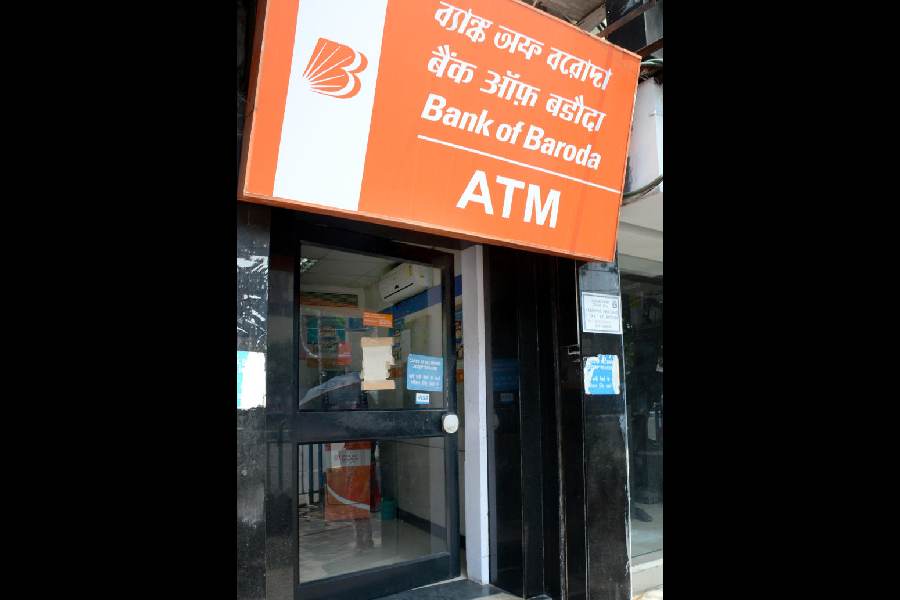
The idea of levying service tax on ATMs is a bad idea. Financial intermediation should not be taxed. He should have also completely abolished such harsh taxes as the banking cash transaction tax and the fringe benefit tax.

The economy is already on auto pilot. It has a built-in momentum of its own. Perhaps, we should be grateful that the finance minister has not done any great damage to it by his budget. But he has certainly missed a golden opportunity to present a budget which would have helped make a paradigm shift from 8 per cent to 10 per cent annual growth rate.

Alas, he has proved to be a god of small things. There is no big picture in this budget.

(Sinha is a former Union finance minister)

Top
Email This Page