|
Bharti Birla knows what a headache
registering marriages is, for she has just gone through
the process herself. The Delhi-based advocate, who works
for a non-governmental organisation (NGO), was told that
to get a marriage registered she would have to furnish the
authorities with a wedding card, a photograph of the bride
and the groom ? and a gazetted officer. Okay, lets
say I can organise all this for myself. But what about my
maid? Where is she going to get a gazetted officer from,
an exasperated Birla asks. This rule that a city like
Delhi follows makes the system of marriage registration
so cumbersome.
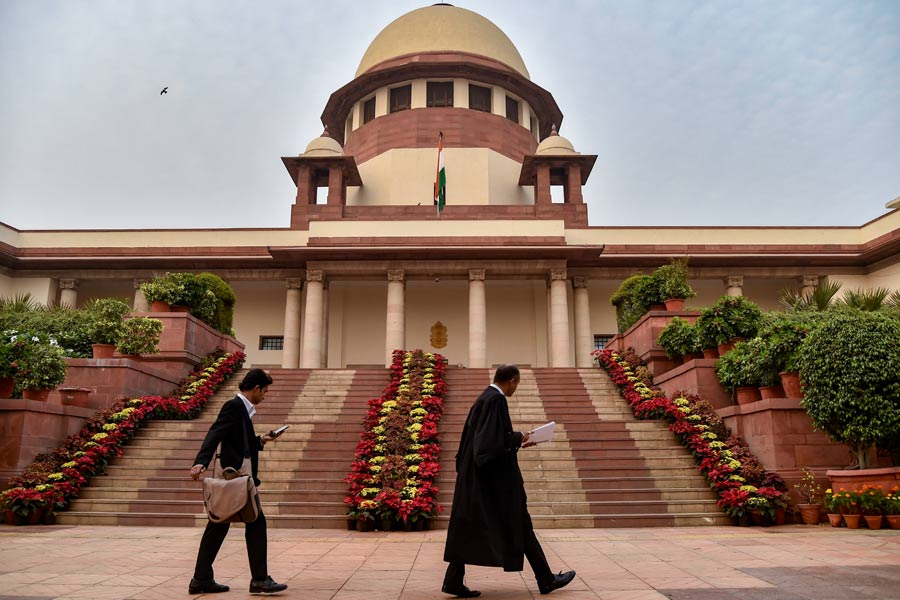
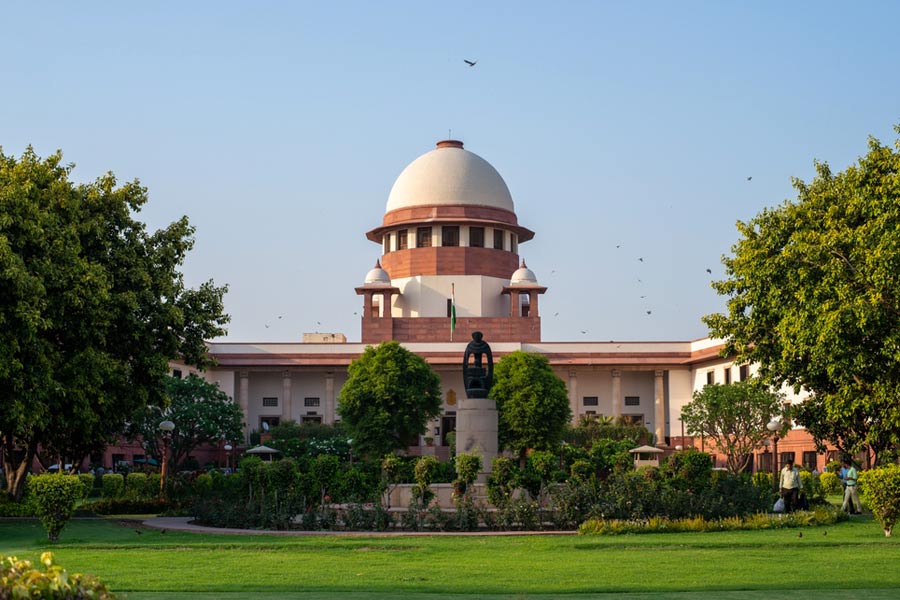
If the Supreme Court of India
has its way, Birlas domestic worker will soon find
it easier to get her marriage registered. Not just that
? the court stresses that every marriage in the country
will have to be registered. On February 14, the Supreme
Court ordered the compulsory registration of marriages.
It directed the states and Union Territories (UT) to frame
rules or amend the old ones to put the system into effect
within three months.
Its a progressive
judgement, says Soumya Bhaumik, the human rights education
officer of Amnesty International. Now we have to see
how it is taken forward, says the activist who has
done considerable work on marriage registration.
Global conventions have always
pressed for compulsory registration of marriages. Article
16 (2) of the international Convention on the Elimination
of all kinds of Discrimination against Women (CEDAW) ? to
which the Indian government is a signatory ? says: ...all
necessary action, including legislation, shall be taken
to specify a minimum age for marriage and to make the registration
of marriages in an official registry compulsory.
India always hemmed and hawed
on the issue, arguing that its customs and religious practices
prevented the country from following suit. While ratifying
CEDAW in 1993, India voiced its reservation with the argument
that registering marriages was not possible because of the
countrys diverse cultures.
The Supreme Court ruling seems
to have put a stay on the Indian governments reservations.
The court has asked the states and Union Territories to
put out an advertisement, asking for objections to the scheme,
within a month. Within two months after that, they would
have to come up with their rules.
That marriage registration has
its benefits ? especially for women ? goes without saying.
The chairperson of the Dehra Dun-based NGO, Rural Litigation
and Entitlement Kendra, Avdhash Kaushal, points out that
it will curb trafficking of women. Every woman who
is in the trade has been put there by a so-called husband.
And we have seen that when there is a police or a legal
case, there is no trace of the husband, he says.
The compulsory registration of
marriages will also curb child marriages, for a registry
will entail citing details such as the date of birth. And
since those wishing to get married would also have to give
a declaration specifying whether or not they have been married
before, the process will check bigamy and strengthen a womans
right to inheritance.
But there are some who stress
that the problem lies not with the intention of the move,
but its implementation. Thats the real test,
says Birla, who is with the Centre for Social Research in
New Delhi.
Bhaumik stresses the need for
a central authority to monitor moves taken by the state.
We dont know what kind of laws the states will
come out with. There may be loopholes which will go unchecked
if there is no central authority to oversee the various
state Acts, he says.
The problem, the experts point
out, is essentially with Hindu marriages, for marriages
are registered under most other religious marriage Acts.
Under the Indian Christian Marriages Act, 1872, all marriages
are entered into a church register after a wedding takes
place. Registration is mandatory under the Parsi Marriage
and Divorce Act, 1936. Muslim law, too, records a marriage
in a nikahnama. And under the Special Marriage Act,
1954 ? valid for all Indian citizens, irrespective of religion
? every marriage is registered. But under the Hindu Marriage
Act, 1954, a marriage does not have to be registered.
That explains why the government
has not been pushing for compulsory registration. The P.V.
Narasimha Rao government in 1994 and the H.D. Deve Gowda
government in 1996 rejected a move for compulsory registration.
The Atal Behari Vajpayee government too turned down a proposal
from the National Human Rights Commission for compulsory
registration of Hindu marriages in September, 2000.
But now, with the court having
stepped in, activists are happy that a move has been made.
A ball set rolling, they stress, can only move on.
|