The Telegraph
Bharat Matrimony1
 
 
IN TODAY'S PAPER
WEEKLY FEATURES
CITY NEWSLINES
FEEDS
  RSS
  My Yahoo!
SEARCH
 
Archives Web
 
ARCHIVES
Since 1st March, 1999
 
THE TELEGRAPH
 
TT Mobile
 
Email This Page
DVD/VCD reviews

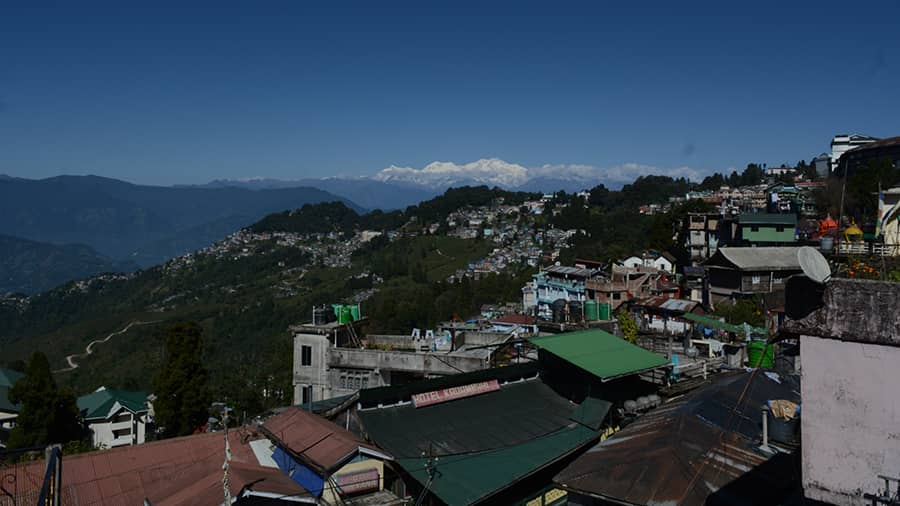
Satyajit Ray’s Kanchanjangha (Angel; DVD, Rs 399) churned up mixed reactions from Day 1 of its release. The long walks embellished with long conversations that led to several crises among the family members built up the focus of the story. In spite of being so very dialogue-oriented Ray could make the conflict of thoughts and ideas rather engrossing. A wealthy family of Calcutta vacationing in Darjeeling at the foot of Mt Kanchanjanga with the dominating head of the family Chhabi Biswas expecting all to obey him. He is there to get his daughter, Alakananda Roy, to meet the engineer groom, N. Viswanathan, he has selected for her. The daughter who’s of a different temperament befriends a young student, Arun Mukherjee, of modest means and one who has the nerve to refuse the job her father had offered him. Pahari Sanyal, a birdwatcher, is a study in contrast to this all-assuming dictator. The rest of the characters are conveniently submissive. Later they gear up for a silent revolt of sorts. The mist clears to reveal the shining white peak of Kanchanjungha seconding the fact that things have come to an agreeable conclusion. Kanchanjungha (1962) was Ray’s first film in colour.

Sonar Kella (Angel Video; DVD, Rs 399) is, simply put, a fantastic film. The very essence of a detective story lies in the thrill of knowing what’ll happen next and it’s evident in every frame of the film. This is the story of a little boy, Kushal Chakraborty, who blurts out to the journos about his painting which in graphic detail tells about some precious stone buried in the fort of Sonar Kella in Jaisalmer. And immediately the bad guys are after him. The worried parents, concerned about their son’s safety, call for the dynamic detective Feluda, his assistant nephew Topshe, and their inimitable writer-friend Jatayu to help them. The trail leads to Jaisalmer with the villains following close on their heels. The climax is in the golden fortress where Feluda catches the villain and helps release the little boy from his obsession. Apart from Soumitra Chatterjee (Feluda), Kamu Mukherjee (Mandar Bose) and Harindranath Chattopadhyay (Uncle Sidhu), the highlight of the film remains Santosh Dutta (Jatayu).

Hirak Rajar Deshe (Angel; DVD, Rs 399 ) is the sequel to Goopy Gyne Bagha Byne. This film takes Goopy and Bagha’s life forward by 10 years. They are now happily married men but soon wanderlust bites them. On an invitation from the king they grab the opportunity to visit the Kingdom of Diamonds. But there they are completely taken aback by the exploitation meted out to the commoners and the mine workers. The king has even developed a brain-washing machine so that no trace of the exploitation remains to induce rebellion. With such a plot in what apparently looks like a children’s film, Satyajit Ray shows what a master he is of this medium. The film makes socio-political statements under the garb of a very simple and extremely interesting children’s story with the two most lovable characters who sing and play to make people happy, but at the same time can mesmerise them into a stone. They use their miraculous power to help the seething rebellion led by a poor village teacher oumitra and his students. The dialogue of the film is in verse, quite an awesome thing to do, and of course the music and the songs that got many awards and applause.

Nishijapon (Shradha Video; VCD, Rs 199) is the latest release of director Sandip Ray. The theme of the story is quite engrossing and endeavours to show how a crisis like hunger can actually disintegrate an otherwise loving family. Soumitra Chatterjee leads a retired life in a remote corner of the Himalayas in a cottage surrounded by mountains on three sides and a river on the fourth. There is a hanging bridge across the river, which connects the cottage to the outside world. His family and a friend have gathered there to spend some time. His two sons, Sabyasachi and Parambrata, daughter-in-law Rituparna and her sister Raima and his friend Deepankar De are all there. But the festive mood is ruined that night when suddenly an earthquake strikes and the lone bridge connecting the house to the outside world collapses, leaving them completely cut off from the outer world. Absence of the basic necessities of life like food and water brings out all the human flaws. It takes just three days of inconvenience to bring out the worst in them. Amid such crisis though, love blossomed between Parambrata and Raima, showing a ray of hope at the same time.

Top
Email This Page