TT Epaper LHS
The Telegraph
TT Mobile
 
 
IN TODAY'S PAPER
WEEKLY FEATURES
CITY NEWSLINES
FEEDS
  RSS
  My Yahoo!
SEARCH
 
Archives Web
 
ARCHIVES
Since 1st March, 1999
 
THE TELEGRAPH
 
CIMA Gallary
 
Email This Page
Labour rights for the unorganised hordes

Millions of Indians will be closely following Parliament in the coming session. From fishermen and seasonal farmers to beedi makers and rag-pickers, the biggest contributors to the country’s economy are finally going to be given labour rights.

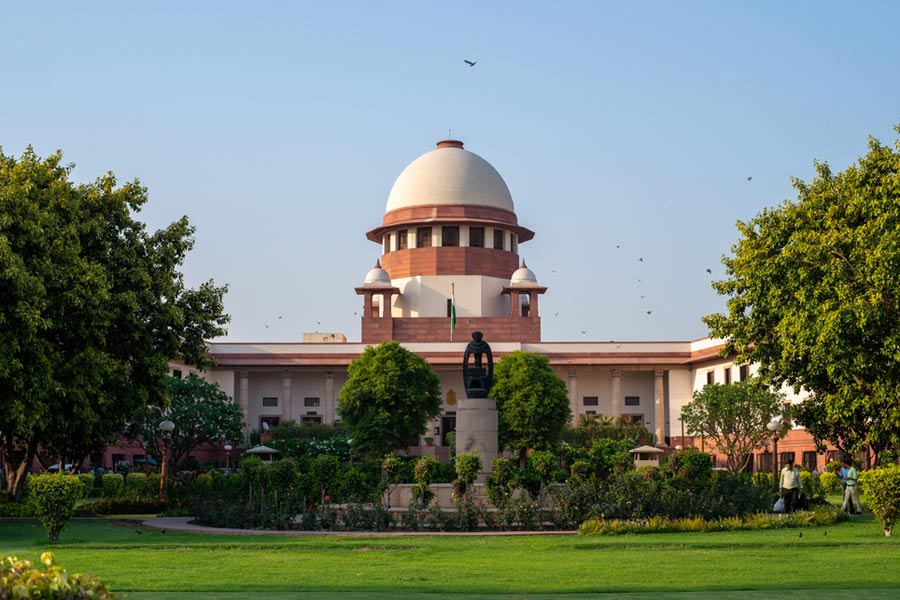
The Unorganised Sector Social Security Bill, 2005, plans to provide India’s vast unorganised labour sector ? 93 per cent of the country’s total work force ? with some of the rights others have long taken for granted. “More than half a century ago, the International Labour Organisation adopted a convention on Minimum Standards of Social Security,” says former Supreme Court Judge V. R. Krishna Iyer. “Given that India has such a large unorganised sector, we should have framed a law right then.”

Organised sector workers, such as government employees and workers in big factories, mines, plantations, banks, insurance, ports, docks and the transportation services, are covered by several labour laws. These laws are aimed not only at smoothening the employer-employee relationship, but also at ensuring social security ? including health allowances, pensions and bonuses ? for workers.

No such social security net, however, exists for the 370-million-strong unorganised sector workers, who routinely work under changing employers. Most artisans, and people involved in sericulture, leather work, salt making, etc. are self-employed. The consequence is that no labour rights apply to them.

The United Progressive Alliance (UPA) government, realising these lacunae in current labour laws, had promised to ensure the “well-being, and welfare” of unorganised sector workers through a legislation in its National Common Minimum Programme. Yet, experts on labour law believe that the current draft of the upcoming Bill, prepared by the Sonia Gandhi-led National Advisory Council, leaves a lot to be desired.

The Bill seeks to provide social security for unorganised workers, but states that income security and employment security will have to be addressed by “other means, perhaps through another Bill”.

Labour law expert T.S. Sankaran, retired additional secretary, ministry of labour, believes that “for these workers, economics and social security are not separate entities, but an integrated one”.

More than half of these workers, according to him, are self-employed and economic security for them is not just ensuring regular earnings. It also involves protection against loss of income-generating assets. “The tsunami, for instance, did not merely destroy the fishing nets and tackles of fishermen, but also the very boats in which they go out to sea,” he points out. Krishna Iyer agrees. “The Supreme Court of India has included social security as one of the elements that go to constitute a minimum wage,” he says.

Several committees set up by the government over the past three decades ? two National Commissions of Labour, the Sanat Mehta Committee and the A. Ramanujam Committee ? had themselves recommended “not taking a piecemeal approach” to the legislation.

The problem, according to unorganised sector activist Subhash Bhatnagar, lies with the government’s lack of understanding of the sector itself. “The NAC does not have a single member versed with labour laws,” he says.

Bhatnagar, who led a march to Parliament of some one lakh workers from the unorganised sector on May 5 last year, said the tone of the draft Bill upset the sentiments of the workers. “The Bill treats workers as beneficiaries. The unorganised sector produces 60 per cent of India’s GDP, and so they are demanding their rights as the producers of the country’s wealth,” he says.

Still, the very fact that a Bill is on the anvil gives hope to rural unorganised sector activists such as S.C. Dube, who believes that the proposed law, despite its shortcomings, would bring in “a new era” of labour rights. “The Bill binds the central government to providing a minimum,” he says. Clause 18 (a), for instance, states that “there shall be a floor-level scheme to be financed by the Union government”.

Sankaran, however, is critical of Clause 17 of the Bill, which, while listing out a large number of schemes, says that their implementation would depend on the “sustainability of funds”. Says he, “A certain percentage of the GDP, or of the revenue budgets of the state and central governments, should be earmarked for their social security.”

But despite the debate, what is noticeable is a sense of hope. Which is why, Krishna Iyer believes that despite the “great” temptation to rush through Parliament a half-baked social security law, the government would not allow “a gross betrayal” of the expectations of the workers and their families.

“I am confident the Prime Minister will not let that happen,” he says.

Top
Email This Page