Canalys
The Telegraph
 
 
IN TODAY'S PAPER
WEEKLY FEATURES
CITY NEWSLINES
FEEDS
  RSS
  My Yahoo!
SEARCH
 
Archives Web
 
ARCHIVES
Since 1st March, 1999
 
THE TELEGRAPH
 
 
Email This Page
WHAT?S UNDER THE CARPET?

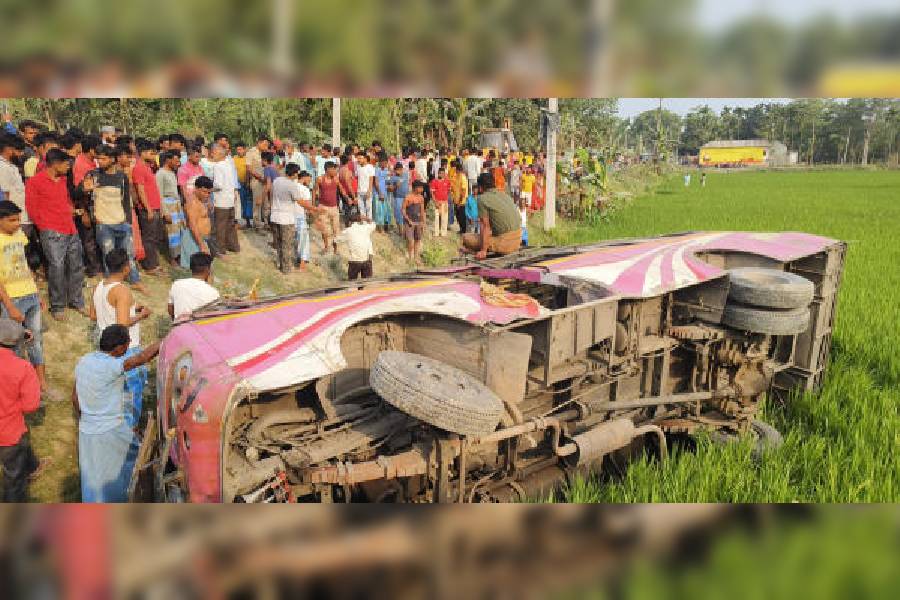
U pen Jamuda of Chandia village in Jajpur?s Kalinga Nagar area first thought it was a burst of crackers. The 70-something was looking intently at his son, Ati, and about 700 other tribal men and women who had converged on the paddyfields near Champakoila village to protest against Tata Steel when the 12 platoons of the state armed police began firing. Minutes before, the police had lobbed teargas shells and apparently fired rubber bullets against adamant tribals who did not want the Tatas to start their steel plant on their agricultural and homestead lands. As the guns boomed, Upen saw his son slump to the ground. The old man started running towards him, but someone held him back. A few hours later, he was told that his son and 11 other tribals had died in police firing.

If Orissa wanted to usher in 2006 as a year of industrial resurgence, it had started on a wrong note. Having signed 43 memoranda of understanding with as many business houses to set up steel units near ore-rich areas (including the deal with South Korean steelmaker Posco near the Paradip port in Jagatsinghpur district), the state government was in a hurry to get started.

On May 9 last year, the officials of Kalinga Nagar had tried to take over the land for Tata steel, but were fobbed off by the local adivasis, who declared they would not vacate the land till they were paid adequate compensation. On January 1, an exasperated chief secretary, Subas Pani, directed the Jajpur administration to help the Tatas resume their work on the acquired land at any cost. But the police bullets that felled 12 tribals and injured scores have raised an international outcry. The government has moved swiftly, transferring the Jajpur collector and superintendent of police and and announcing a probe by a sitting high court judge. But the trouble is far from over. The tribals are now blocking the Daitari-Paradip Expressway, Orissa?s mineral lifeline.

What has made matters worse is the return of the five dead bodies by the police, with the hands chopped off from the wrists. The administration first claimed that it was necessary for identification, but later retracted its version and suspended three doctors who conducted the autopsies. The Naveen Patnaik government now faces a barrage of criticism and condemnation from communists and social activists alike.

But not even the harshest words could express the indignation felt in Kalinga Nagar, Orissa?s future steel hub, where 13 small, medium and large steel units would produce over 14 million tonnes of steel a decade later. ?Naveen has killed my son for his steel plant. He can very well build it over my body,? said Upen, who was dreaming that his son would land a job in the upcoming steel units after having got a paltry Rs 6,000 for his homestead land.

Between 1992 and 1994, Biju Patnaik?s government had acquired hundreds of acres of land at Duburi for the Kalinga Nagar industrial complex after Swraj Paul wanted to set up a steel plant in Duburi. The displaced people were given Rs 37,000 per acre and then in 1995, the then chief minister, J.B. Patnaik, declared an additional amount of Rs 15,000 per acre for each of the ousted families. Since Paul didn?t come, the tribals who were occupying large chunks of government land continued to till the land and stay. In the mid-Nineties, the Nilachal Ispat Nigam and Mesco steel plant were started. Of the 13,000 acres in the industrial complex, the Tatas were handed over 2,000 acre last year. A total of 760 households were to be ousted by their project. Last year, following protests, the government announced an enhanced package of Rs 25,000 per acre ex-gratia on the original compensation, along with an assurance of one guaranteed job per family, a house-building assistance of Rs 50,000 and a temporary shelter allowance of Rs 5,000. But in the absence of a proper enumeration of newly-created displaced families, the compensation package didn?t mean anything.

The tribal discontent stemmed from lack of alternative livelihood and poor compensation. The money came in spurts ? first in 1992, then in 1995 and finally to only a few tribals recently. The money was hardly enough. Not worldly wise, the tribals in Kalinga Nagar had exhausted the measly compensation. Also, ?for a displaced tribal, the loss of land means a loss of social, emotional and cultural status. Cash is no compensation for it,? says sociologist Anup Kumar Dash.

It didn?t help that companies like Nilachal Ispat and Mesco, already operating in Kalinga Nagar, reneged on their promise of giving jobs to the tribals. Of the 634 families ousted, only 186 have been given jobs by Nilachal Ispat, although the agreement had been different. Upcoming ones like Jindal Stainless (out of the 59 families displaced by Jindal, only 24 have got jobs with it), and Visa also didn?t live up to expectations, so the tribals were not sure if the forthcoming steel projects would employ them. The tribals also felt cheated when the government sold their land to Tata Steel at a price 10 times higher than what they had been paid.?If Tata can pay the government Rs 3.35 lakh per acre, why can?t it give us Rs 1 lakh for the same?? asks Sudama Mohanta, an oustee of Dholapathar village.

It is obvious that the Orissa government is to be blamed for the death of the tribals as it continues to sweep the important issue of resettlement and rehabilitation under the carpet. A package was drafted by the United Nations Development Programme last year, but it is gathering dust with the chairman-cum-managing director of the Industrial Infrastructure Development Corporation, L.N. Gupta, since last July. The draft, apart from suggesting payment of full compensation for all losses to the affected people at replacement cost and their proper settlement through negotiation, seeks to elevate the position of the project-affected people by asking the industrial and mining companies to earmark 5 per cent equity for them as preferential shares. It also seeks to earmark 5 per cent of their net annual profit for local development. To become a policy it requires the final nod from the chief minister?s office, but IDCO is sitting on the file following pressures from the industry.

Orissa should rue the fact that industrialization is happening over the bodies of 12 tribals. The killing will remain a blot on the collective conscience of the state for a long time to come. It has made Naveen Patnaik look small. And ugly.

Top
Email This Page