|
Prem Prakash, 25, can sell ice to the Eskimos and tea to the Chinese. Prakash, though, didnt set out to work in the retail industry. A textile engineer, he is today poised for a career in store operations. The student at the Indian Retail School in New Delhi hopes to become a store manager in the next five years. I hope its a WalMart, he says, keeping his fingers crossed that the Indian government will open the industry to international superstores chain WalMart and its global rivals.
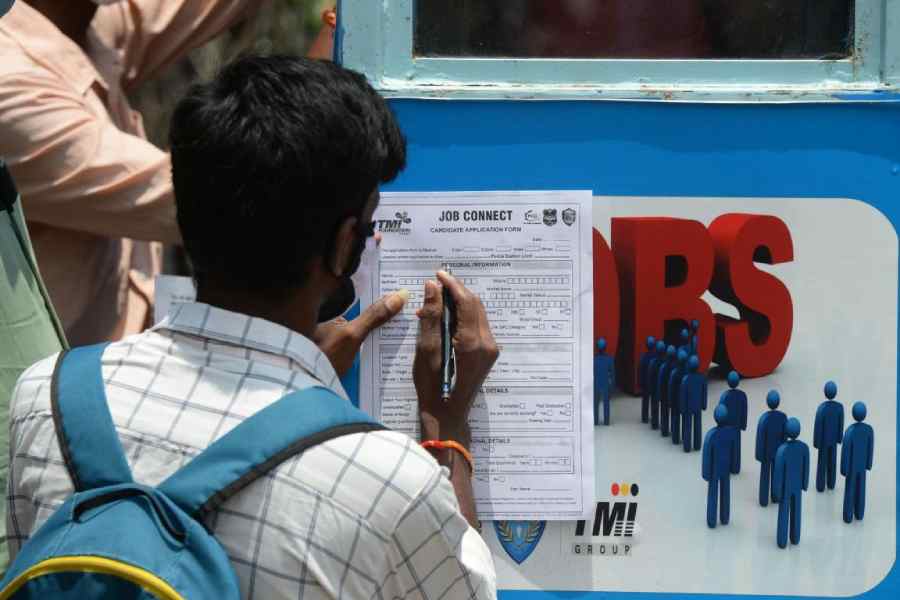
Prakash isnt the only one betting on the retail business. As the Rs 960,000-crore sector grows annually at the rate of 5%, as per the latest PriceWaterhouseCoopers report, a large number of jobseekers is eyeing the field. Even five years ago, there were few takers for retail jobs in B-schools, says Brigitta George Abraham, a Mumbai-based human resource consultant who specialises in the retail sector. Today, retailing is seen as a sunrise industry and a stable future in it is definitely available.
So what does a career in retailing involve? The answer, essentially, is that it involves different aspects of in-store operations, all of which are aimed at gaining new customers and retaining them. There are broadly five types of retail industry jobs: store operations, retail merchandising, marketing and customer relationship management, visual merchandising and supply chain management. Besides, there are general functions like HR and finance or the cashiers job.
While swanky malls have changed perceptions about retailing in India, it is certainly the numbers that have established this sector as the single largest employment generator, after information technology and computer-related services. Consider the facts. The Confederation of Indian Industry predicts that there will be at least 1,000 stores in each of the metros over the next two years. As the total retail space in the country touches an estimated 50 million square feet over the next couple of years, the sector could generate close to 1,50,000 jobs, says Gibson G. Vedamani, chief executive officer of the Retailers Association of India.
While 80 per cent of these jobs would be in frontline sales, the remaining would be in other operations like merchandising, marketing, logistics and supply chain management. With so much going for the industry, young people are making a beeline for it.
When Rakhi Gupta joined a designer mens store in Pune in 2004, she never thought that she would make a career in retailing.Catch up with mall mania
Today, the retail communications management student at the Mudra Institute of Communications (Mica) in Ahmedabad has decided to specialise in merchandising. There are 11 malls coming up in Pune alone ? the opportunities are enormous, she says. Like Gupta, Delhi-based Ruchita Batta decided to bank on the retail industry rather than pursue a run-of-the-mill corporate job. Soon after finishing an MBA course at ICFAI, Gurgaon, the commerce graduate enrolled in the Indian Retail School. Retail is an emerging sector and, therefore, unpredictable. I like the thrill of it, she says.
Some, such as instrumentation engineer Pankaj Rawat, are seeking a retail industry career to be able to strike out on their own one day. Thats because the retail industry is one of the few that lets you run a profit centre just five years into a store operations job. If I do well and get to manage a store, I would almost be a mini CEO, says Rawat, who is studying at Mica.
So what do you have to do to get into the industry? If you have a graduate degree, love people, are flexible and can keep a cool head under pressure, you could make a start as a sales associate. Your main job would be to interact with walk-in customers and induce maximum purchase. Done well, this job sees fast growth to a floor manager or supervisor in a couple of years and, to a store or retail manager in about five years. Eventually, he or she could be an operations head in charge of more than one store.
Other than store operations, the rest of the functions need professional training. An MBA degree is always an added bonus. A merchandiser, for instance, could be a graduate or an MBA with a professional degree in retail merchandise management. He or she would study consumer trends before sourcing and buying merchandise and evolving an effective pricing strategy.
At the entry level, the monthly remuneration for frontline sales associates with no prior experience in the retail industry ranges between Rs 3,000 and Rs 4,000. Those with the requisite professional qualifications earn upward of Rs 20,000 a month. An MBA, with prior experience in the industry, could earn up to Rs 35,000 a month.
As the retail sector booms, several management institutes are now coming forward to offer specialised courses in retail management. Last year, the Mumbai-based K.J.Somaiya Institute of Management Studies and Research tied up with Pantaloon Retail to offer an 18-month diploma course (annual fee: Rs 66,000). The unique advantage of this course is continuous interaction and online and hands-on training for students every week, followed by a six-month stipendiary training at one or more outlets of the retailer, says Suresh Ghai, director of the institute. The Indian Retail School offers a six-month course in a single retail specialisation for around Rs 30,000. In Ahmedabad, Mica charges around Rs 2 lakh for a one-year comprehensive programme.
As retail careers come of age, buying and selling will never be the same again in India.
|