TT Epaper LHS
The Telegraph
TT Mobile
 
 
IN TODAY'S PAPER
WEEKLY FEATURES
CITY NEWSLINES
FEEDS
  RSS
  My Yahoo!
SEARCH
 
Archives Web
 
ARCHIVES
Since 1st March, 1999
 
THE TELEGRAPH
 
CIMA Gallary
 
Email This Page
KEEP THE PEOPLE HAPPY

India, Democracy and Well-Being: An Inquiry into the Persistence of Poverty in a Dynamic Democracy
By Amarjeet Sinha, Rupa, Rs 595

?We should not be content with mere political democracy. We must make our political democracy a social democracy.? Ambedkar said this in his address to the Constituent Assembly in 1949. He was apprehensive of a political democracy functioning in the absence of social and economic democracy in a hierarchy-bound society. Indian democracy has been interrogated by social scientists like Frances Frankel and M.S.A. Rao, Sudipta Kaviraj, Partha Chatterjee and others from time to time. The social development angle has been specially emphasized in the writings of Amartya Sen and Jean Dr?ze. Amarjeet Sinha attempts to understand the nature of India?s political democracy and its success and failure in handling poverty and securing universal human well-being, in spite of five decades of freedom.

Policies of positive discrimination and political mobilization of the underprivileged have surely contributed in making India?s democratic experiment dynamic. But a lot more needs to be done. Sinha traces the path of India?s development since independence via the route of democracy. According to Sinha, while Gandhi had a perspective of human development, basic education and literacy for all, social transformation of the Dalits, his pacifist, non-violent methods are hardly a viable option to challenge unequal relationships in society.

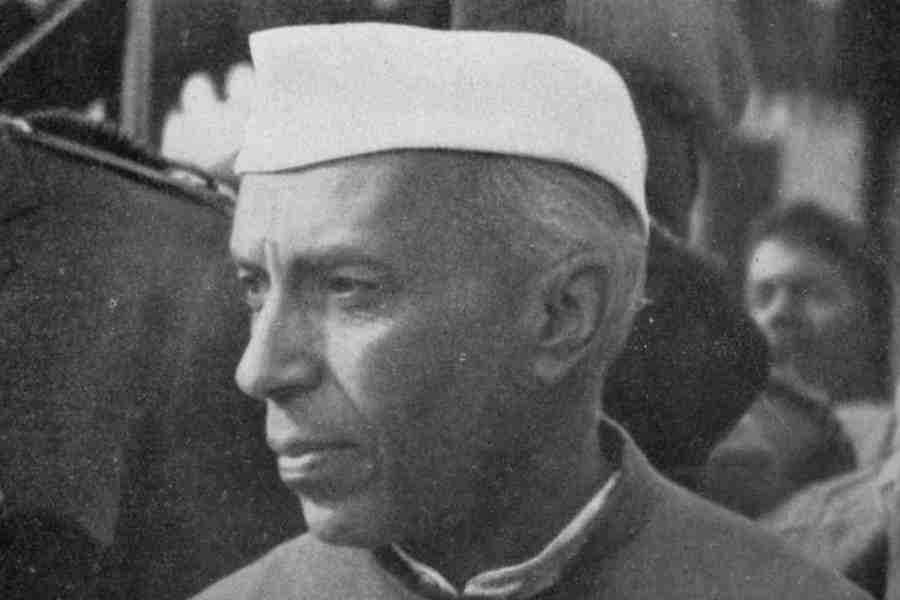
Nehru laid emphasis on self-sufficiency in food production and recognition of national integration and secularism as the hallmark of democracy. Industrial advances, establishment of technical institutes were high on his agenda. However, Nehru failed to utilize the traditional forms of knowledge. Regional development was low on his agenda. Indira Gandhi tried to fill this gap and took regional representation and political mobilization a step forward by initiating a large number of direct area based national and regional poverty alleviation programmes. But the resources allocated to fulfil the promise were insufficient. Soon, the slogan of ?garabi hatao? became mere rhetoric. By the time Rajiv Gandhi came to power, limitations of the public sector and bureaucratic inefficiency were more than visible. Growth rate declined, the country was officially compelled to follow the path of liberalization and consequent, globalization. While India has made commendable progress in terms of self-sufficiency in food, land reforms, urban development, industrial growth and advances in information technology, social justice, and rights-based pursuit of human well-being is yet to be achieved.

Sinha asserts that political mobilization of the poor has not translated into a rejection of hierarchical hegemonies. Inequality in social opportunities persists. India has failed to provide the poor quality education, good health, adequate food, social security and proper livelihood.

Sinha argues that the Indian state must provide for the people?s well-being. This ought to top the agenda of all political parties, policy-makers, and those wielding power, but how actually the goal can be achieved is not spelt out clearly by the author. There is a marked difference between aspiration, prophecy and actual achievement, which Sinha seems to forget. This book is written from an emotional perspective and much of it is repetitive. However, the author?s effort to put the different aspects of India?s dynamic democracy into one book is commendable.

Top
Email This Page