|
|
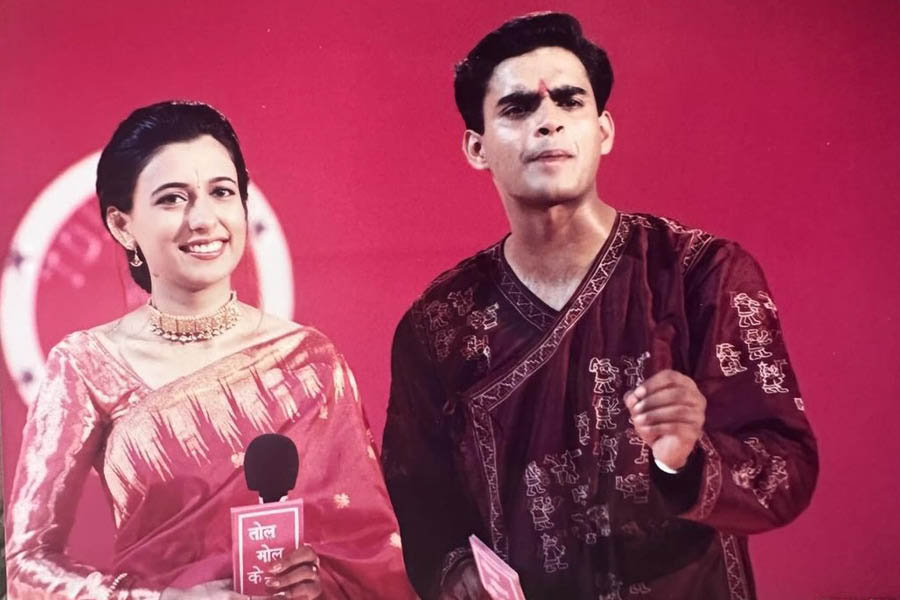
Bollywood calling? Shweta (right) at a fashion show. (File picture)
|
Bahraich (Uttar Pradesh), Nov. 25: Amitabh Bachchans daughter will finally appear in a film.
But Shweta , who earlier this year declared she would never fall for the lure of celluloid, wont be breaking her vow. For, the film featuring her is a documentary, now being shot in the state, on the need to protect Indias river dolphins from extinction.
The WWF (formerly World Wildlife Fund), which is running a save-the-dolphin campaign in India and is involved with the film, has already declared her the countrys dolphin ambassador.
Shweta was in Garmukteswar near Ghaziabad in May, criss-crossing rivers on motor boats for a first-hand acquaintance with the endangered river mammal.
She then spent several days educating farmers and their children living along the banks of the Ganga about how their pesticides and chemical manures poison the susuks (dolphins) habitat. She advised them to use cow dung and neem as manure.
When you catch a dolphin, set it free. Let it go back into the water, Shweta told the villagers.
She also visited the Katarniaghat wildlife sanctuary in Bahraich, about 135 km from Lucknow, as part of the campaign.
I am tied up with household chores, children and other family responsibilities. Yet I will find time to endorse the campaign, Shweta said. She added a little wistfully: I wish I could bring my children here to show them.
In the film, being shot by South Africa-based production company Back to Back, Shweta will be airing a save the dolphin message. The shooting began on November 20 and is expected to be completed in six months.
We are happy that she has agreed to be part of the campaign. We are determined to see this campaign have some impact, said Sandeep Behra, the convener of the WWF in India.
Shweta will soon be back at the sanctuary, not just for the shoot but also to lead an awareness march by farmers and their children from the villages along the river Garura, whose clear waters are home to about 30 dolphins. During her earlier visit, she had met wildlife specialists and college professors to plan the campaign.
A survey in February had revealed a severe threat to dolphins in the region. A WWF team and state forest officers extensively studied the river fauna right from the Indo-Nepal border up to the Kailashpuri barrage, said Romesh Pandey, the divisional forest officer.
He described how fishermen were killing the dolphins so that their oil could be sold as an ayurvedic medicine for rheumatism. Whether the oil has such a curative property is medically disputed.
Even before Shweta began her campaign in these parts, WWF had been distributing hundreds of posters with captions that read: Wanted alive: Gangetic dolphins.
Shwetas involvement has given the campaign new momentum; her name has pepped up the volunteers, said Behra. She has a natural talent for communication.
WWF sources said a survey of the 6,400-km stretch of the Ganga, Brahmaputra and their tributaries has shown that the number of dolphins had fallen from 4,000 to about 1,500 in the past 10 years.
The film will be shown on the National Geographic channel and will also be screened in Indias riverside villages.
The next phase of the campaign will cover Bihar and Bengal where, too, dolphins are falling prey to fishermen.
|