|
|
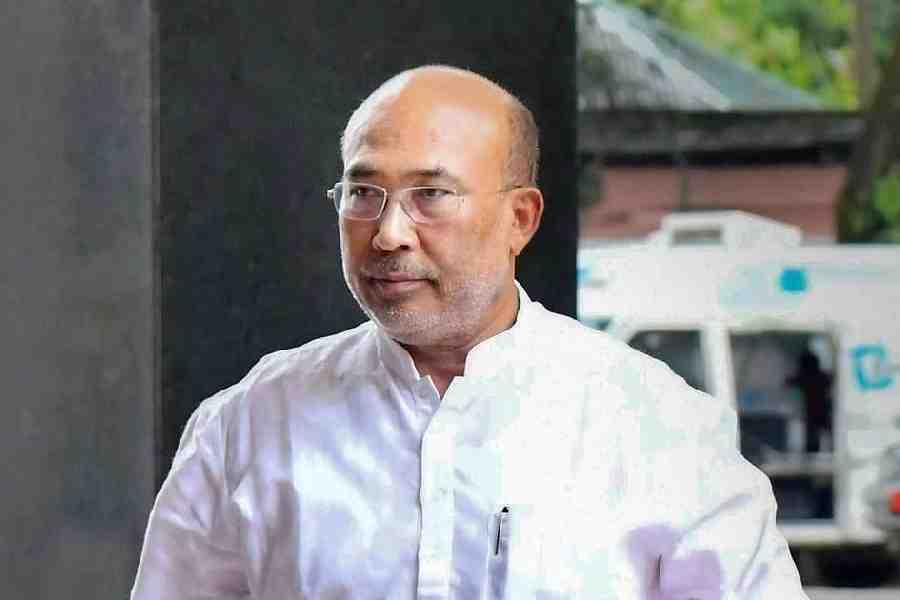
Chief minister Buddhadeb Bhattacharjee and mayor Bikash Ranjan Bhattacharya share a light moment at the foundation stone-laying ceremony of the Institute of Neurosciences on Tuesday. Picture by Amit Datta
|
Chief minister Buddhadeb Bhattacharjee on Tuesday admitted to ?lacunae, lapses and problems? in the state?s healthcare system.
On Tuesday, a 55-year-old woman died at the state-run Sambhunath Pandit Hospital after ants feasted on her eyes on Sunday night. Bhattacharjee, however, refused comment on the incident.
The chief minister said he did not have the details of the case, before adding that the government was trying to improve the healthcare system by addressing human resource and infrastructure problems.
Bhattacharjee was speaking at the foundation stone-laying programme for the Institute of Neurosciences at the Mullickbazar-Park Street intersection.
?Let newspapers criticise us. Even if they say everything has failed, it is not so, especially when you look at the number of people being cured. Handling tens of thousands of patients is a huge task, and we are doing our best,? he said.
The chief minister added: ?There are 14 private hospitals in the city now. Entrepreneurs are being encouraged to set up hospitals here. We want centres of excellence, but the government cannot do it alone.?
The state has formulated a draft public-private partnership policy in healthcare, which has been made available on a website, Bhattacharjee informed the gathering. He cited the Institute of Neurosciences as a model public-private healthcare project that should be emulated.
Elaborating on the difficulty of the task facing the government, the chief minister said the state caters to 70 per cent of the population through a five-tier healthcare system. In the villages, almost 90 per cent of the people avail of state-run healthcare facilities.
Bhattacharjee said that the rural healthcare system was being improved under a programme funded by the British government?s Department of International Development. The state is also in touch with the World Bank for improving the rural health infrastructure, he stated.
Construction of the Institute of Neurosciences is expected to commence in a couple of months? time. The 150-bed hospital, being built at the cost of Rs 30 crore, is expected to be ready in 18 to 24 months.
It will also act as trauma, stroke and diagnostic centre. Free treatment will be provided to the needy.
In April 2005, the Calcutta Municipal Corporation (CMC) gave the green light for the hospital. A tripartite charitable body, comprising the state government, CMC and the Neurosciences Foundation, Bengal, will set up the hospital.
Consultant neurologist at Newcastle General Hospital R.P. Sengupta, the man behind the neuroscience institute, said he visits Calcutta almost every month to further the project, and would eventually settle in the city.
?At the moment, I am gathering resources abroad. The challenge is also to bring back some doctors and create a platform for them to work here,? the doctor added.
?It took a long time to kick-start the project, as there was a dispute with the previous civic board regarding ownership of the plot. The problem was resolved within a week of the Left Front assuming control of the civic body,? explained the chief minister.
|