|
Dhaka, Nov. 12: The challenges that South Asia faces today as a region were no longer susceptible to national solutions, Prime Minister Manmohan Singh declared at the 13th Saarc summit here today. He, therefore, argued for an imperative need to change and overcome the divisions of history and politics to forge a new architecture of mutually beneficial economic partnership.
However, at the same time, in an obvious reference to Pakistan and Bangladesh, he argued that this would not be possible unless there is zero tolerance for cross-border terrorism and for harbouring of hostile insurgent groups and criminal elements.
India accuses Pakistan of promoting cross-border terrorism on its territory and Bangladesh of harbouring north-eastern militants hostile to it.
Proposing that South Asian countries should not only reconnect themselves but also connect themselves with their larger Asian neighbourhood, Singh today suggested several bold measures for economic integration.
His proposals included each member country providing transit facilities to third countries to its immediate neighbours, India offering reciprocal facility of daily air services to the designated airlines of Saarc countries, the creation of a South Asian university, a contributory regional food bank, a South Asian development fund for poverty alleviation, the establishment of a Saarc high economic council, a South Asian dialogue on energy and setting up retail outlets for textiles and handicrafts of each country in the capitals of the other members.
As an initial gesture, he suggested that India would hold a South Asian car rally before the next summit to symbolise vividly our regional identity and also draw attention to the urgent need to improve our Saarc transport infrastructure.
Underlying these proposals for expansion of trade and transit, sharing of the knowledge base, reducing food insecurity and opening markets was the condition that no member country should allow its territory to be used against the interests of another member country. The unequivocal stress on cross-border terrorism and harbouring of militants suggested that his reference to failed states in Indias neighbourhood yesterday was deliberate.
Even today, he reiterated to Indias neighbours about what they stood to gain by making each other secure and the costs of lack sensitivity to the concerns of others. He argued that more liberal movement of people and goods across our borders requires greater sensitivity on the part of all member countries to pressing concerns of others. Only when there was mutual confidence and a collective commitment against the scourge of terrorism could any progress on trade and other economic interaction be achieved, he insisted.
The burden of Singhs address was that the initial blueprint of regional cooperation charted 20 years ago under Saarc had fallen short of expectations. It neither matched the success of such efforts either in Asia, like Asean, or in the rest of the world.
Referring to Asian resurgence based on rebuilding of pre-colonial arteries of trade and commerce, Singh asked: My question is, is Saarc prepared to be an integral part of this emerging Asian resurgence or is it content to remain marginalised at its periphery? South Asia, he argued, cannot claim that it is at the crossroads of Asia while remaining disconnected within the region. Without the latter, the former is not possible, he asserted.
Reconnection of the subcontinent
was essential as only this, the Prime Minister suggested,
would allow South Asia to reclaim the prosperity that
is undoubtedly our due. India, he said, was willing
to provide transit to all its neighbours to third countries
and urged others to follow suit. At present, Pakistan does
not allow the transit of Indian goods to Afghanistan and
beyond, Bangladesh does not allow the transit of Indian
goods to its north-eastern states, and India is yet to allow
Dhaka to evacuate power from Bhutan or Nepal.
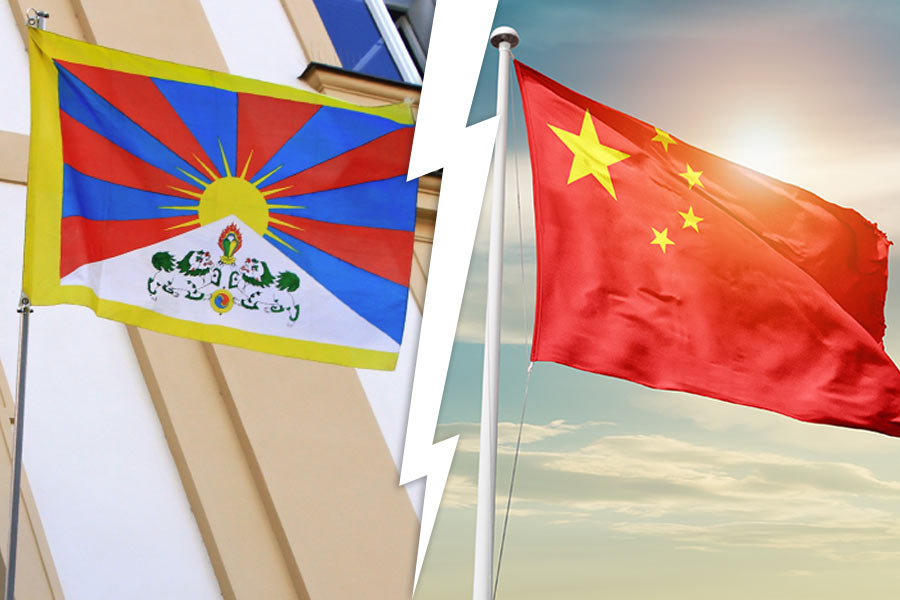
China role
Saarc seems to have arrived at
a compromise on Afghanistans membership and Chinas
request to be associated with it.
Afghanistan may well be invited
to become the eighth member and China may be approached
to sign an MoU for cooperation.
Although no final decision has
been taken yet, this could be the way out, pending the framing
of criteria and modalities for associating other countries
as dialogue partners or observers.
Bangla talks
Prime Minister Manmohan Singh
had an important meeting with his Bangladesh counterpart
Begum Khaleda Zia.
Besides dwelling on the Saarc
process Bangladesh takes over the chairmanship of
Saarc this year Singh assured her that India wanted
the very best of relations with Dhaka.
As if to assuage the anti-India
suspicions of the ruling BNP, Singh said India would deal
with any government elected by the people of Bangladesh.
|