|
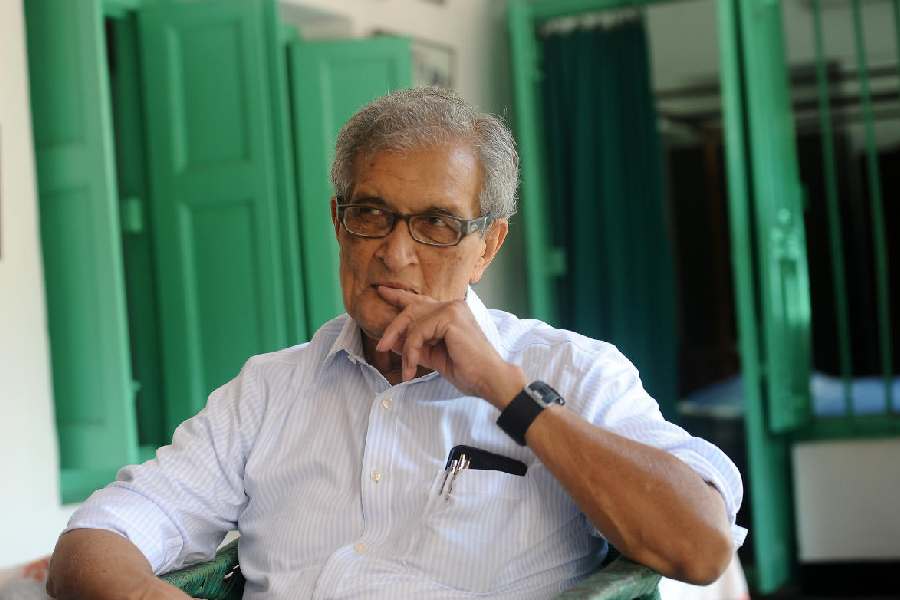
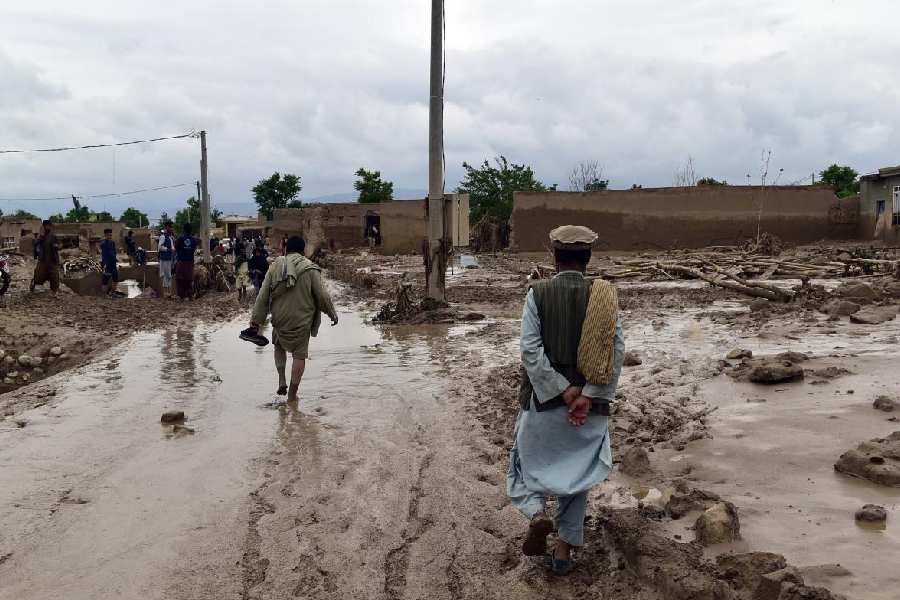
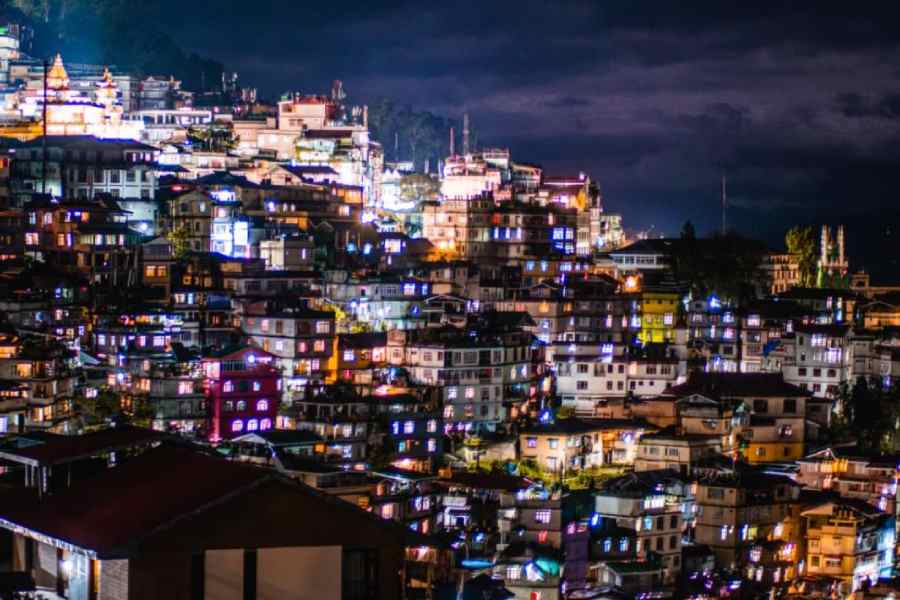
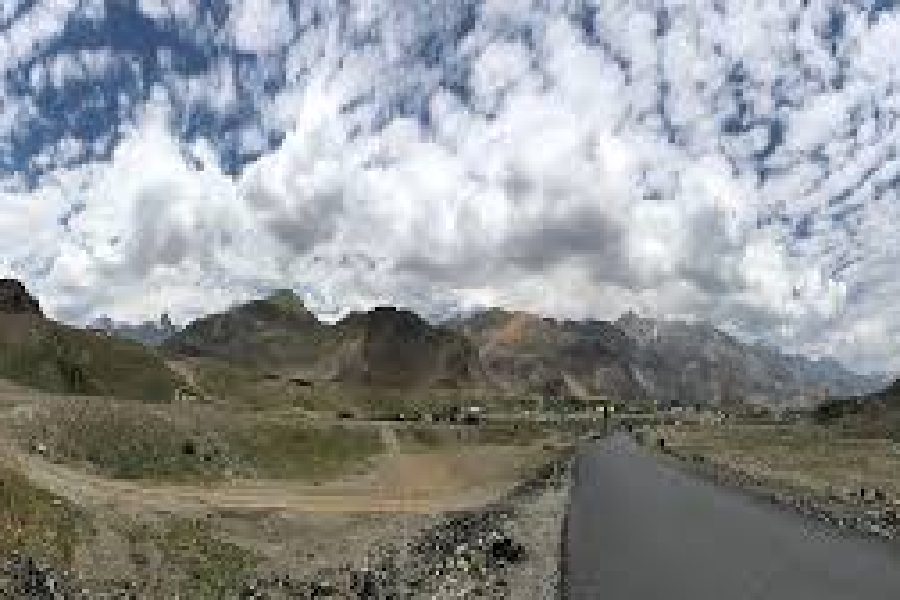
| THEN AND NOW: The town of old Tehri (above),
and New Tehri |
 |
Travelling steadily downhill, the Maruti 800 suddenly comes to a grinding halt. Vikas Rawat, a 60-something resident of Dehra Dun, steps out of the car and perches himself on a concrete barrier at the edge of a steep fall. For a few minutes he sits there, motionless, his gaze fixed on the valley below. He strains to see through the harsh glare of the golden sun and tears soon begin to well up in his eyes.
Several hundred feet below him, across the gorge through which waters of the Bhagirathi and the Vilangana once flowed, stands Tehri Dam ? in service of the nation, as a roadside plaque many kilometres away in Chamba proclaims. To the left of the superstructure, at the confluence of the two rivers, lies the town of Old Tehri, awaiting its imminent submergence.
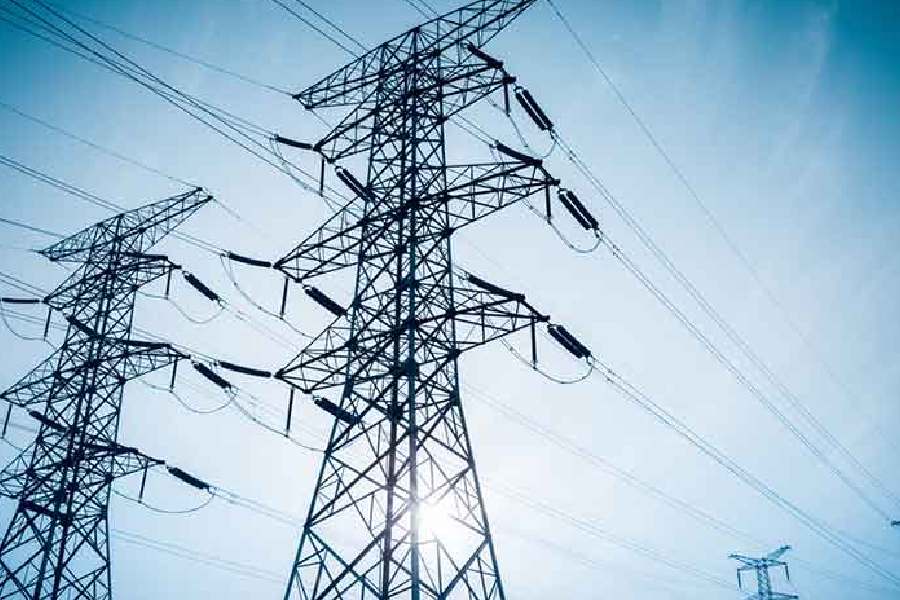
The last residents of the six-lakh-strong Uttaranchal town moved out on Monday, about a week after the underhill tunnels that bypassed the waters flowing into the valley during the dams construction were shut permanently. Its only a matter of time now before the reservoir of the dam, with Old Tehri at its base, fills up to feed water to the giant hydro-electric turbines planted in the hollow of the mountain, and the production of electricity begins. Its only a matter of time, then, before Old Tehri sinks.
In the context of development, the inundation of Tehri seems to be a small price to pay, at least from the states perspective. Much of the town has disappeared under water already. Only an island, pockmarked with remnants of broken houses, and the main mall ? with a forlorn clock tower standing amid the debris ? remain. Denied an exit to the plains, water rapidly flows in from both ends to gather in the valley. Within a month, Tehri will be gone. Given its height, the clock tower will be the last to go. Rawats house, located down on the slope, wont survive that long.
When I heard water had begun to fill up, I came rushing from Dehra Dun just to catch a glimpse of my house, says Rawat, his eyes still moist with tears. This is the last time I will ever see it. Sab chala gaya, he sighs.
Displacement is a predicament that hasnt been exclusive to Rawat, who has been living in Dehra Dun for two years now. Ever since water began to collect in the valley, hundreds of families have had to go through the painful experience of bringing down their houses with their own hands and relocating to far-flung towns across the state. Compensation has been adequate, say many residents. But it hasnt helped in putting Tehri out of the mind and starting life afresh.
Many people have opted to move to New Tehri, a town built a few years ago on an adjacent hilltop to accommodate the residents of the old town. Theres no water there, and the tanker comes once in three days, says 62-year-old Chandra Mohan Nautiyal, who has chosen to shift base to Pathri ? 20 km away ? instead. Once a farmer, Nautiyal now makes a living selling scrap iron gleaned from the demolished houses. His fields went under water a day after the tunnels were closed. The passenger bus between Tehri and Chamba has left the valley for the last time. In a few days, the dusty tract that was once a busy road leading down to Tehri will be sealed off permanently. A buffalo has been marooned on the island ? its owner didnt quite manage to ferry it to safety. Unaware of the future, it now roams the land, happily mowing down gardens that were previously out of its bounds.
With time running out, many erstwhile residents of Tehri ? like Rawat ? have made a last trip to their hearths. Vijay Negi, proprietor of Vijay Footwear in New Tehri, took his three-year-old daughter down to the valley a few days ago, to show her the ruins of their family home. I showed her our house and the streets where I used to play when I was her age, says Negi.
Business has not been good after Negi relocated to New Tehri. Old Tehri was a tourist junction; New Tehri is off route. How many shoes can I sell to the local people? he argues. Two of Negis brothers have packed their belongings and headed for Pratapnagar, a village on the other side of the Bhagirathi. There was a bridge which used to connect Pratapnagar with Tehri. But thats gone now, says Negi. It takes my brothers a whole day to come to New Tehri now.
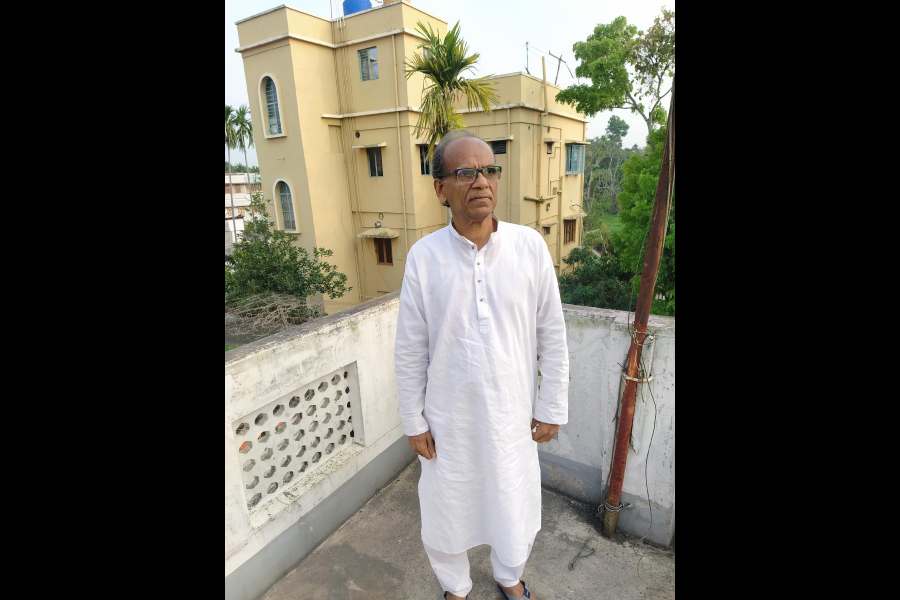
It isnt just despair that haunts every human mind in these quarters. Broken promises hurt more than reality, you see, says Pratap Singh Rana, with a smile. He points to a yellow mansion a few hundred metres above his PCO booth, located off the danger zone at Tehri. Thats the new residence ? locals say its an 18-bedroom house ? of environmental activist Sunderlal Bahuguna. But the man who fought against the dam for years is currently in Australia, say the townsmen.
Bahuguna saab promised us we would win our battle against the government and Tehri would be safe, says Rana. He even said he would go down with the town if the authorities didnt step back on the project. Now that he lives in a palace, where are we supposed to go?
Meanwhile, a few more cars have screeched to a halt beside Rawats car, on the banking that serves as a temporary viewpoint for the few tourists who take a detour to see and take photographs of a lake in the making. The site promises a sadistic pleasure of sorts, derived from watching the slow consumption of a helpless town by the hungry waters. Were getting late, Rawats driver seems to indicate, by constantly glancing at his watch.
Heaving a sigh, Rawat turns his back on the valley for the last time. Minutes later, his car disappears round the corner ? probably never to return again.
|