|
It is now a dim, distant memory for him. In February 1994, Buddhadeb Bhattacharjee was thrilled that former Czech president Vaclav Havel was in Calcutta. Poet, playwright and one-time communist icon, Havel, like Mao Zedong and Vladimir Mayakovosky, was the stuff his dreams were made of. It was another matter that his party did not cheer Havel, who had fallen from its heroes gallery after the Prague Spring of 1968, when he criticised the Soviet invasion of former Czechoslovakia.
But Bhattacharjee still adored the man ? for his literature. Havels visit to Calcutta coincided with the most dramatic phase in the Bengal leaders political life. Only a few months ago, he had stunned everyone by quitting the Left Front ministry in a huff. Neither he nor his party ever explained why, but it was known that Bhattacharjee was stung by a remark made by the then chief minister Jyoti Basu. He took refuge in a room at Nandan, the Bengali Lefts cultural hub, penning a play called Doohsamay (Bad Times).
That was also when the Haldia petrochemicals project was taking shape. This was to be the biggest industrial investment in West Bengal in many years and the first big one for which the Marxist government was desperate to get private capital. For Bhattacharjee, though, Haldia was far less exciting than Havel.
In the mid-1990s, when his name came up as a possible successor to Basu, he would be dismissive. Im not the right choice for that chair, which makes you do all kinds of things, he would say. Nobody doubted his sincerity or his honesty when he said that.
New mantra
Today, as he completes five years as chief minister, the best way to get him into a spirited conversation is to ask him about his plans to bring new industries and investments to Bengal. For the shy, middle-class Bengali who never felt comfortable in the company of rich people, let alone industrialists, now dreams of persuading investors from the far corners of India and abroad to set up shop in Bengal. He has always been uneasy about corporate ways but has changed enough to understand the importance of aggressively marketing his state. When he is not doing so, he gets his ministers to do the job.
Right now power minister Nirupam Sen, is in China to discuss with the government and entrepreneurs there a clutch of proposals for Chinese investments in Bengal. Finance minister Asim Dasgupta leaves next week for America on a similar mission. We started late not only in information technology (IT) but also in setting up new industries. We are in a hurry to make amends for lost time, says the chief minister.
The IT industry, towering new high-rises, shopping malls and multiplexes, the flyovers and improved roads in Calcutta and beyond, upcoming urban centres and new industrial projects in the districts ? the signs of change are unmistakable. But the chief minister is impatient for more, that too at a quicker pace.
So what is responsible for the change in Bhattacharjee? Its the new responsibility in a new environment, he smiles, sitting in a cubicle in the party office on Alimuddin Street and puffing at a cigarette.
If big entrepreneurs have started investing in Bengal, that is said to be because of the faith they now have in Bhattacharjee and his vision for Bengal. Everything said, its his persona that has created this faith, says RPG group vice-chairman Sanjiv Goenka, adding: Everyone can see that hes sincere, transparent and action-oriented. Goenka has no hesitation in describing him as the best chief minister in the country, echoing Wipro boss Azim Premji.
When he went to Jakarta last August to finalise the Salim groups projects in Bengal, Anthony Salim had much the same to say about him. Asked what attracted his group to Bengal, the Indonesian business tycoon replied: Its the chief minister. He is Bengals best brand ambassador. To Sanjay Budhia, the Confederation of Indian Industrys head of the national committee on exports, he is Bengals change agent.
To be sure, businessmen rarely say negative things about a chief minister. In his time, Basu too was hailed by the business community. But Bhattacharjee is very different from Basu. He not only loves literature and films but watches and talks about football and cricket. His smiling face and easy manner are in sharp contrast with Basus grim visage and imposing presence. He can be impulsive ? sometimes to a fault ? and is easily flustered. Basu was so cool that one didnt know what his real feelings were, recalls a former chief secretary of the state who worked with both men.
Money talks
Bhattacharjee, however, underplays his own role in Bengals slow but steady makeover: My policies are the continuation of the policies adopted at the time of Jyoti Basu. We adopted a new industrial policy back in 1994. My government runs on the basis of programmes charted out by the Left Front.
True. Two of the biggest new industrial projects in Bengal ? the Haldia petrochemicals and the Mitsubishi chemicals projects ? were set up during Basus tenure at the helm. And in the CPI(M)s scheme of things, no individual is bigger than the party. Bhattacharjees change ultimately reflects the changing face of the CPI(M). Most important, Bhattacharjees reign began at a time when economic liberalisation in India began to come of age. He has had the advantage of the dramatically changed times.
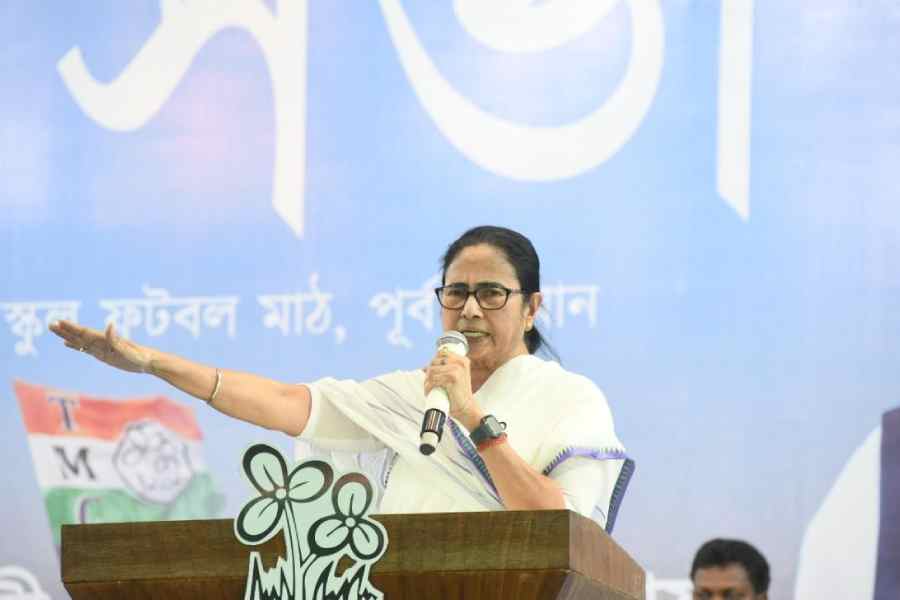
In politics, particularly in Marxist Bengal, it is not enough to earn the investors confidence. No one knows that better than the chief minister. The controversy over the Salim groups proposed investments in a special economic zone is an indication of what political challenges he still has to face and overcome. It was not only Mamata Banerjee who was up in arms against the project; the first revolt came from the land reforms minister, Abdur Rezzak Molla, who thought that Bhattacharjee was plumping for the uncertain economic benefits from it at the expense of agriculture and poor farmers.
The Salim groups projects were not the first that met with such opposition and they may not be the last. When his government came out with a new agriculture policy two years ago, the agriculture minister, Kamal Guha of the Forward Bloc, was the first Left Front leader to have cried foul. The chief minister was not only selling land to multinationals, critics said, but also taking away the farmers right to their land.
Who doesnt want industries in Bengal? Getting certificates from investors is all very fine, but we in the Left cannot allow poor people to feel that employers can take away their rights with impunity. We want new industries, but we want these to help the people and obey our laws, says Manju Mazumdar, secretary of the West Bengal unit of the CPI. He would like the government to do much more to revive the states small and traditional industries. IT companies can wind up their operations tomorrow, but local companies will be here to stay, providing employment to many more people and creating more wealth for the state than a handful of IT companies, he adds.
Miles to go
Not that only the opposition parties and the CPI(M)s Left Front partners are sceptical of Bhattacharjee's no-holds-barred campaign to bring about an industrial revival in Bengal. The toughest challenge for him has come ? and still comes ? from his own party. Mollas open criticism of the Salim project was only symptomatic of the rumblings within the party.
Bhattacharjee is anxious to dispel the notion that his pro-industry policies come at the cost of the Lefts fundamental political commitments. Its a myth that our new agriculture policy favoured contract farming or even captive farming, he says. We simply cannot dilute our policy that gave land ownership rights to poor farmers. And it isnt true that weve shifted our focus completely from agriculture to industry. We are not fools to forget that 70 per cent of our people live on agriculture.
Yet he has serious problems with the ways of the partys labour wing, the Centre of Indian Trade Unions (CITU). He made no secret of his anger at CITU forcing a strike in the IT industry at Calcuttas Salt Lake area on September 29. He almost took it as a personal affront ? not only had his government given the IT industry special status in its IT policy of 2002; but it had been exempted from a previous strike, raising hopes for a new political culture in Bengal.
CITUs intransigence only prompted him to take the issue to the partys politburo. Couched in party rhetoric over trade union rights, the new direction is clear ? no strikes can be forced on the IT industry. What happened with the debate over strikes in IT may well have set the stage for larger policy debates in the near future.
If industry is becoming the chief ministers success story, education in Bengal is one failure. And its primarily due to his inability to break the partys near-total control of education. The result: mediocrity rules in the states education system. The state health system too is in no better shape than what it was five years ago. The work culture in government offices is still a far cry from the do-it-now mantra, with which he began his term.
Even so, he is setting the pace of reforms for his party and the government and identifying new areas for more liberal policies. No wonder then that Prime Minister Manmohan Singh depends much on him to make the Centres reforms agenda acceptable to the CPI(M)s leaders in Delhi.
A new Bengal may still be a promise. But Bhattacharjees success lies in creating a new belief that he is doing everything to try and fulfil that promise.
|