|
| THAT’S THE SPIRIT: Robbie Williams |
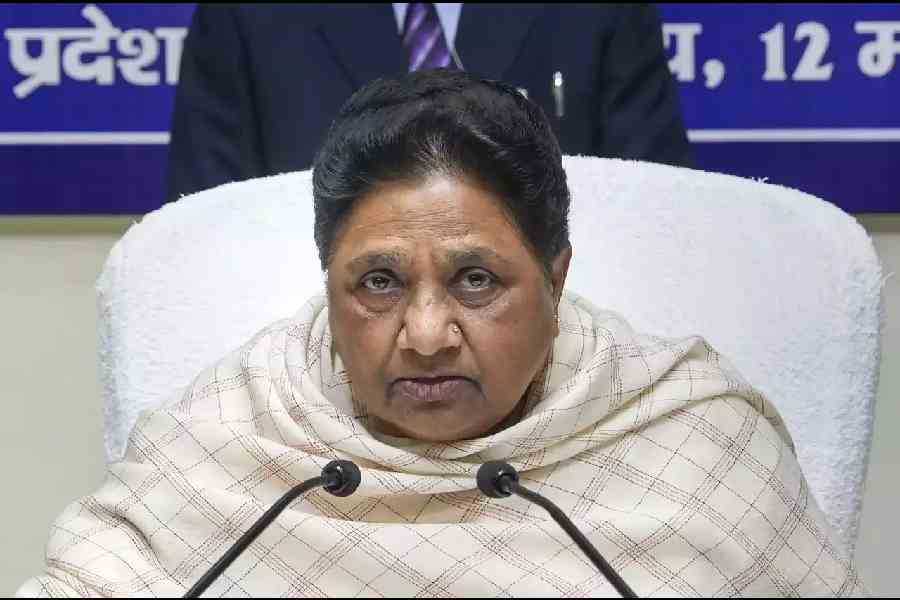
Music of the Mahatma Robbie Williams, described by one newspaper as “the biggest pop phenomenon in Britain since The Beatles”, has depended on some interesting people for his lyrics. First, there was Guy Chambers, for many years his song writing partner but with whom he fell out over royalties ' not surprising since his EMI deal was worth '80 million. Chambers was succeeded by Stephen Duffy, who had once been a member of Duran Duran. Now Williams has turned to an unlikely source for inspiration ' Mahatma Gandhi. In one speech justifying his non-violent struggle for independence, Gandhi told the crowd: “First they ignore you, then they laugh at you, then they fight you, then you win.” The Mahatma’s followers may be amused by the opening lyrics from the new Williams single: “First they ignore you/ Then laugh at you and hate you/ Then they fight you, then you win.” Robert Peter Maximillion Williams was born into a Catholic family in Stoke-on-Trent, Staffordshire, on February 13, 1974. Having joined the boy band, Take That, at 16, he stayed with them for six years until 1995, when he went solo, became one of the biggest stars in contemporary Britain and cleaned up just about every award in the business. However, the tabloid newspapers are fascinated by the usual mix of “sex, drugs and rock ’’ roll” excesses in his life. Two biographies, Feel and Robbie Williams: Angels and Demons, have scrutinised his quarrels and his saga of “meaningless sexual encounters”. What was the truth of his relationship with Nicole Appleton, Geri Halliwell, Nicole Kidman, Kylie Minogue and Rachel Hunter' According to one reviewer, “Feel seems to be about a man in his prime who has become paranoid, miserable, lonely and utterly self-obsessed”. After being in a “spiritual lull”, the singer, who now lives in LA, has been “learning about religion and faith to give his life meaning”. “Robbie has spent a lot of time researching great spiritual leaders and Mahatma Gandhi is one of his heroes,” a friend explained. Any day now, it is feared, he might start rapping to Raghupati raghav raja ram. Black or white When it comes to reporting India and Pakistan, even when the context is humanitarian, it seems the BBC is always out to make mischief. In marked contrast, when the BBC refers to relations between Britain and Germany, it does not say, “Britain and Germany, who have fought two World Wars in which millions were killed'” It would look silly if it did and be pulled up by the British and German governments. There is still among older Brits an undercurrent of hatred for Nazi Germany, but modern Britain and Germany ' and the BBC ' have moved on. And yet, BBC online news reports cannot ever write about relations between India and Pakistan, even when the context is earthquake relief, without describing them as “rivals” or “nuclear rivals”. Here is a typical sentence, which follows a line about Indian aid being accepted by Pakistan: “Observers expect the move to strengthen peace moves between the neighbours, who have fought three wars since 1947.” TV veteran David Shukman could not resist a cheap crack: “Even the old enemy India has offered help ' and Pakistan has accepted.” The sub-text is: “Even these lesser mortals are behaving like us civilised white folk.” The BBC should apply to India and Pakistan the same standards it adopts when discussing Britain and Germany. It doesn’t need to act as an agent for Western arms manufacturers. So why does it try to make mischief all the time' Indian Kashmir is always “Indian-controlled Kashmir”. That is like referring to “British-controlled Belfast”.
|
| BOOK WISE: Simon Singh |
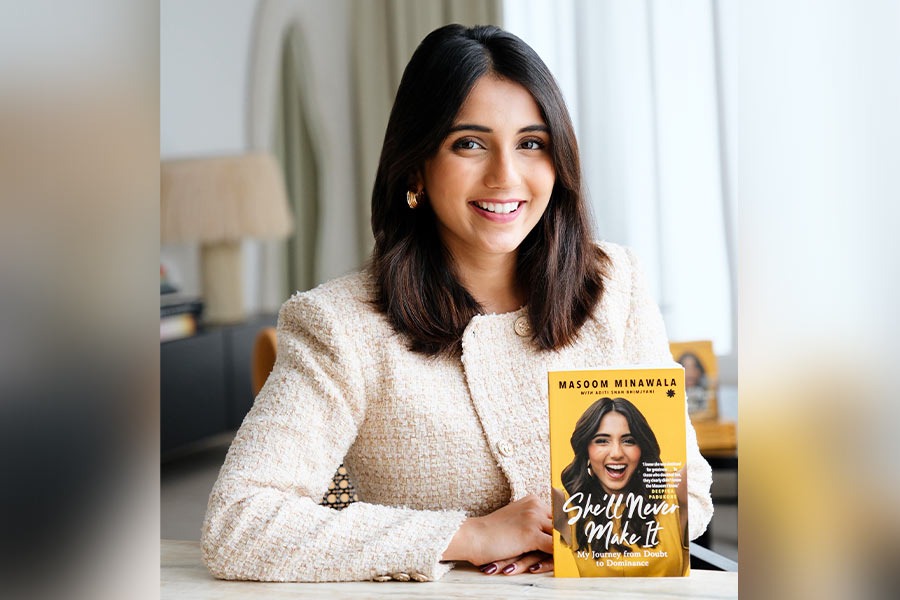
The big bang Simon Singh (degrees in physics from Imperial and Cambridge) hasn’t had a moment’s rest since he wrote his book on everything you wanted to know about the origin of the universe but were too shy to ask. In the last fortnight, Simon has been speaking about Big Bang: The Origin of the Universe in Birmingham, Germany, Switzerland and US (where he has already toured something like 21 cities in as many days). What I have always liked about Simon is his infectious enthusiasm for science. He has put the fizz back into physics. And, thanks to the British Council, he will be doing that at an auditorium near you. Starting in Calcutta (Dec 5), he will be in Mumbai (Dec 7), Bangalore (Dec 8), Chandigarh (Dec 12) and Delhi (Dec 14). “For thousands of years we have wondered about the history and origins of the universe and now, at last, we have a reasonable, rational, beautiful, verifiable theory ' the Big Bang theory,” Simon tells me. Theologians will appreciate his next point: “I am often asked about the conflict between science and religion. As far as I am concerned there is no conflict. Science is about understanding the material world and religion is about understanding the spiritual world. The person who invented the Big Bang theory was a priest, Georges Lemaitre, so clearly there does not have to be a conflict between religion and science.” Simon concludes: “If there is a God and if he created the laws of physics, then I think we honour God by trying to understand the laws of physics. The poet Keats talked about unweaving the rainbow, by which he meant that Isaac Newton analysed the rainbow and destroyed its beauty, but I think that the more we understand the rainbow the more beautiful it becomes. There is nothing good about ignorance.” Tory tricks Compared with David Cameron, Rahul Gandhi is a political veteran. Yet, Eton and Oxford educated Cameron, only 38 and an MP for barely four years, is the new darling of the Tories. On cutting taxes, his view is: “It’s not a question of cutting taxes to appeal to people’s greed. I don’t believe in that. Lower taxes is about having a really competitive economy that’s going to compete with the Chinas and the Indias of the future. And so actually we can’t afford not to have lower taxes over time.” He certainly has this one thing in common with Gordon Brown, likely to be the next Prime Minister. Both see India and China as the threat to Western economic domination.
|
| ACTION TIME: Daniel Craig; (below) Gulshan Grover |
 |
Tittle tattle Daniel Craig, 37, reminds me a little of Sean Connery, the first ' and best ' actor to play 007. But even more important may be the choice of an appropriate villain to act as foil. We have had one Indian baddie in Kabir Bedi, in Octopussy. An excellent choice to play the villain in Casino Royale would be Gulshan Grover, who slipped into London last week with quiet menace. He made a brief appearance on Paap last week on Channel 4 and needs a chance to show off his Bollywood badmaashi to a Hollywood audience. I don’t know if he will get the part ' “the casting is done in LA,” he says ' and neither, I suspect, does he. My favourite was “Odd Job”, the man who decapitated women with his steel-edged flying hat ' or “took his hat off to ladies” until Bond gave him a shocking experience with a live electric cable. |