|
|
A child holds her brother as they wait for their mother to return with relief in Muzaffarabad on Sunday. (AFP)
|
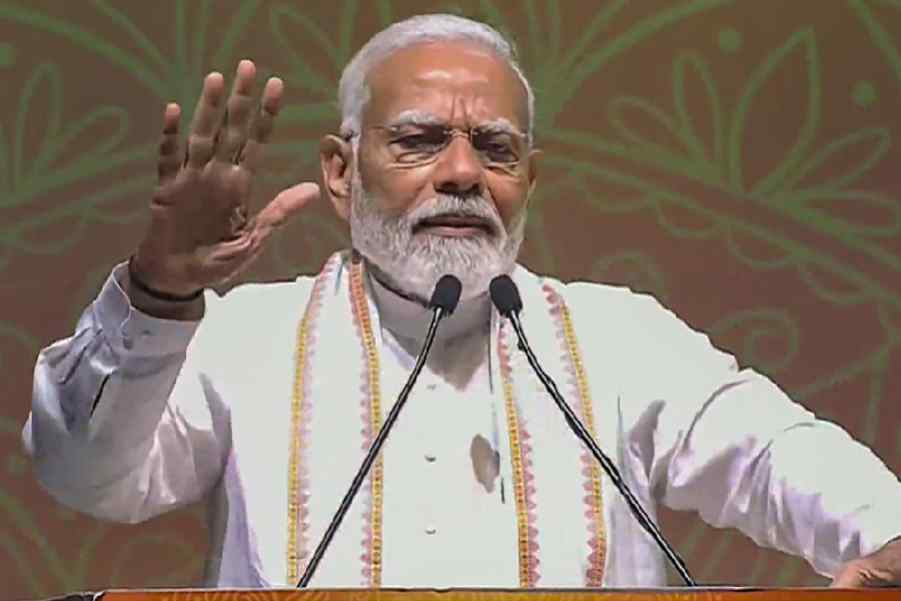
New Delhi, Oct. 16: Prime Minister Manmohan Singh feels India and Pakistan have lost an opportunity to boost the peace process by allowing the quake tragedy and the relief work to get entangled in status quoism, well-placed sources in the government have said.
Pakistan President Pervez Musharrafs televised address ? in which he singled out Singhs gesture of calling him to express grief over the quake and thanked him for promptly dispatching aid ? was small consolation.
Musharrafs address did not cloud Indias perception that Pakistans initial response was to reject its offer and if it did relent, it was because of the scale of the disaster.
This despite the several phone calls between Islamabad and Delhi to allow an IL-76 IAF aircraft to land in Islamabads Chaklala airbase.
Singh had wanted to visit Islamabad for a few hours last week to offer his personal sympathies to Musharraf but it was called off ostensibly because he had to have a minor surgery in his right hand.
The PMs idea was to show that visits of the leaders from either side of the border need not always be mega shows of diplomacy. They can also be quiet, normal visits, prompted by humanitarian considerations.
In the past year, the Sri Lankan President and Prime Minister have visited India at least half a dozen times but they were never big events. In the case of India and Pakistan, there are enough sceptics in both the establishments to thwart such gestures aimed at restoring normality, a government source said.
Hamid Ansari, a former diplomat, endorsed this view.
The sad part of it is that ingrained political perceptions come to the fore almost automatically. At the political level, the depth and the intensity of the quake took time to sink in because, lets face it, the initial reaction was that Pakistan-occupied Kashmir deserved it. The Pakistanis would have seen in such a reaction a devious Indian plan to find an excuse to access their side of Kashmir. Government reactions on both sides are guided by inter-state political considerations, Ansari said.
The former diplomat agreed that Singh ? whom he described as being ahead of everybody else around him by not reacting in a standard mode ? could have turned the tragedy into a better opportunity.
What, for instance, prevented India from treating 400 children from PoK? he asked.
Ansari was not the only one to hold this view.
Hurriyat Conference leader Mirwaiz Umar Farooq, who is regarded as Kashmirs main moderate voice, was quoted by Reuters as saying: If India would have allowed telephone links, people-to-people contacts, it would have given a boost to the peace process. If India and Pakistan would have co-ordinated efforts to provide relief and rehabilitation, it would have given a boost, but that hasnt happened.
The quake is not the only disaster to put Indo-Pak relations to test, or for that matter, Indias own receptivity (or lack of it) to external aid.
When Gujarat was ravaged by a similar disaster in January 2001, Musharraf was on record as saying India had declined Pakistans offer of aid. Indian officials maintained there was no specific offer. Later, Pakistan sent three planeloads of blankets and tents that India accepted.
BBCs Mike Woolridge had commented in a chat show that year that Pakistan has sent this aid at a time when both sides are struggling to find a way to restart the official dialogue on the basis of the ceasefire that is in effect at this moment in Kashmir.
Like Singh, Musharraf had then expressed a wish to visit Bhuj and Anjar (which were devastated) with relief goods as a goodwill gesture. But it was rejected on the plea that the administration was completely preoccupied with relief work and providing security would be difficult.
When the tsunami struck, India rejected aid offers from every country and only asked the World Bank and the Asian Development Bank for help in reconstruction projects.
|