|
| VITAL STATISTICS |
| WHAT IS IT? A Delhi University college; offers postgraduate studies in social work.
WHO’S THE BOSS? Sneh Lata Tandon.
HOW CHEAP IS IT? The fee is about Rs 9,000 to Rs 10,000 per annum. Hostel accommodation costs Rs 8,150 per annum.
WHERE TO STAY? Hostel
facility provided on campus to both boys and girls.
WHAT ABOUT JOBS? The college has a good placement cell.
WHERE IS IT? University of Delhi, University Enclave (North Campus), New Delhi - 110007 |
The Delhi School of Social Work (DSSW) is for those who wish to do more than just a 9-to-5 job. The institute ? often called the Department of Social Work in Delhi University ? offers a unique blend of a good faculty, an amicable environment and a promising future for students.
DSSW was first established as the ?National YWCA School of Social Work? in 1946. It was much later ? in April 1961 ? that Delhi University adopted it as an institute.
Social work is a subject that cannot exactly be categorised. Most merely know it as something that gives a student a grassroots-level perspective. Some old DSSW students believe that the institute is for those who wish to give something back to society. But the head of DSSW explains that it's all that and a lot more. ?We provide interdisciplinary collaboration for better understanding of human problems and issues for social development,? says Professor Sneh Lata Tandon, head, department of social work and dean, faculty of social sciences. ?As a professional institution, we aim not only at imparting education and training in professional social work but also developing the right attitude and values for those who are going to work in that field.?
Of workaholics
The institute offers three different courses: an MA, MPhil and a PhD in social work. The two-year postgraduate course is the most popular among students. An MPhil in social work is a research course to be completed over three years if done full-time, or over four years if it is done part-time. A doctorate would take five years.
DSSW is result-oriented and Tandon is convinced that its strenuous schedule is a path to a successful future. ?The curriculum helps students understand the consequences of social change and empowers them for intervention within the existing social infrastructure in a scientific manner,? she says. The courses demand intensive fieldwork and a six-day work week. Shivani Chauhan, an ex-student of DSSW, stresses that the focus is on practical work. ?I spent two days a week working for an NGO involved with children?s issues and for the HR department of Air-India,? she says.
Rural camps
DSSW provides a placement cell, guest lecture programmes and innovative methods of training. It has one of the best libraries in the field of social welfare and social sciences, with at least 30,000 volumes on the shelves. There is hostel accommodation for both men and women, and rooms are allotted on the basis of merit. The institute also boasts of Fieldwork Units under which workshops are organised in the form of rural camps.
A placement brochure is taken out annually, through which the cell tries to reach out to prospective employers. Organisations such as Care-India, Capart and Pradan come for campus recruitment. Students get jobs in the voluntary sector, HR departments, labour and social welfare fields and in the social sector wings of corporate offices. Some opt for contractual jobs in UN organisations.
The fun part
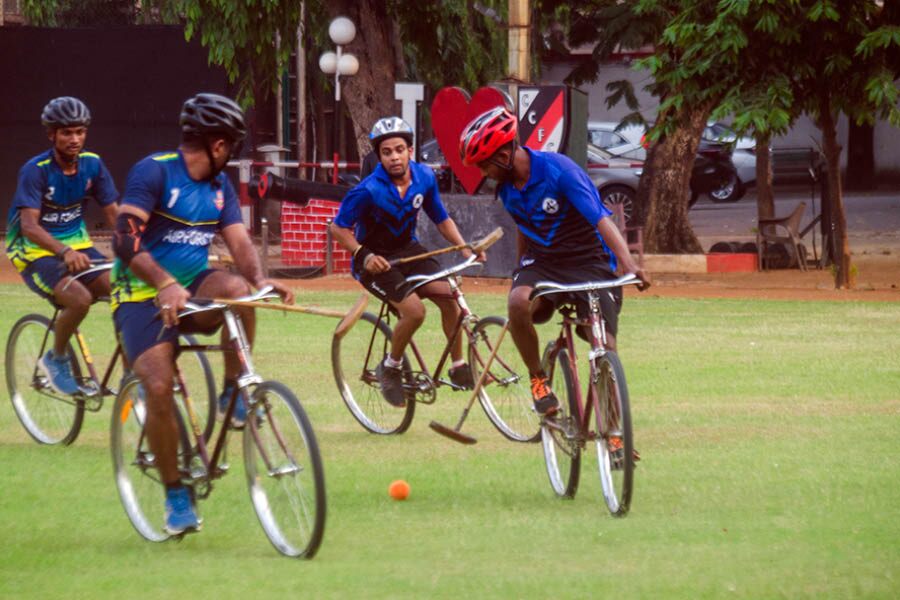
The institute also encourages students to participate in various committees dealing with fieldwork, placement, library, annual day programmes, canteen, grievances and sexual harassment. There are facilities for indoor and outdoor and outdoor games too.
DSSW has other special features as well, namely self-governed centres and scholarships. Students are involved in the ?Gram Mahila Kendra?, ?Training, Orientation and Research Centre? and ?Child Guidance Centre?. It also offers numerous scholarships and awards.
PINKY NIGAM
Old memories
Prof. Manoj K. Jha, Reader at DSSW, on his student days at the institute
DSSW GAVE ALL of us a part of itself. Despite occasional frustrations, these lines from our pledge kept us going: I shall never lose faith in the value of every human being and the capacity of man to change his ways of life and thinking.
I was an outstation student, hence, hostel life was special. This, indeed, was the place where my friends and I shared our dream of an alternative world. And we used to think that the world outside was as easy and as free as our campus was. I remember how, during the Mandal commission protests in 1990, students in our school came up with a formula to deal with the issue without bringing in a blanket reservation for OBCs. Our school was closed for a week and we travelled around to share our views with others. I will never forget the experience.
As told to Pinky Nigam |