|
|
Aiyar: Plan not working?
|
Beijing, Oct. 2: India
should accept that its attempt to cooperate with China on
global energy exploration projects is a non-starter and
switch to capital- and technology-rich Taiwan as an energy
partner, an Indian academic visiting here said.
Both India and China, Asias fastest-growing energy consumers, have made acquiring global energy reserves a national objective.
The idea that they could cooperate instead of competing in this has been a pet theme of petroleum minister Mani Shankar Aiyar.
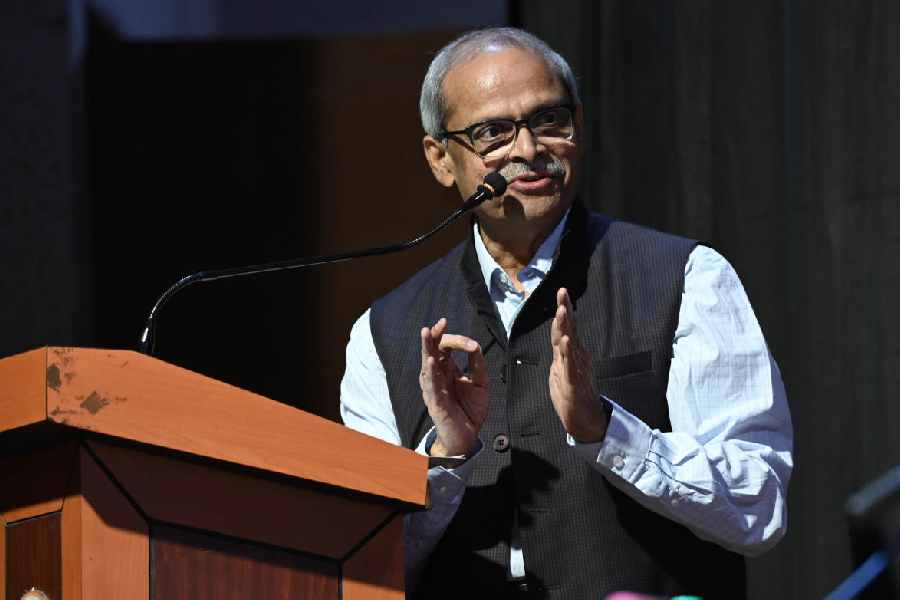
But the reality is that while India was very hot for the idea, Beijing has been cool to it, Madhav Nalapat, professor of geopolitics at the Manipal Academy of Higher Education and an adviser to the National Security Council, said.
Since the current government has come to power in New Delhi we have not won a single oil deal, not got one square inch of oil-bearing territory anywhere in the world, Nalapat added.
In this year alone, China has edged India out of energy deals worth $600 million in Angola, $1.8 billion in Ecuador and $4.2 billion in Kazakhstan.
Though Oil and Natural Gas Corporation and its overseas subsidiary, ONGC Videsh Ltd (OVL) invested substantial time, money and political clout in both deals, and had even begun to informally tell journalists the cat was in the bag, China walked away with the prize.
In deals where OVL has had some success, it has had to play second fiddle to China. In Iran, where OVL won a 20 per cent share in the development of the Yadavaran oil field, Sinopec, a Chinese oil major, got a 50 per cent share.
Nalapat said the interests of China and India are just not aligned for effective cooperation, and that Taiwans experienced and rich oil majors would make a much more suitable and reliable energy partner for Indias capital-constrained fledgling oil firms.
Combining Taiwanese capital and management with Indias geopolitical depth and diplomatic clout could create a world-beating combination, said Nalapat. Taiwan does not have much political access and we can get them into deals and they can help us execute them.
Talks between Taiwanese and India energy firms are already underway and some deals could be announced within the next few months, added Nalapat, who will travel on to Taipei from Beijing.
Indo-Taiwanese cooperation could make commercial sense, an energy executive in Beijing said on condition of anonymity.
Many of the deals China has entered into are not really economical (and) have been subsidised by the central government, he said, offering the example of China National Offshore Oil Corporations ill-fated $18.5-billion offer to buy US-based Unocal Corp. Taiwanese companies dont do that, and neither do Indian ones, so hopefully they will let reality direct their deals more than politics.
For example, while ONGC has said it is mulling countering Chinas $4.18-billion offer for Kazakhstans PetroKazakhstan Inc., S.C. Tripathi, secretary to Indias oil ministry, said it would do so only if it made economic sense.
Nalapat was careful to clarify that growing economic ties between India and Taiwan are unlikely to have any negative repercussions on the recent thaw in relations between Beijing and Delhi.
While China bitterly opposes diplomatic recognition of Taiwan, which it considers a renegade province, it has been very pragmatic about not intervening in the islands commercial dealings.
Cross-straits trade exceeded $70 billion last year, and officially, Taiwanese companies have invested about $50 billion in China. In fact, such economic cooperation in the face of extreme political tension is often held up as a model for Pakistan and India.
The major reason Sino-Indo cooperation on energy has not panned out is that neither country trusts the other enough at the strategic level. As long as China continues its nuclear assistance to Pakistan, and now they are even helping Bangladesh, it is hard for us to develop strategic ties (with Beijing), Nalapat said.
|