TT Epaper LHS
The Telegraph
TT Mobile
 
 
IN TODAY'S PAPER
WEEKLY FEATURES
CITY NEWSLINES
FEEDS
  RSS
  My Yahoo!
SEARCH
 
Archives Web
 
ARCHIVES
Since 1st March, 1999
 
THE TELEGRAPH
 
CIMA Gallary
 
Email This Page
A knife that kills
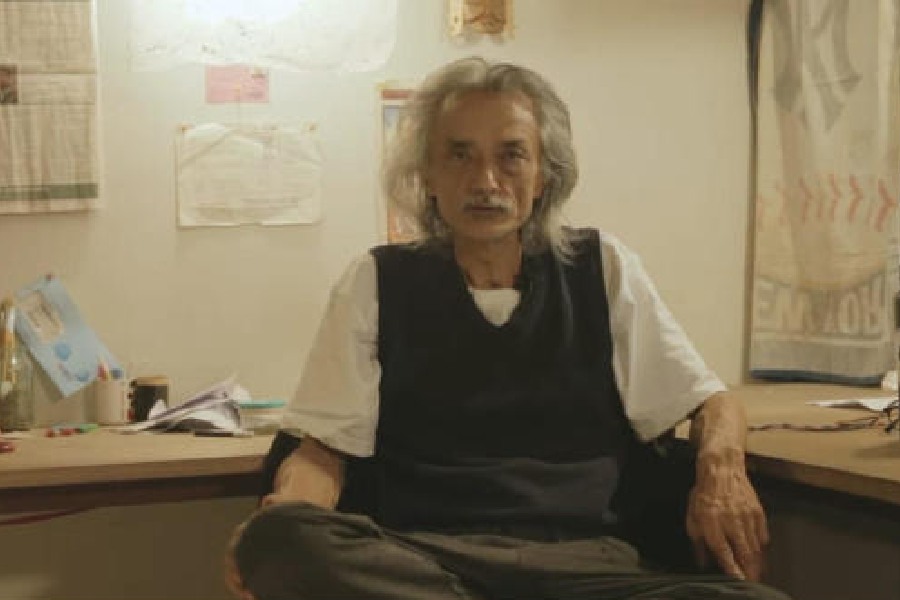
Single-minded master: Tetsuya Nishio

The Japanese have produced more than their fair share of single-minded masters. There are sushi masters who have devoted their lives to the immaculate slicing of raw fish and there are green tea masters who have spent decades honing the art of brewing the perfect cuppa.

And then there is Tetsuya Nishio, the undisputed grand “puzzle master” of Su Doku: a bespectacled fiend from the darkest suburbs of Tokyo who spends his every waking hour devising abominable new ways to torture our brain cells. His only weapon is logic, but, in his own words, “it is a knife that kills”.

His commitment to deviousness is absolute, and he is notorious among the millions of Su Doku fans spread across Japan. When Su Doku champions burst into tears of frustration over the latest “super difficult” puzzle, his is the name they curse out loud. Master Nishio has trained almost all of Japan’s greatest champions and apprentice puzzle masters.

And now, in its first sighting outside Japan, one of the cruellest twists on the basic Su Doku game has reached The Times straight from Nishio’s diabolical stable.

“Of course I have recently read in the Japanese press about the extraordinary Su Doku boom in the UK and I was very happy to see it happening,” says the puzzle master, “but Britain has not had the puzzles for long enough to become fully used to their complexities. This new variation will be a dreadful challenge for you.”

Samunamupure (it translates as “sum number place” and we have named it Killer Su Doku) is a variation that has been evolving among Nishio and his small clan of devoted puzzle students for some years. It is, he says, the perfect example of a next-generation puzzle: it is simple to understand, requires no insider knowledge or training and rewards pure and simple logic.

The digits within the oddly shaped “inner boxes” must add up to the small number written in the top corner of that box. Apart from that, all the normal Su Doku rules apply. “The really satisfying part,” says Nishio with an evil smirk, “is that you can design a Samunamupure puzzle in a way that you do not need to insert any starting numbers in the grid. I think that will make some people very disturbed.”

The original samunamupure was devised a few years ago by Miyuki Nisawa, one of the puzzle-master’s most accomplished pupils. Under his tutelage she has further sharpened the puzzle’s bite, gradually stretching its difficulty while retaining the appallingly addictive qualities of the Su Doku genre. Others have joined her in honing the puzzles.

Yumiko Meguro, another of the clan, said: “Britain will be surprised and confused by Samunamupure at first, but once you have realised its secret, you will be absolutely lost to it.”

Although Su Doku has its roots outside Japan, it is no surprise that it is here that people such as Nishio have taken the idea to new levels of devotion. Lodged deep in the heart of Japanese culture is the spirit of monozukuri ? a concept that translates roughly as “craftsmanship” but implies an obsessive attention to detail. Nishio and his cohorts are in a special class that arises from this concept ? of so-called “puzzle-otaku”, or “Su Doku-nerds”.

Nishio spends most of his time in his puzzle studio in Higashimurayama, churning out about 15 puzzles a day. At the moment, he is particularly hard-worked because of a dramatic social phenomenon on the Japanese horizon. “From next year, all the baby boomers born after the Second World War are going to retire at 65, and they are all going to start doing Su Doku to fill their time. The puzzle community and I have to be ready.”

When he does venture outdoors there are certain things he always takes with him. One is a battered, yellowing copy of a 20-year-old American crossword magazine which published the first Su Doku puzzle that Nishio saw. It was included in the magazine as a curio, and never took off in the US. Nishio not only enjoyed the puzzle ? as the pencil markings surrounding the grid attest ? but gave up his job writing standard logic puzzles to take the Su Doku idea forward.

The other thing that he always carries is a small pad of empty Su Doku grids, “always ready for the next great idea”, he says, taking the pad out and jotting down a secret “work in progress” Su Doku that seems to involve a lot of arrows. “Train, cafe, bar ? you never know when genius will strike.”

Nishio’s mastery of Su Doku has put him at the centre of a huge network of former pupils in Japan and other puzzle masters from around the world. They come to him for advice, for unsweetened criticism of their new offerings, and to seek judgment on the great Su Doku debates of the day.

When one of his apprentices, for example, came up with a new theory that allows certain squares to be filled in earlier than regular logic would allow, the debate raged for months. Eventually, Nishio was won over by the argument, and an explanation of Hamada’s Logic now has pride of place in the front pages of Nishio’s puzzle books.

“Hamada’s Logic makes things fun,” says Nishio. “It gives you the chance to try out some truly mind-bending puzzles that involve a dozen leaps of logic just to fill in a single number.” The master also once engaged in a lengthy debate with Wayne Gould, the compiler behind the Times Su Doku puzzles. Gould complained about a particular Su Doku puzzle of Nishio’s devising, arguing that it required a leap of more than just logic to complete. Nishio argued fiercely against this sacrilege, eventually persuading Gould that it was a puzzle with which Mr Spock would have been perfectly satisfied.

The greatest lesson that Nishio has tried to instill in the members of his stable is that the ideal Su Doku puzzle ? of any genre ? should involve the solver in a single path of logic. It is perfecting this, he says, that makes it immediately obvious to him which are mediocre Su Doku and which are great.

“I spend every moment thinking about new puzzles and how to make the existing puzzles more interesting. To write a simple puzzle (by his definition, the sort that appears in The Times) takes me around 15 minutes. But a more complicated one will take me as much as two hours. The time is spent ensuring that there is a unique solution that can be navigated only by logic.”

As Britain prepares to take on the new challenge of next-generation Su Doku, Japan’s puzzle master offers a simple word of warning: “Do not get too addicted. We can make these puzzles so difficult that it would take a champion six hours to complete one.” 

(THE TIMES, LONDON)

Top
Email This Page