|
The Centre?s announcement last week that it was adopting a tough anti-hijack policy, which envisages no talking to hijackers and the shooting down of a hijacked plane, may be necessary in the light of what happened to the World Trade Center and the Pentagon on September 11, 2001.
But the new policy is not flawless. The measures lack the touch of humaneness required in such crises. How are the powers-that-be to blindly order the shooting down of a hijacked plane with, say 200 passengers on board, and which is supposed to be heading for a vital installation or a prominent building of national importance? One has to give the pilot a chance to talk to the hijackers, to know their intentions and demands, and to convey them to the decision-makers in the government machinery down below to deliberate upon.
The hijacking has to be dealt with in a balanced manner with the view to save the travellers? lives as well as minimize the damage on the ground if the aircraft is shot down. In any case, an airliner must be shot down only when absolutely unavoidable.
Up in the sky
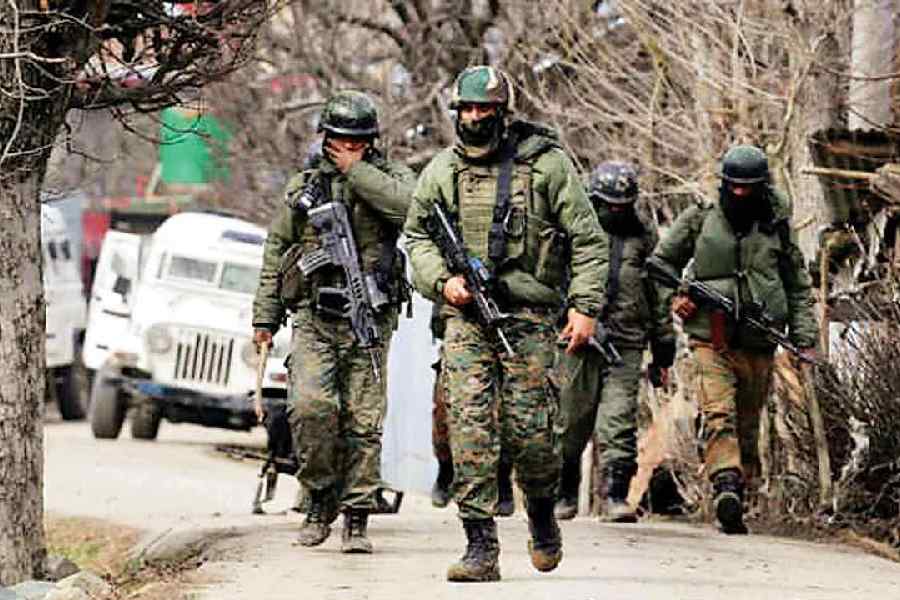
The anti-hijack policy cleared by the cabinet committee on security also lays down the drill for securing the release of passengers with the help of foreign governments, if the hijacking takes place overseas. In hijackings within the country, the policy visualizes immobilizing the airliner. The new guidelines also state that efforts must be made to persuade the hijackers to land, after which the authorities must prevent the plane from taking off again by blocking the runway or turning off runway lights. Commandos may also be allowed to storm the plane to end the hijacking.
The first hijacking of an airplane in India was in 1971 when Hashim Qureshi commandeered an Indian Airlines plane from Srinagar to Lahore. Qureshi was followed by five Khalistani militants carrying knives and swords who hijacked an IA plane in September 1981, carrying 111 passengers and a crew of six. The aircraft was taken to Lahore where Pakistani commandos overpowered the hijackers and rescued the passengers.
The next major incident happened in 1984, when seven young Khalistan supporters demanded that an IA domestic liner be flown to the United States of America. The plane was taken to the United Arab Emirates, where that country?s defence minister negotiated the release of the passengers.
Standard practice
And then of course there was the hijacking of IC-814 in late 1999 by terrorists just after take off from Kathmandu who diverted it to Kandahar. After a week-long stand-off, the then National Democratic Alliance regime agreed to release three jailed terrorists in exchange for the hostages.
While it is good to have standard operating procedures laid out for such national crises, some amount of flexibility must be allowed. In the past, hijackings have followed a pattern ? negotiations with the hijackers, followed by some form of settlement (not always the meeting of the hijackers? original demands) or the storming of the aircraft by armed forces to rescue the hostages.
Before 9/11, most airlines followed a policy whereby the pilot complied with the hijackers? demands in the hope of a peaceful outcome. Now understandably, the attitude of governments all over the world has hardened. While many airlines now have armed marshals keeping a vigil on passengers in-flight, many others have taken steps to armour the cockpit to deter the entry of hijackers. The government must lay more stress on such measures besides trying to block all the loopholes in the security at our airports.
|